
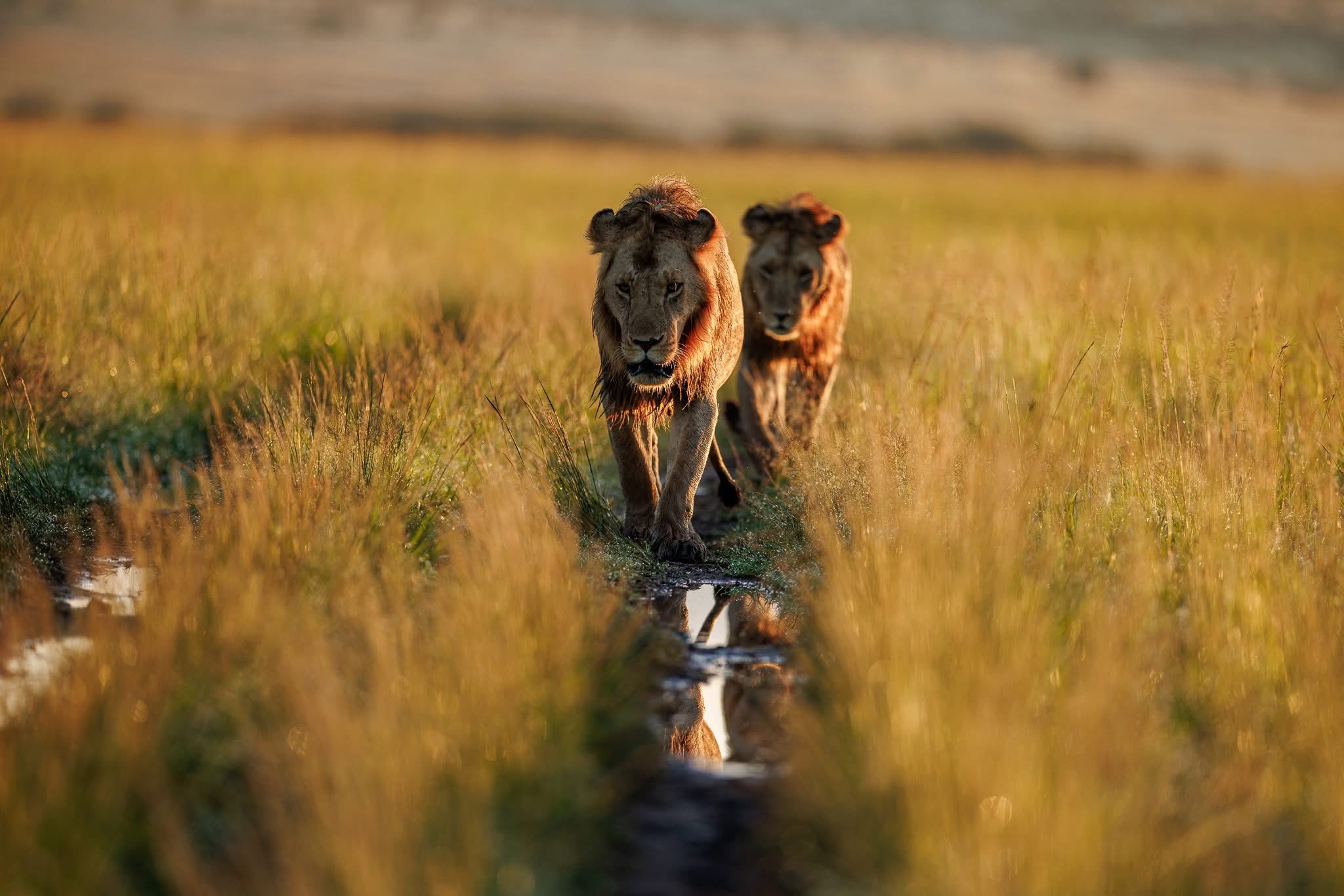

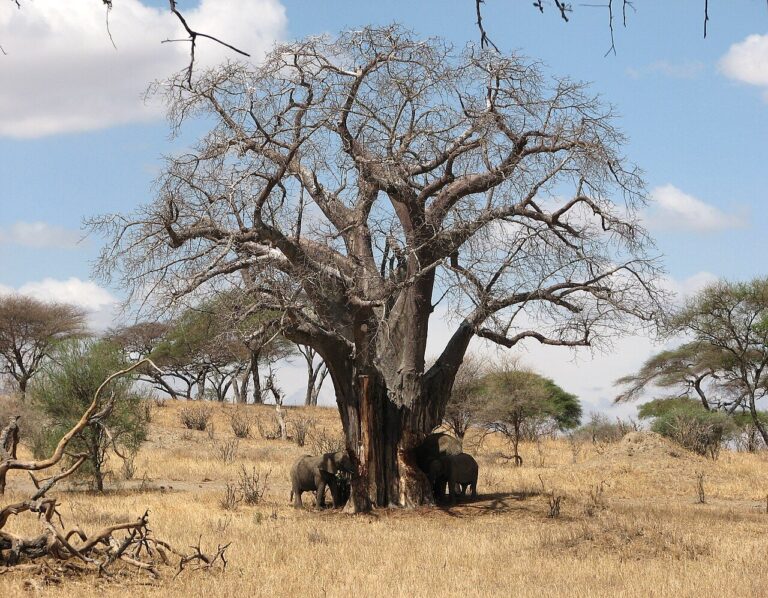
The Serengeti is famous for movement, but its deeper gift is space. Dawn may begin with lions calling beyond camp, dust hanging behind a column of wildebeest, or a leopard descending from a sausage tree while the plains are still blue with cold. By noon the same country feels immense and still. To understand it, you have to stop treating the park as one destination.
Serengeti National Park covers a vast part of the wider Serengeti–Mara ecosystem. Rivers, kopjes, open grassland, acacia woodland and seasonal marshes create different wildlife stories across the year. A well-planned safari places you in the right landscape for the season without pretending that nature keeps an appointment book.
Which Serengeti is right for you?
Central Serengeti and Seronera
Central Serengeti is the most reliable year-round introduction. The Seronera River, scattered kopjes and permanent water support resident wildlife, especially lion, leopard and cheetah. Access is straightforward and the range of camps is broad. The compromise is popularity: careful timing and a guide willing to move beyond the obvious circuits make a considerable difference.
Western Corridor and Grumeti
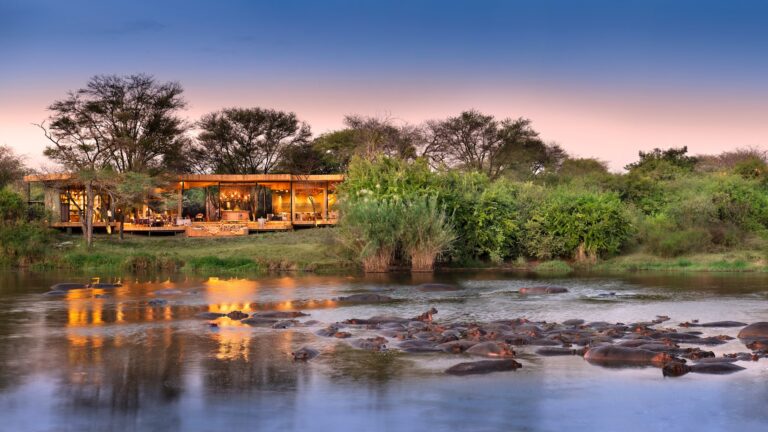
The west is riverine and wooded, with black-cotton soil, tall grass and the broad Grumeti River. Migration herds often pass through from roughly May into July, although rain decides the details. This is also where names create confusion: the national park’s Western Corridor, &Beyond Grumeti Serengeti River Lodge and the adjoining private Singita Grumeti reserve are related geographically but offer different rules, access and styles of safari.
Northern Serengeti, Kogatende and Lamai
The north is wild, expansive country split by the Mara River. From roughly July to October it becomes the focus of migration travel, but the river never performs on command. Outside the busiest months, resident cats, elephant and the sheer quiet of the Lamai landscape can be reason enough to come.
Southern Serengeti and Ndutu
The southern short-grass plains are green-season country. Mineral-rich soils support nutritious grass after rain, drawing the migration south and creating the celebrated calving period, usually centred on January to March. Ndutu sits across the Serengeti National Park and Ngorongoro Conservation Area boundary, so driving rules and access vary with location.
Eastern Serengeti and Namiri Plains
The east is open, remote and particularly compelling for travellers who care about big cats and long sightlines. Namiri Plains, once closed to tourism for cheetah research, now offers one of the Serengeti’s most distinctive year-round experiences. It combines naturally with Seronera or the southern plains when time and season allow.
The Great Migration, honestly explained
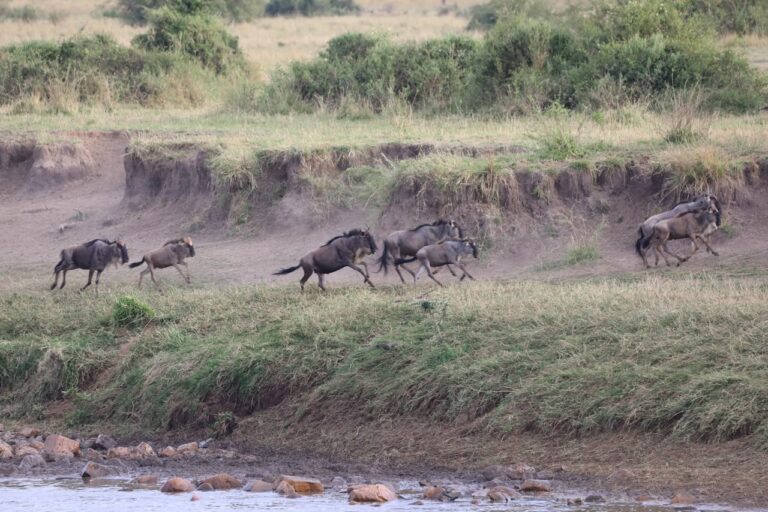
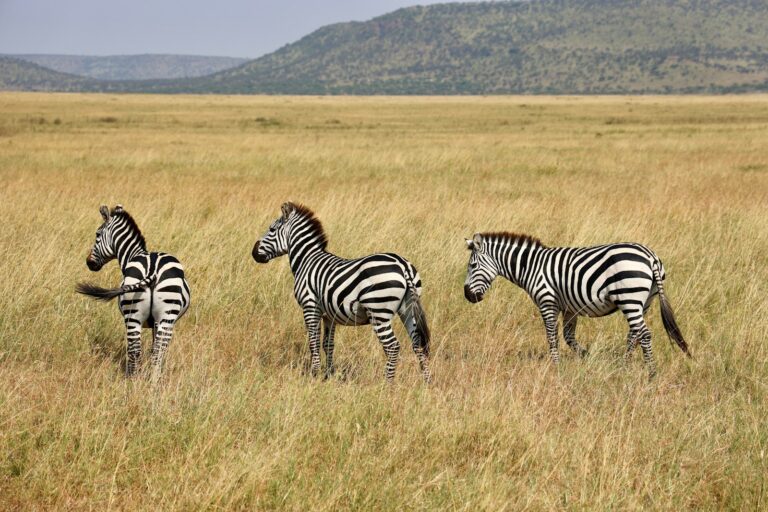
The Great Migration is a continuous search for water and new grass by roughly 1.6 million wildebeest together with zebra and other grazers. The familiar month-by-month map is useful as a broad guide, not a guarantee. Local rain can divide the herds, hold them in one place or move them earlier than expected.
River crossings are dramatic, but they are only one chapter. Rutting on the western plains, the first storms darkening the eastern horizon, calves appearing across the south and great columns of animals walking through woodland can be just as powerful. We build a resilient itinerary around a region and a season rather than gambling the whole safari on a single crossing.
Where you stay changes the safari
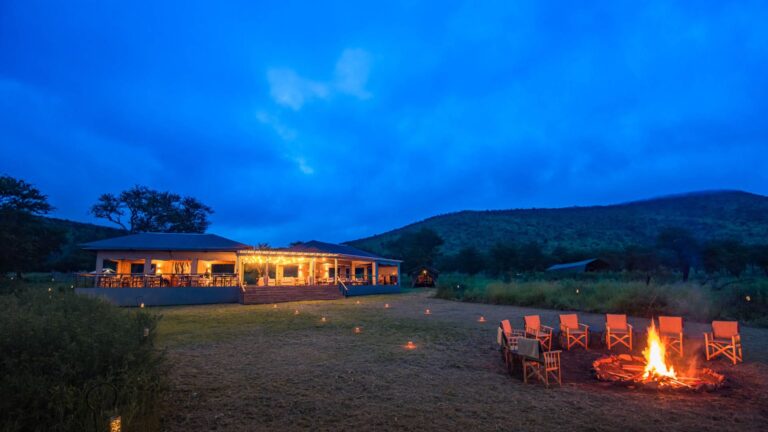
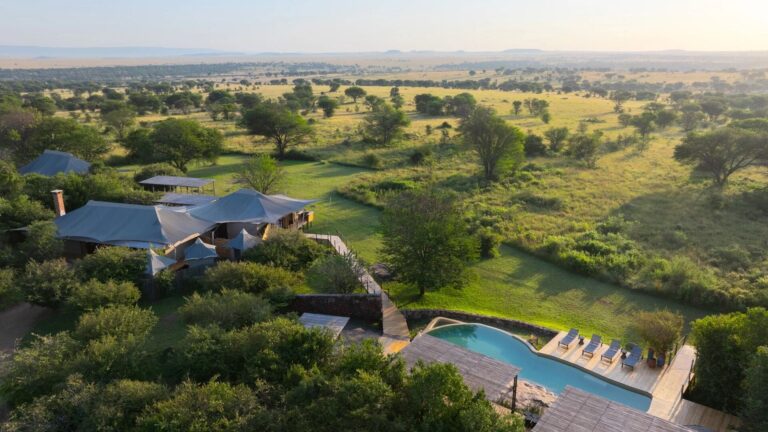
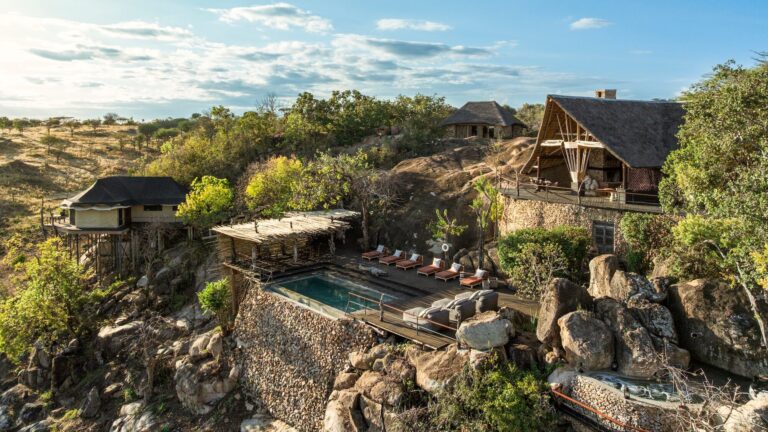
A camp is not simply a room. Its location decides how early you reach the first sighting, whether you can remain out for a full day, how much traffic you encounter and whether a private vehicle is realistic. In the central Serengeti, Dunia Camp and Four Seasons Safari Lodge offer very different expressions of comfort. In the north, Sayari and Lamai place guests near the Mara River and the Lamai Wedge. The eastern plains belong to properties such as Namiri Plains. In the west, &Beyond Grumeti River Lodge and Singita’s Grumeti collection should never be sold as interchangeable.
Mobile camps such as &Beyond Serengeti Under Canvas change location with the season. They suit travellers who want the sensory experience of sleeping under canvas and being positioned around the migration. Permanent lodges offer more extensive facilities and, often, easier family logistics. Neither is automatically better.
How many nights?
Three nights is a sensible minimum in one region. Four gives the guide room to respond to weather and wildlife rather than repeating the same roads. With six or seven nights, two complementary regions can work beautifully. Trying to cover north, central, west and south in one short safari turns the Serengeti into a series of long transfers.
A safari with patience
The best guides read behaviour before pursuing a report on the radio. They notice vultures gathering, a topi staring in one direction, the wind changing around a cat, or zebra beginning to bunch near water. This is the safari we believe in: fewer frantic kilometres, more time with an unfolding scene and no pressure on wildlife for a photograph.
Photographers can read our detailed Serengeti photography guide. Travellers combining the park with the wider circuit should continue to Ngorongoro, Tarangire or the full Tanzania safari guide.
The Serengeti is an ecosystem, not one game-drive area
The first mistake in planning the Serengeti is to book the park name without asking where the camp sits. From the southern short-grass plains to the Mara River in the north is a journey across different habitats and, in a safari vehicle, a very long way. Central Seronera has permanent water and resident cats. The west is shaped by the Grumeti River and woodland. The north opens into rolling country cut by the Mara River. The east is quieter kopje and short-grass country with a strong cheetah story. The south spills beyond the park into the Ngorongoro Conservation Area and becomes the migration nursery after suitable rain.
A lodge can truthfully describe itself as “in the Serengeti” and still be several hours from the wildlife event a traveller has imagined. We therefore plan by airstrip, drive radius and season, not by the word Serengeti alone.
How the year normally unfolds
January to March: south and east
After the short rains, the herds usually spread across the mineral-rich plains around Ndutu, Kusini and Gol. Calving is concentrated in a broad period rather than on one date. The most rewarding days are not only about births: cheetah use the open ground, hyenas work the herds, and storm light can turn the plain silver, green and black within an hour. Roads can become slick after rain, and a good driver matters as much as a famous camp.
April to June: the long-rain transition and Western Corridor
As the southern plains dry, the migration breaks into columns moving through central and western country. April and May are changeable; some camps close and tracks can be difficult, yet the park is green and quiet. By June, herds may gather around the Western Corridor and Grumeti system before continuing north. The Grumeti crossings are less predictable and generally less theatrical than the Mara River, but the western landscape is rewarding in its own right.
July to October: the north, with important caveats
The migration usually reaches the northern Serengeti during this period, but river crossings do not run to a timetable. Herds can cross, return and cross again, or spend days away from an accessible point. Waiting beside the river can be exhilarating or frustrating. We balance it with drives for lion, leopard, cheetah, elephant, rhino and the quieter details of the northern landscape.
November and December: movement south
The short rains begin to pull the herds away from the north. Routes vary and the animals can be spread through eastern and central Serengeti before reaching the southern plains. This is an attractive time for travellers who prefer fewer vehicles and fresh grass to a headline river event.
Resident wildlife is the insurance policy
The migration is weather-led; resident wildlife gives the itinerary resilience. Central Serengeti is the most dependable all-round base because the Seronera River system supports prey and predators through the year. The east is excellent for open-country cats. Northern Serengeti retains strong wildlife after the herds leave and can feel wonderfully empty. Grumeti’s private reserves add flexible activities and controlled vehicle density, while the park’s Western Corridor offers a wilder, more traditional game-drive experience.
This is why we rarely recommend choosing a camp solely because a migration map places a coloured arrow nearby. We ask what the region offers on the day the herds are twenty kilometres away.
One region or two?
Three nights in one region is the minimum we normally consider worthwhile. Four gives a guide two full days plus arrival and departure drives. Travellers with five or six Serengeti nights can stay in one well-positioned base or split between two contrasting regions. Seven or eight nights makes a two-region safari feel unhurried. Moving camp every two nights usually reduces field time and repeats the same packing, airstrip and briefing cycle.
A north-and-central combination is strong from July to October. South-and-central works well in the green season. East-and-central suits travellers interested in cheetah, photography and quieter ground. West-and-north can follow the broad seasonal progression from June onward, but flight and road logic must be checked for the exact camps.
What a day in the field actually feels like
In the Serengeti, distance is part of the work. A dawn departure may begin in cold air with coffee in a flask and end three hours later beside a kopje where lions have not moved since sunrise. Another day may involve a longer drive to reach a river or herd. Full-day drives are useful when the wildlife interest lies far from camp, but they should not be automatic: returning for lunch, a swim and a quieter afternoon can produce a better holiday.
Shared drives follow a group rhythm. A private vehicle lets photographers wait for light, families return early, and serious wildlife travellers stay with behaviour rather than chase a radio call. The difference is not luxury for its own sake; it is control of time.
Crowds, sightings and good guiding
Seronera, the Mara River and famous migration viewpoints can become busy. A skilled guide manages this by leaving early, reading secondary roads and knowing when not to join a cluster of vehicles. Private concessions such as Singita Grumeti offer lower vehicle density and activities that national-park rules may not allow, but they do not replace the ecological range of the national park. They are a different product.
We value guides who can explain why a herd is uneasy, what vultures reveal, how wind changes a cat’s approach and when to turn the engine off. The Serengeti becomes memorable when it is interpreted, not merely counted.
Camp styles and the questions behind them
Permanent lodges offer larger public spaces, pools and predictable infrastructure. Seasonal tented camps move between broad migration zones. Mobile does not necessarily mean basic, and permanent does not necessarily mean poorly positioned. We check the precise seasonal location, the operating airstrip, drive times, vehicle policy, power, room layout, child rules and whether the camp closes in the rains.
For migration-focused travel, book early—particularly northern camps from July to September and the southern plains during the most popular calving weeks. For value and photography, June, November and early December can be excellent when matched to the right region.