
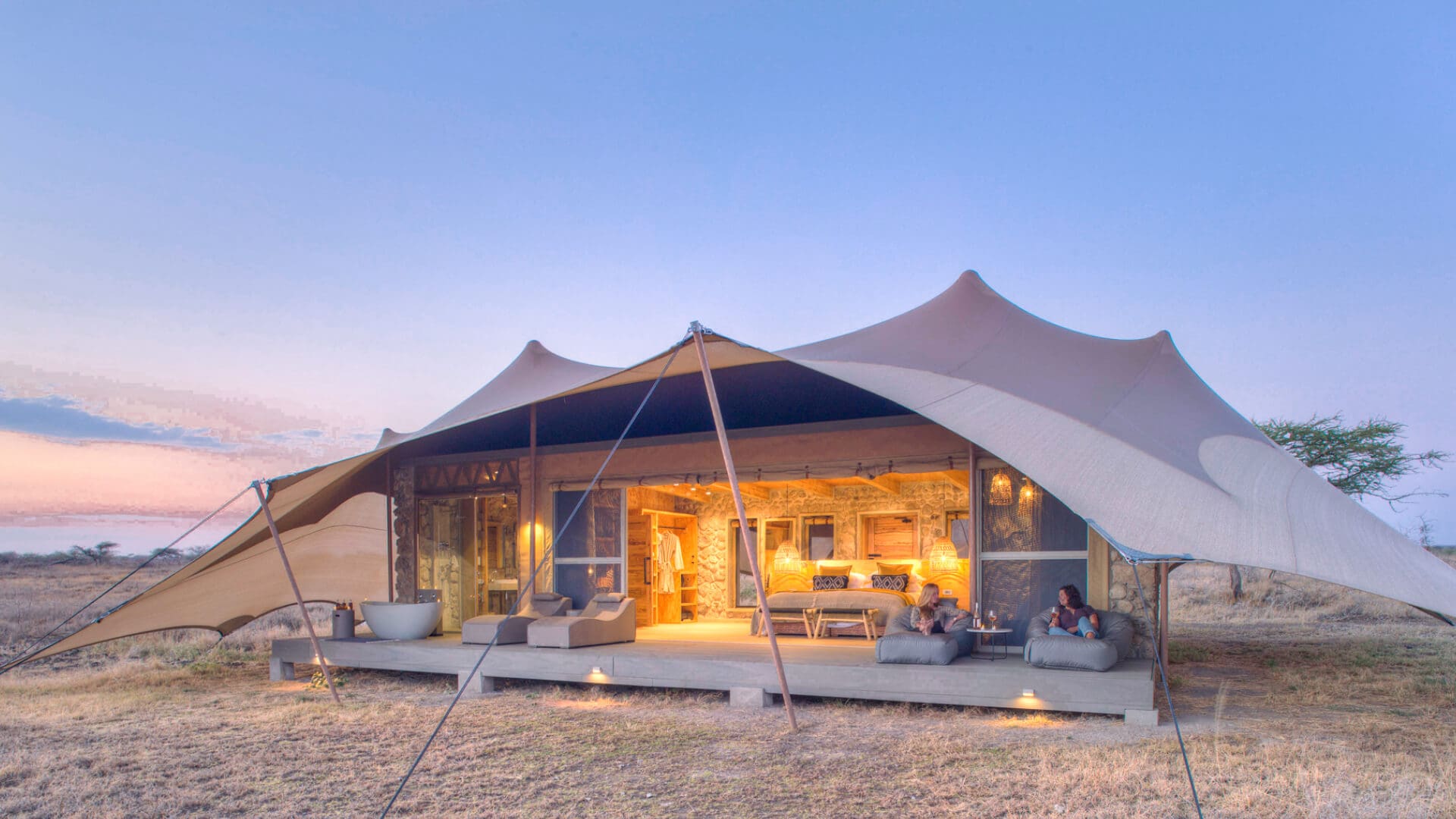
Namiri Plains is for travellers who can enjoy a horizon before it gives them an animal. The camp sits in the eastern Serengeti, an open, remote landscape shaped by the Ngare Nanyuki river system and long associated with cheetah research and recovery.
Why we would choose it
The eastern plains are compelling for big-cat enthusiasts, photographers and repeat visitors who want to move beyond the busiest central roads. Cheetah, lion and other predators use the open country, but the true appeal is fieldcraft: reading distance, light and behaviour with a guide who knows a less-travelled region.
The camp has a small tented scale with a family option and specialist photographic vehicle arrangements available by advance request. It is comfortable enough for four nights without turning the landscape into background decoration.
Season and movement
Resident predators make the east interesting beyond the migration. Rain can bring fresh grass and larger herbivore movement; dry months open sightlines and change water use. The exact picture shifts, which is why we sell Namiri as eastern Serengeti rather than a guaranteed species encounter.
The trade-offs
- Lower vehicle density and excellent space, but fewer quick alternatives when a sighting is slow.
- Strong big-cat reputation, without any ethical guarantee of a particular animal.
- A tented camp with real wilderness atmosphere, not a full-service resort.
- Its eastern position needs careful transfer planning; it is not a casual side drive from the northern river.
Who it suits
Namiri suits photographers, couples, older families comfortable with a tented environment and anyone who values quiet observation. Guests who need extensive facilities, short airport transfers or a dense sequence of vehicles and sightings may prefer central Seronera.
Three nights is workable; four lets the guide explore properly. It combines well with Seronera or the southern plains when the season and route support it.