
WILDERNESS ALTERNATIVE EXPEDITION
The adventure can be wild. The planning should feel easy.

Most people write to us with something in mind. A first safari. A summit they have thought about for years. A honeymoon, a seventieth birthday, two weeks between jobs. We start there, with a few questions, before anything that looks like an itinerary. It is the difference between a trip built around you and a package with your name on it, and you can usually feel it by the second email.
We work from two bases, Nanyuki and Moshi, at the foot of Mount Kenya and Kilimanjaro. That is unusual for a company our size and it changes what we can offer. Our teams in Kenya and Tanzania are our own people rather than subcontractors, which means the standard does not drop when you cross the border, and it means a trip can move from the Maasai Mara to Kilimanjaro to Zanzibar without ever being handed to strangers.
On safari we would rather switch the engine off. A leopard settling into a tree, a herd deciding whether to cross, a lioness with cubs who has not yet noticed the vehicle. These are the things people still talk about a year later, and they only come to those who wait. Our guides read behaviour as well as tracks, so they will often know what an animal is about to do before it does it. We will not race you between sightings to tick off a list, and we would rather leave the vehicle cluster and find our own morning.
We have taken guests through the Mara, Amboseli, Samburu and the far north of Kenya, up Kilimanjaro, Mount Kenya and the Rwenzori, and on to Zanzibar and Diani afterwards. Trips that hold both halves are the ones we enjoy most. A week at altitude reads completely differently when it ends with slow days by the sea.
The company was founded by Kennedy Mutuma, a mountaineer, guide and photographer. He has climbed Mount Kenya more than a hundred times and stood on Batian, the true summit, over twenty. His photography has taken him into the field for UNICEF, the World Food Programme and the Sheldrick Wildlife Trust, which turns out to matter on safari more than it sounds, because he thinks about where the light will be at six in the morning and plans the day accordingly.
Our guides are the reason any of this works. Three permanent KPSGA-certified guides and a mountain team across both countries, all holding Wilderness First Aid qualifications. What the certificates do not show is that they chose this work and stayed in it. You notice it on the third afternoon of a trek when the cloud comes in and nobody is flustered, and you notice it in the vehicle when someone answers a question about a bird properly, because they wanted to know the answer themselves.
We are small enough that the person who replies to your first email is the person planning your days and often the one who meets you when you land. By the time you arrive we usually know that you are nervous about the altitude, or travelling with a parent who tires by the afternoon, or that you would rather do one thing slowly than four things quickly.
A good part of our work is on the ground for international travel companies in Kenya and Tanzania, agencies with their own reputations who send us their clients and keep sending them. Our own guests come mostly from Australia, the United Kingdom and Norway, with others from Germany, France, the United States and Canada, and nearly all of them arrive on somebody's recommendation.
Kennedy also co-founded the Kurunzi Fund, which supports girls' education and community work in Northern Kenya and the Rift Valley.
Write to us and you will get a real reply from a real person, usually with a question or two first. That is where every good trip we have run has started.
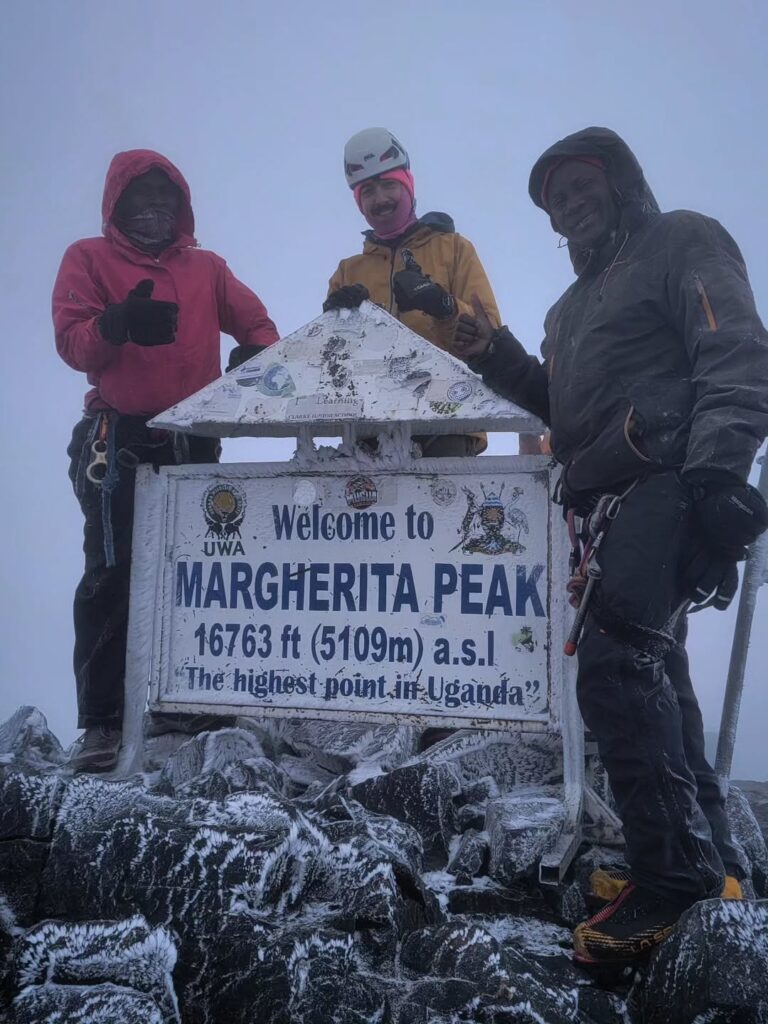
The field team
Experienced people, named responsibilities.
Our permanent team includes KPSGA-certified safari guides and mountain crew with Wilderness First Aid training. The exact guide, mountain lead, driver and support team depend on the route; we confirm the people, roles and current qualifications attached to your departure before travel.
What matters in the field is not a badge on its own. It is sound judgement, calm communication, local knowledge and the confidence to change a plan when weather, wildlife or road conditions require it.