
Kenya · Southern Safari Circuit
Amboseli
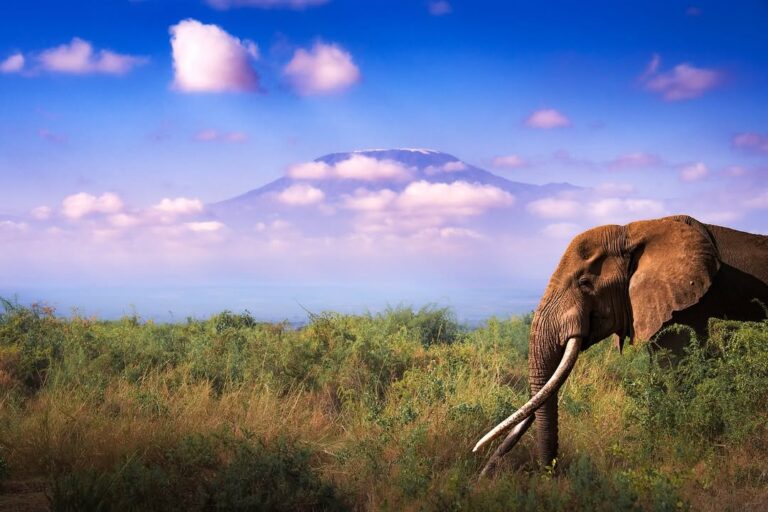
Elephants in the open. Marsh light. Kilimanjaro holding the southern sky.
This is safari country stripped to its essential elements: dust, water, cloud and the measured footfall of elephants moving towards the swamp.
A landscape in layers
Amboseli does not reveal itself all at once. Kilimanjaro can stand clear in the blue before sunrise, disappear behind its own weather by breakfast, then return as a pale presence in the evening. The wise approach is to give the landscape time.
Small in scale.
Immense in atmosphere.
There are places where you search for wildlife, and places where the whole landscape feels alive. Amboseli belongs to the second kind.
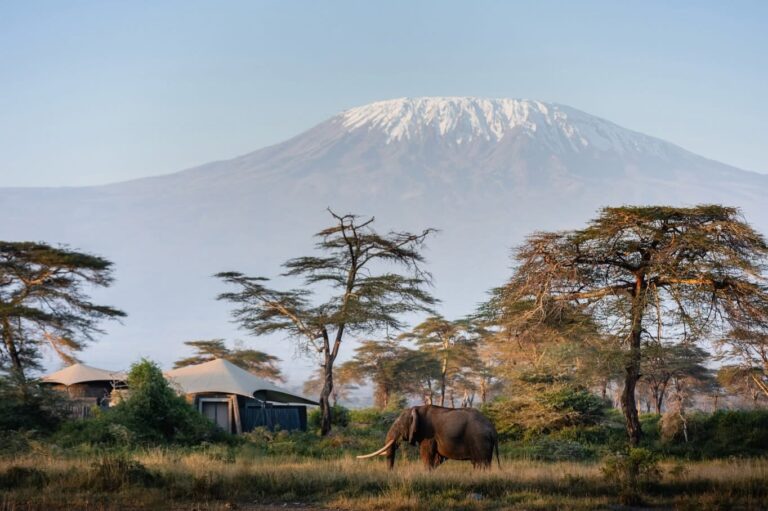
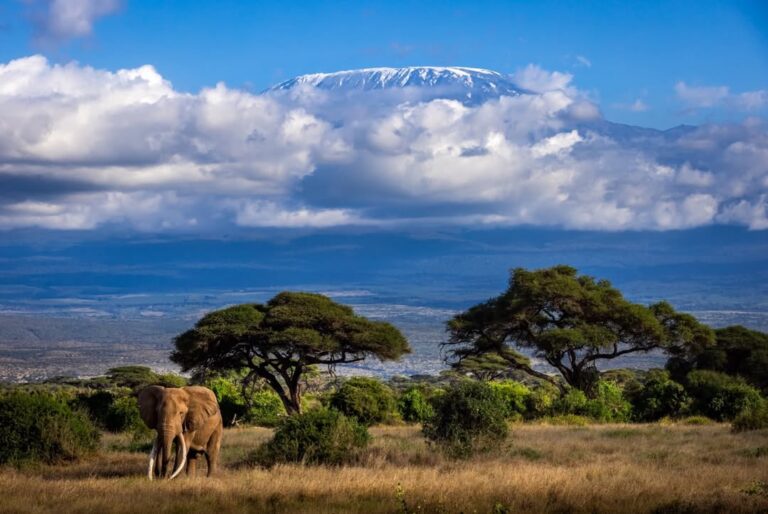
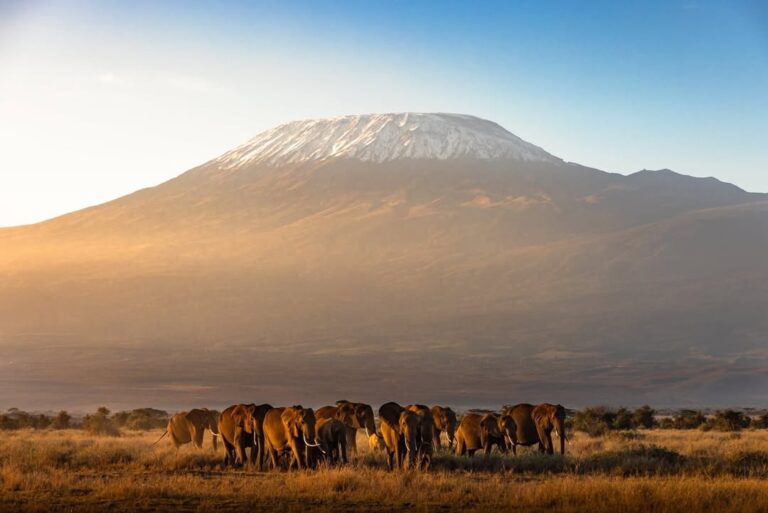
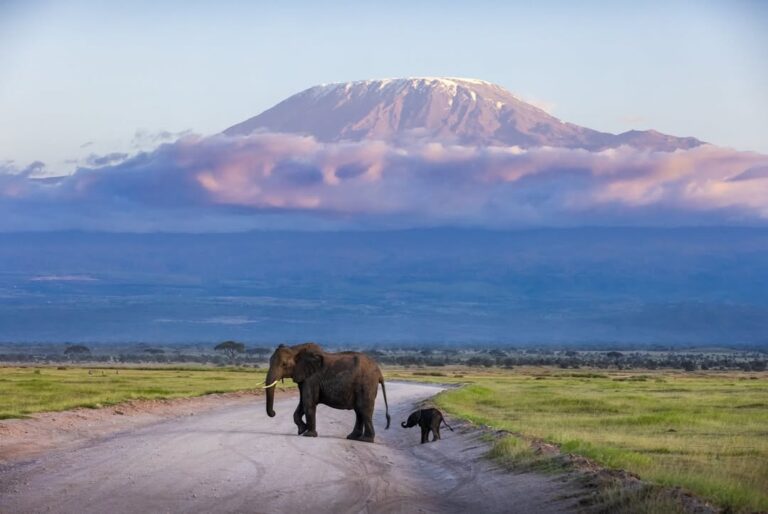
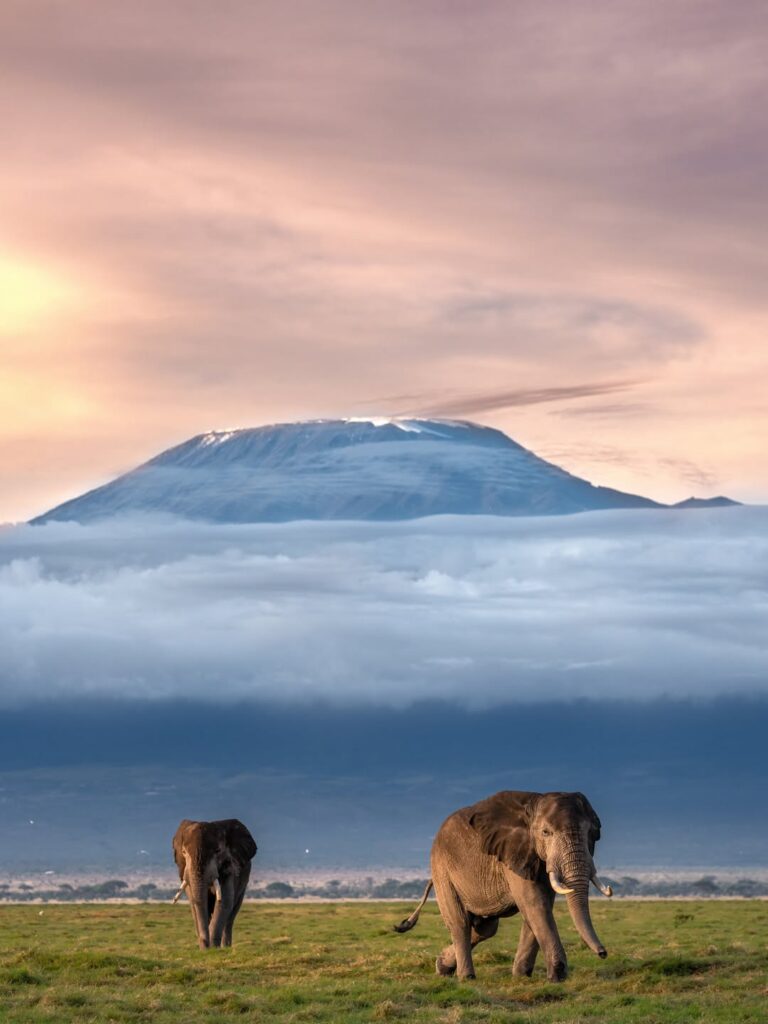
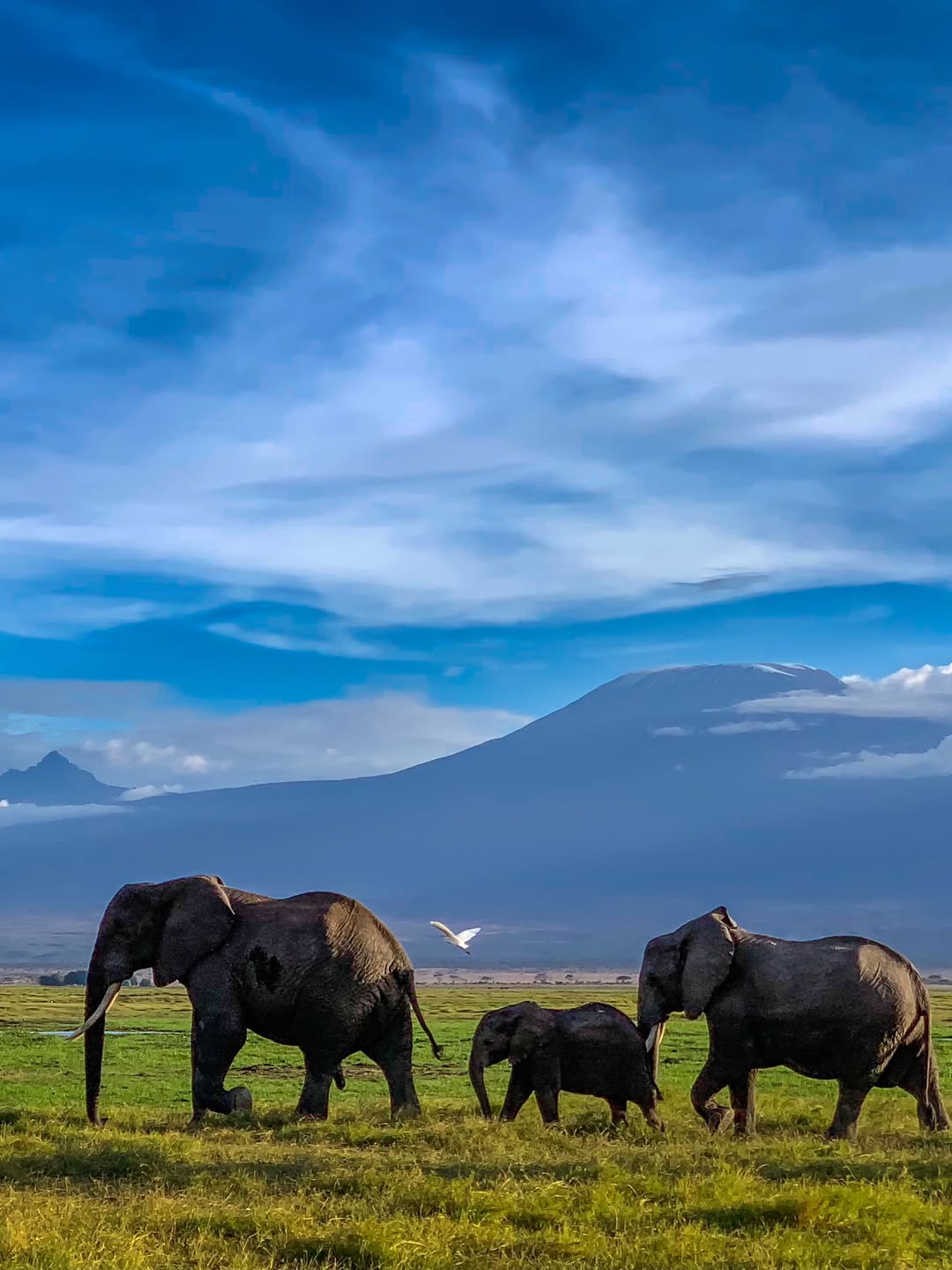
At first light the plains are washed in pewter and rose. The air still carries the night’s coolness; crowned cranes call from the wet ground and cattle bells may travel from the community lands beyond the boundary. Then an elephant family appears—quietly, almost impossibly—crossing the open country in single file. Behind them, on a clear morning, Kilimanjaro lifts above the cloud like weather made solid.
The mountain is across the border in Tanzania, but it governs the visual life of Amboseli. Below it lies a compressed mosaic of pale lakebed, short grass, acacia woodland and permanent green swamp. The changes can be abrupt. A drive begins in fine volcanic dust, passes zebra and gazelle on the open plain, and minutes later reaches elephants standing shoulder-deep in sedge, feeding so steadily that the marsh seems to move with them.
To call Amboseli merely “the place for elephant photographs with Kilimanjaro” is to miss its intelligence. The park is the protected heart of a much larger ecosystem. Water arrives underground. Wildlife moves beyond the lines on a map. Pastoral life and elephant routes overlap in the surrounding rangelands. A good safari here is not a race between sightings; it is an education in how animals, water, weather and people share a difficult, beautiful country.

Why Amboseli
A safari of contrast
Amboseli is built on contradiction: a semi-arid basin sustained by hidden water, great animals moving through seemingly empty space, an African mountain carrying equatorial ice.
Rain and mist falling on Kilimanjaro infiltrate its porous volcanic slopes and travel underground before resurfacing in the Amboseli basin. The result is one of the defining sights of the park: intensely green, spring-fed marsh lying against dry ochre earth. Enkongo Narok and the other wetlands are not scenic decoration. They are feeding grounds, refuges and meeting places for elephants, buffalo, hippo and a profusion of waterbirds.
The pale bed of Lake Amboseli tells the opposite story. For much of the year it is a broad, alkaline expanse where heat shimmers, dust devils walk and distant animals become silhouettes. After sufficient rain, water may spread over parts of the basin and change the movement of wildlife. Nothing here is fixed. The park you meet in February may feel markedly different by September.
That compactness is a gift to the observant traveller. Within one drive a guide can read tracks along a dusty verge, pause with a kori bustard on the plain, watch elephants feeding in sedge and finish beneath acacias where giraffe browse in the last light. Amboseli is not about collecting species at speed. It is about seeing the mechanics of a landscape clearly.
Do not judge the morning by whether Kilimanjaro is visible when you leave camp. Watch the cloud line, the wind and the direction of the light. Some of the finest mountain moments arrive unexpectedly, after everyone else has turned towards breakfast.
The elephant country
Individuals, families
and remembered routes
Amboseli is one of the rare safari landscapes where elephants can be watched as individuals rather than as anonymous members of a herd. Long-term field research, maintained across nearly five decades, has followed family histories, births, deaths, associations and movements. That continuity has changed what the world understands about elephant society—and it changes the quality of a sighting for anyone travelling with a knowledgeable guide.
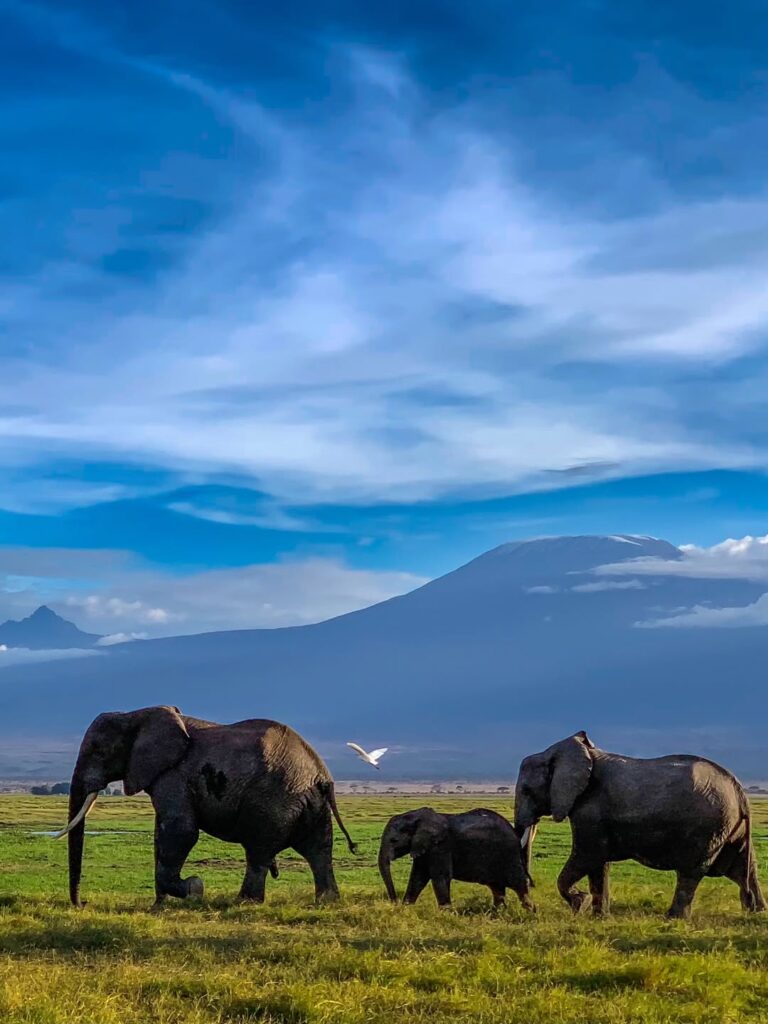
Look first at the shape of the group. Calves are usually protected in the centre. Mothers, sisters and aunts form the enduring family unit; mature bulls live a more independent life, sometimes alone and sometimes in loose male company. Ear notches, tusk shape, body size and behaviour help experienced observers distinguish one animal from another. The longer you remain, the less the scene resembles a procession and the more it becomes a network of relationships.
Watch the matriarch. She may stop with her head raised and trunk testing the air while the rest of the family closes around her. A sudden bunching of bodies can signal uncertainty; relaxed feeding, dusting and unhurried movement tell a different story. Calves practise with trunks they do not yet fully control. Adolescents test one another, flap their ears and stage mock charges. Low rumbles may be felt as much as heard when the vehicle is quiet.
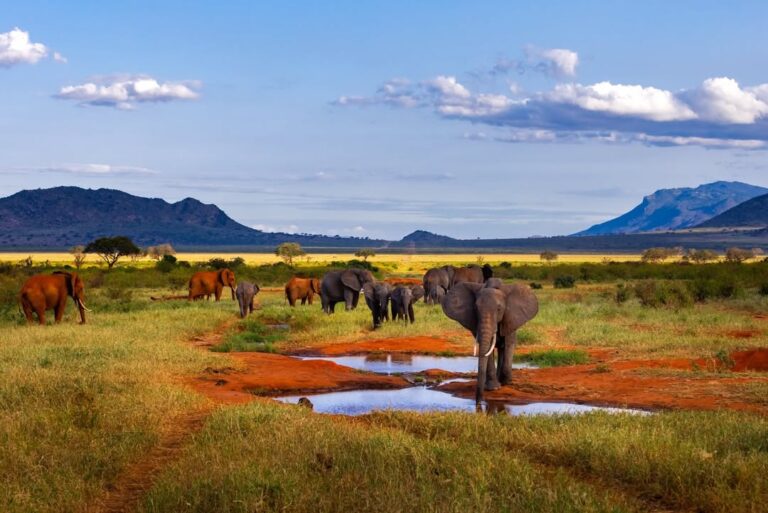
Families often leave drier feeding country for the swamps as the day warms. In the wetlands they pull sedges in rhythmic bundles, wash roots, drink and cool themselves. Bulls may stand deeper in the green, stained dark with water and mud, before crossing the open plain in late afternoon. These predictable needs create opportunities for excellent viewing, but they should never be used to box animals in.
A good guide reads direction before distance. If a family is moving towards the road, the vehicle is positioned once and the engine goes quiet. Space is left open. The elephants decide how close the encounter becomes. This is calmer for the animals and almost always more powerful for the traveller than joining a moving wall of vehicles.
Older matriarchs carry ecological knowledge accumulated through droughts, rains and changing routes. Watching a family follow one across the plain is therefore more than a beautiful scene; it is memory moving through a landscape. Amboseli teaches this better than almost anywhere, provided you stay long enough to watch rather than simply arrive, photograph and leave.
The elephants also make the clearest case for conservation beyond park borders. Their lives are not contained by the national park. Seasonal routes extend through community land and connect the wider Tsavo–Chyulu–Kilimanjaro landscape. Keeping those routes viable depends on coexistence, functioning rangelands and conservation that makes sense for the people who live here throughout the year.
A day on safari
Follow the light.
Follow the elephants.
Amboseli has a daily rhythm. The exact route should remain flexible, but the best guiding responds to temperature, light and the movement between dry feeding grounds and water.
The mountain hour
Leave with a warm layer and coffee in a flask. The air is cleanest, Kilimanjaro most likely to be clear and predators may still be active before the day brightens. On open ground, elephant families become dark, deliberate shapes against the mountain. This is the time to commit to a position rather than chase radio calls across the park.
Into the green
As heat gathers, elephants often make for the permanent swamps. Buffalo rest in the wet ground, hippo channels cut through papyrus and egrets attend the feeding herds. Midday is not dead time here. With shade, water and patient observation it can reveal close behaviour that a hurried dawn circuit misses.
Dust and long shadows
The light turns warmer and animals begin to move away from water. Dust catches behind feet and trunks; acacias throw long shadows over the plain. A guide may choose an exit route slowly, reading which families are travelling into open country and where the mountain might break through its evening cloud.
Amboseli rewards waiting, and waiting requires agreement about what matters. In a private vehicle you can remain with one elephant family, spend time on birds, stop for a distant mountain composition or return to camp when children have had enough. The safari follows your interests rather than a shared timetable.


Beyond the elephant
A complete wetland-and-plains safari
Elephants may command the horizon, but the pleasure of Amboseli lies in learning to see the life around them.
On the open flats, zebra and wildebeest graze with Thomson’s and Grant’s gazelles; Maasai giraffe move between woodland islands and acacia margins. Lion use cover and the cooler hours, while cheetah favour visibility and space. Spotted hyena are important, intelligent hunters as well as scavengers. None of these animals appears to a timetable, and a guide who oversells certainty is not doing the landscape justice.
Read the open country
Zebra, wildebeest, giraffe, gazelles and warthog use the grasslands and woodland margins. Scan termite mounds for a cheetah’s elevated silhouette, shade for lion and the behaviour of prey animals for news your eyes have not yet found.
Water, refuge, abundance
Hippo channels, wallowing buffalo and feeding elephants animate the spring-fed wetlands. Herons and egrets work the edges; jacanas pick over floating vegetation. The green is so vivid against the dust that it can appear almost lit from within.
A serious birding park
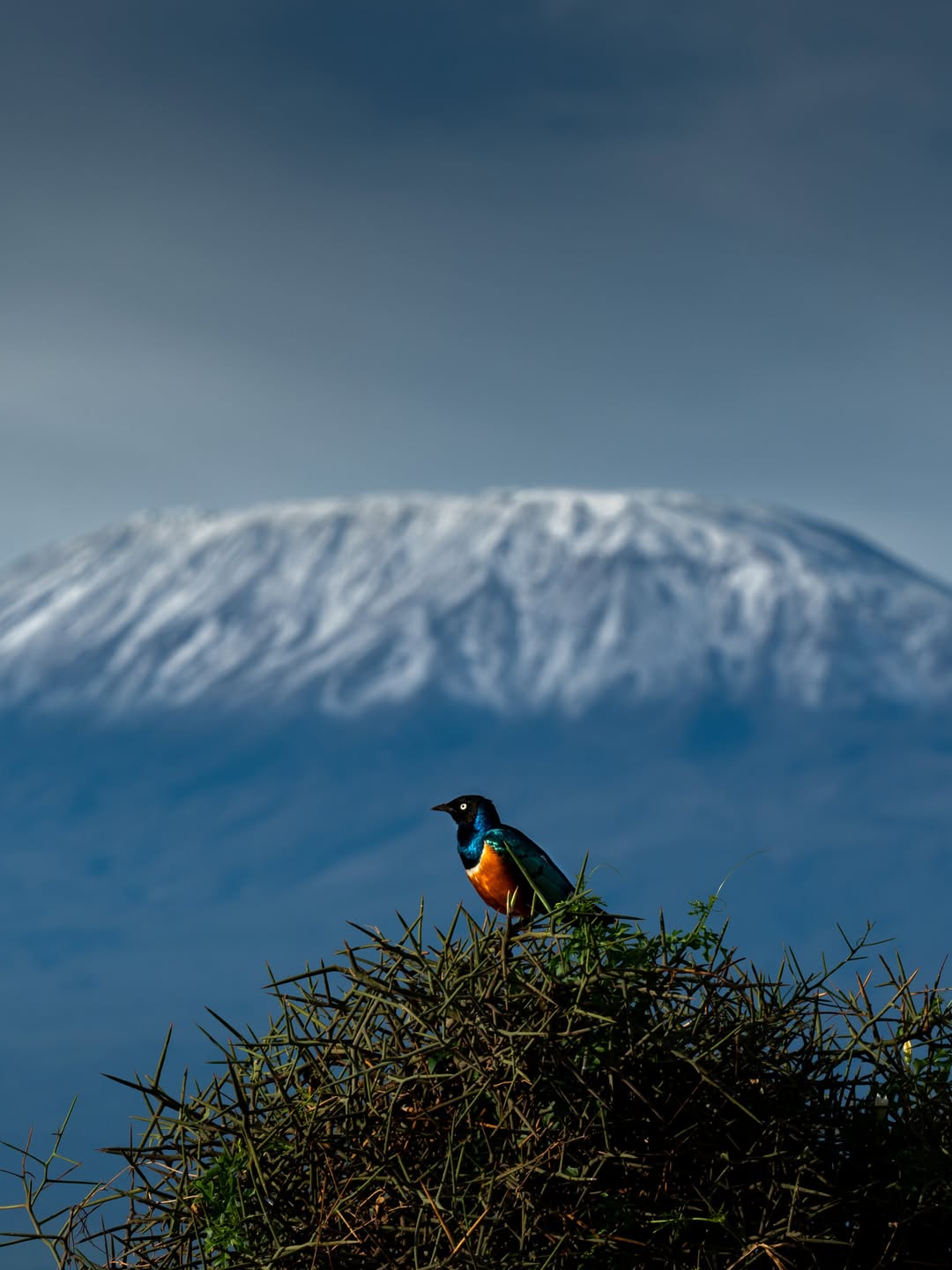
More than 400 species have been recorded. Look for raptors in the thermals, bustards and secretarybirds on open ground, waterbirds around the swamps, and flashes of superb starling blue in the thorn country.
What your guide is watching
The obvious animal is not always the whole sighting. Oxpeckers lifting from buffalo, impala staring in one direction, zebra bunching tightly or elephants pausing with trunks raised can reveal a change before it is visible. Good guiding means reading these small signals, explaining them without drowning the moment in talk, and knowing when silence is the better interpretation.
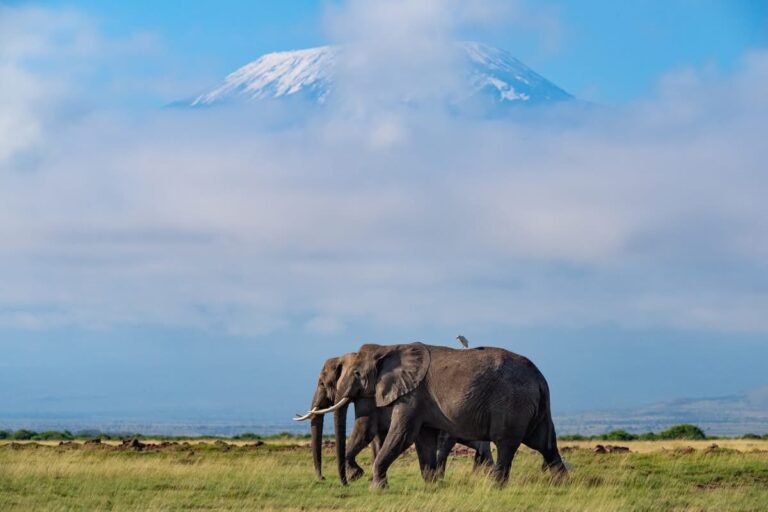
First comes the dust. Then the green of the swamp. Then an elephant lifts its trunk—and, if the cloud allows, Africa’s highest mountain stands behind it all.
Amboseli, read slowly
Seasons and timing
When to visit Amboseli
There is no single perfect month. The best time depends on whether your priority is concentrated wildlife, green landscapes, birds, dramatic skies or quieter travel.
Dry-season definition
As surface water diminishes, the permanent marshes become increasingly important. Shorter grass opens sightlines; dust hangs in backlight and elephant movement between feeding areas and water can be particularly rewarding. This is a popular period, so an early start, a patient guide and private vehicle help you avoid the busiest rhythm.
Green, weather-filled country
Seasonal rain can transform the basin quickly. Fresh grass softens the plains, migrant birds add variety and the sky builds in dramatic layers. Wildlife may be more dispersed and roads variable, but colour, cloud and new life give photographers and repeat visitors a richer, less predictable Amboseli.
The mountain makes no promise
Kilimanjaro often shows most clearly around dawn and may reappear late in the day, yet it keeps its own counsel. Cloud is not a failed safari. It brings scale, changing light and the suspense that makes a sudden clear summit feel earned. We build several viewing windows into the stay rather than sell a guarantee nature cannot keep.
Photography in Amboseli
Light, distance
and restraint
The classic Amboseli frame is not found by racing towards the nearest elephant. It is built from distance, direction and patience.
A guide first considers where the family is travelling, where the legal road allows the vehicle to wait, what the wind is doing to the dust and whether the mountain will sit cleanly in the composition. Then the engine is switched off. When the judgement is right, the elephants walk into the frame on their own terms.
A private vehicle allows you to commit to one subject and wait through changing light. Beanbags are generally more useful than tripods inside a vehicle. A longer lens protects respectful animal distance and isolates behaviour; a second body or wider zoom preserves the scale of herd, plain and mountain. Bring more memory cards than you expect and a simple way to keep dust away from lenses and sensors.
Backlight turns dust into gold and makes the ragged hairs along an elephant’s back glow. Overcast conditions reveal skin texture and subtle family interaction. A low sun creates long shadows across the lakebed; wet-season cloud brings depth and drama. Off-road driving is not permitted in the national park, so the craft lies in anticipation—not intrusion.
Leave room around an elephant. Amboseli is one of the great places for environmental wildlife photography: animal, habitat and weather in a single frame. The picture should show where the elephant lives, not only that you were close to it.

Planning your safari
Road, air and the right pace
Let Kenya unfold
The park is about 204 kilometres from Nairobi via Emali and Iremito Gate. In ordinary conditions the drive commonly takes four to five hours, but Nairobi traffic, roadworks and stops decide the real time. The journey is valuable when you want to understand the change from highland city to southern rangeland, and it connects naturally onwards to Tsavo West.
Arrive with the day intact
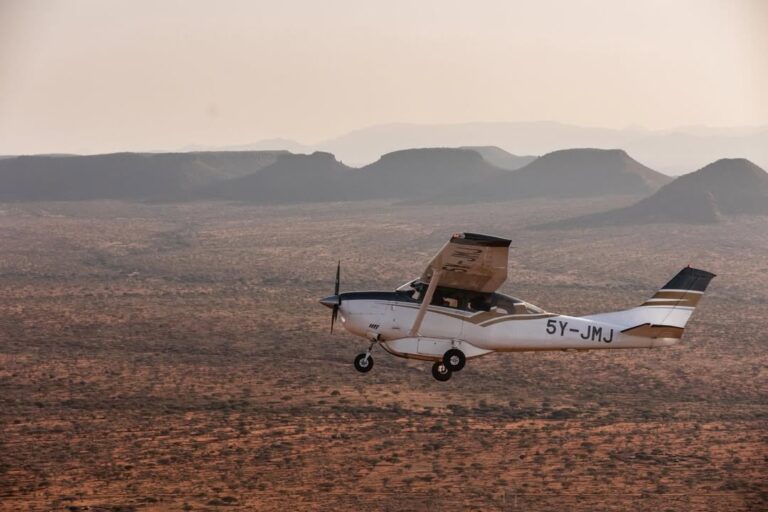
Scheduled bush flights operate from Wilson Airport, with onward safari connections possible on selected services. Flying protects time on a short itinerary and can make an Amboseli–Mara combination far more graceful. Timetables and routings change, so we check the service that fits your dates rather than design around an old schedule.
Two nights is an introduction
One night gives you an arrival drive and a hurried morning. Two nights create a proper full day; three allow the park to breathe. With repeated dawn and evening windows, cloud is less of an anxiety, the guide can wait with a family and you begin to recognise patterns rather than collecting isolated sightings.
Where to stay
Choose for position,
not only for the room
In Amboseli, the location of your bed changes the character of your safari as much as the thread count.
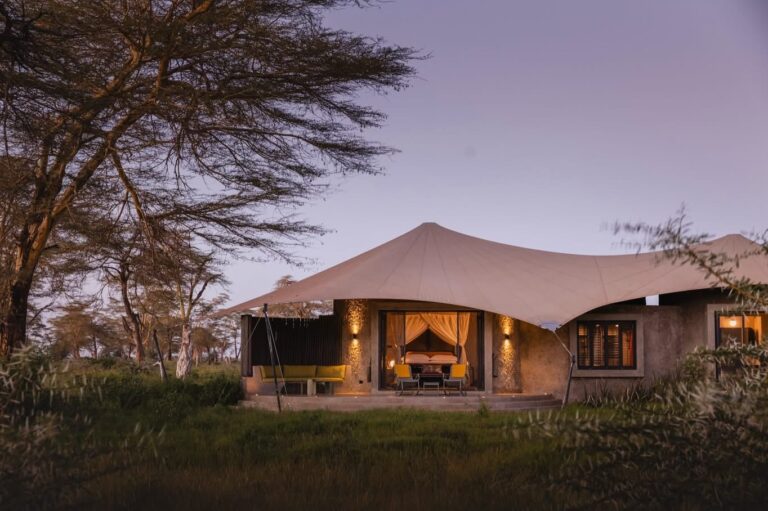
Staying inside the national park can shorten the distance between breakfast and wildlife and helps with an early start on public roads. Camps in the surrounding ecosystem may offer more privacy, a stronger sense of space and activities shaped by their particular conservancy or community setting. A famous Kilimanjaro view is compelling, but it should be weighed alongside guiding quality, access time, vehicle policy, food, atmosphere and the ability to respond when the weather changes.
Lodges with a mountain outlook
Generous facilities, established gardens and easy downtime can suit families, first-time safari travellers and anyone who wants comfort between long drives.
Intimate tented camps
Fewer rooms, attentive hosting and the sound of the landscape beyond canvas create a more immediate safari atmosphere.
We recommend a small, current shortlist after understanding your budget, preferred style, party and route. We also ask practical questions: Do you need interconnecting family space? Is a pool important? Would you trade a larger room for fewer vehicles? Are steps or long walks difficult? The right answer is personal, and properties are never presented as interchangeable.
The wider ecosystem
Community, corridors and conservation
The national park protects crucial habitat, but it is not a self-contained island. Elephants, zebra, wildebeest and predators move through a wider landscape of group ranches, conservancies and pastoral land reaching towards Tsavo, the Chyulu Hills and Kilimanjaro. What happens outside the gate can therefore matter as much as what happens beside a famous swamp.
Maasai communities are not a colourful backdrop to wildlife. They are landholders, livestock keepers, rangers, guides, conservation leaders, entrepreneurs, parents and young people deciding what this landscape will become. Pastoralism has shaped these rangelands over generations, and the future of migration routes depends on conservation working alongside viable human lives.
The pressures are real: subdivision, fencing, changing land use, drought and competition around water can narrow the space shared by people, livestock and wildlife. Locally led conservancies and ranger programmes help keep corridors open, respond to conflict and create value from land remaining connected. This is long, difficult work, not a slogan placed beneath a photograph.
Responsible cultural experiences begin with a genuine relationship. They should be hosted by known partners, shaped around consent, paid fairly and described honestly. We prefer conversation and context to a performance staged for a camera. If a community visit suits your journey, we explain who is hosting, what the exchange involves and how to approach photography with respect.
A good guide connects these realities to what you see on a drive: an elephant trail leaving the park, livestock watering beyond the boundary, a ranger post or a dispersal area that looks empty but is ecologically essential. Amboseli becomes far more interesting when the gate is understood as an administrative line, not the edge of the ecosystem.
Extend the journey
Natural combinations
Amboseli + Tsavo West
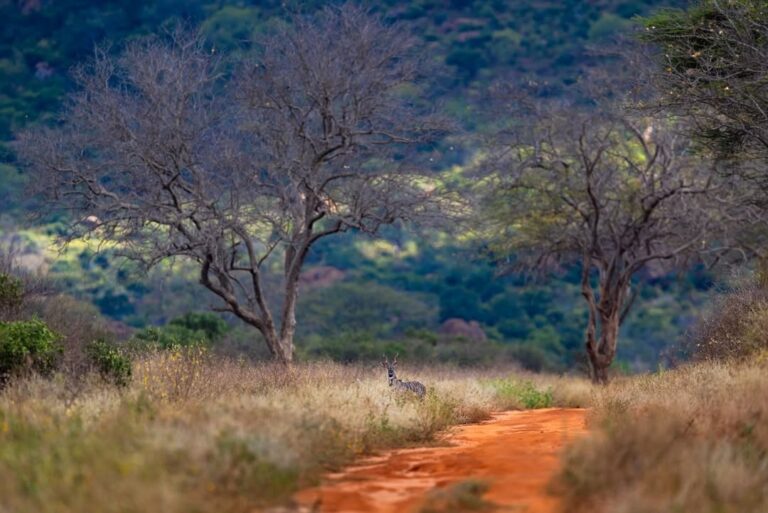
Continue by road into volcanic country, lava flows, springs and a wilder, more wooded landscape. A strong four- to six-night southern circuit.
Amboseli + Maasai Mara
Pair elephants and Kilimanjaro with the Mara’s rolling grasslands and predator-rich plains. Flying via Nairobi usually protects safari time.
Amboseli + Kenya coast
Move from dawn game drives to the Indian Ocean. Tsavo can create a graceful overland bridge; flying is best when time is limited.
Good to know
Amboseli safari FAQ
How many nights do I need in Amboseli?
Two nights is a sensible minimum; three gives a more relaxed full day and several chances for clear Kilimanjaro views. One night can work on a tight road itinerary but feels hurried.
Is Kilimanjaro inside Amboseli National Park?
No. The mountain stands across the border in Tanzania, but its immense northern face dominates many Amboseli views and its groundwater helps sustain the ecosystem’s springs and swamps.
Can you guarantee elephants in front of Kilimanjaro?
No ethical operator can guarantee a wild animal, cloud-free summit and exact alignment. A skilled guide, private vehicle and enough time greatly improve the opportunity without disturbing wildlife.
Is driving off-road allowed?
No. Visitors should remain on designated roads, observe the park speed limit and keep a respectful viewing distance. Good guides work with light, animal movement and legal road position.
Is Amboseli suitable for families?
Yes. Short travel distances within the park, highly visible wildlife and engaging elephant behaviour can work well for children. We tailor drive length, accommodation and transfer method to the family.
Should I fly or drive from Nairobi?
Drive if you enjoy seeing the country unfold, want to continue to Tsavo or are balancing cost. Fly if time is limited or Amboseli is being combined with distant safari areas. We compare the full route, not one transfer in isolation.
Are park fees included?
Our private proposals state exactly what is included. Park fees and government terms can change, so we confirm current charges for your dates rather than publishing a figure that may become inaccurate.
What should I pack?
Bring neutral layers for cool early mornings, sun protection, a hat, closed shoes, binoculars and camera protection from dust. Soft-sided luggage is usually required for light-aircraft itineraries.
Begin with a conversation
Design your Amboseli safari
Tell us when you hope to travel, who is coming and what matters most—photography, family time, a particular lodge style or a wider Kenya journey. We will shape the route around you.