
Amboseli field guide
Planning Your Amboseli Safari
Plan an Amboseli safari with clear advice on road and air access, private vehicles, game-drive rhythm, packing, families and the right number of nights.
Make the route serve the safari
A good Amboseli itinerary protects the first and last light, leaves room for weather and avoids using every day as a transfer day.
Start with time, not a checklist
Amboseli is geographically compact, but a rushed itinerary can still miss its character.
One night usually means arriving for an afternoon drive, sleeping and leaving after a short morning. It can work when time is genuinely limited, but it should be sold honestly. Two nights create the classic rhythm: arrival safari, a full day and a final morning. Three nights are better for photographers, families wanting shorter drives, repeat viewing of elephant groups and several attempts at a clear Kilimanjaro.
The wider Kenya route matters. Driving from Nairobi suits travellers who want to see the country change and continue towards Tsavo. Flying saves time on a short stay or when connecting through Wilson Airport to the Maasai Mara and other regions. A route that looks shorter on a map may be tiring when traffic, gates, road surfaces and air connections are considered together.
We design from the whole journey backwards: international arrival, recovery time, safari pace, luggage, the ages and interests of travellers, and what comes after Amboseli.
Road or air
Two different arrivals
Approximately four to five hours
KWS gives the road distance via Emali and Iremito Gate as about 204 kilometres. Nairobi traffic, roadworks and stops determine the actual transfer. A private vehicle keeps luggage simple and can continue directly to Tsavo West.
Protect safari time
Scheduled bush flights can make a short Amboseli stay elegant and are useful when combining distant parks. Timetables change seasonally and some onward journeys connect through Wilson rather than operating directly.
Use each method well
Fly one sector and drive another when it improves the whole itinerary—for example flying into Amboseli before continuing overland through Tsavo towards the coast. We confirm real services for the travel dates.
The daily rhythm
When game drives make sense
Dawn and late afternoon are important, but Amboseli’s wetlands can keep midday interesting.
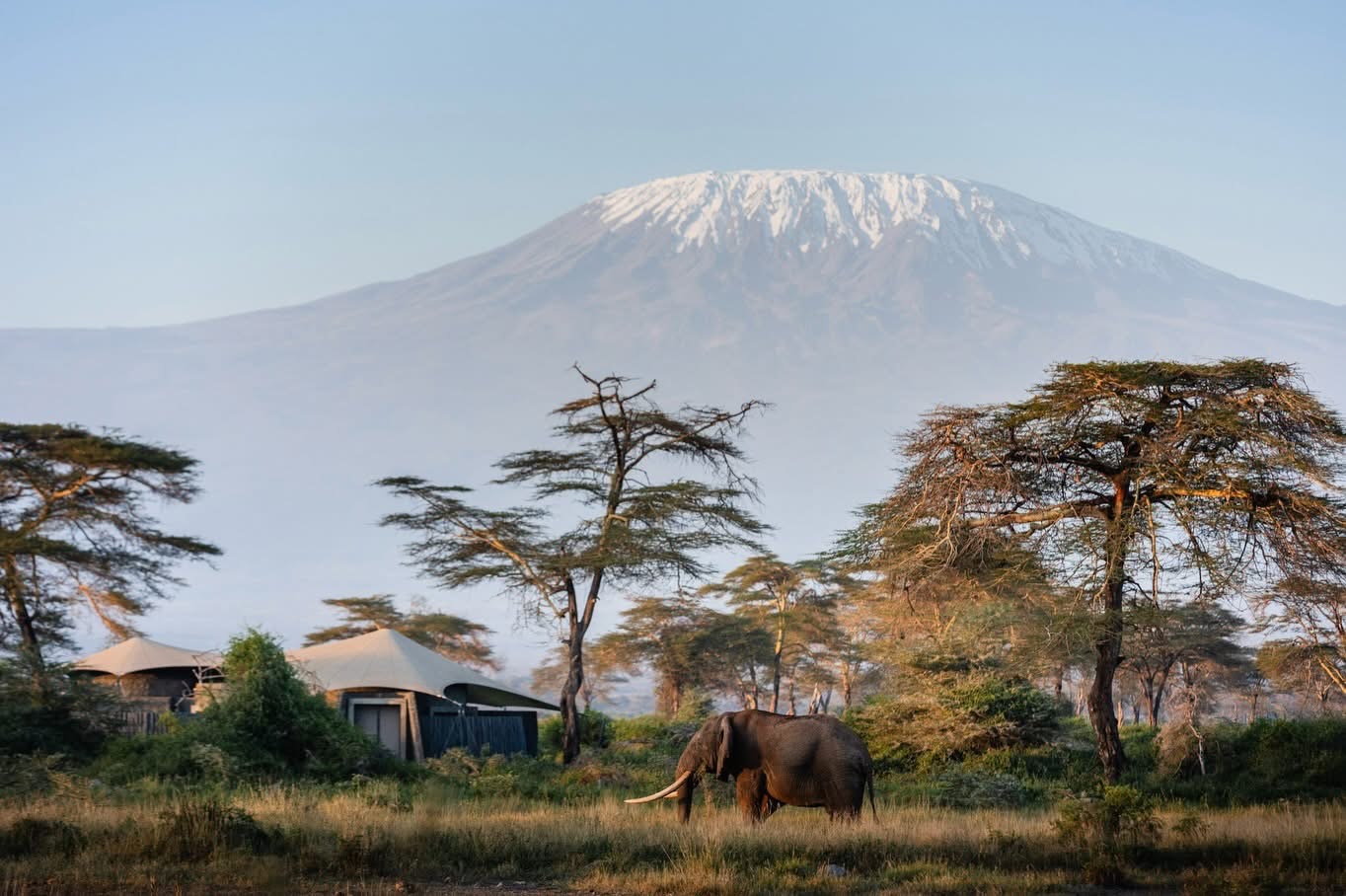
Leave before sunrise when possible. It is cooler, Kilimanjaro is often clearer and predators may still be active. Carry a layer; open vehicles can feel surprisingly cold before the sun reaches the basin.
As the day warms, elephants often move towards spring-fed swamps. A full-day drive with a picnic can work well for committed wildlife watchers, but it should not become a test of endurance. A lodge break, pool or quiet lunch may produce a better afternoon for families and first-time guests.
Late afternoon brings directional light, dust and movement away from water. Park gates operate on set hours, so the guide plans the final sighting with enough time to exit legally and without speeding.
Private use allows the day to respond to you. Children can return early, photographers can wait, birders can stop and couples can remain in silence rather than following a shared group timetable.
Packing well
Layers, dust and light-aircraft limits
Pack neutral, breathable clothing and a warm layer for dawn. A hat, high-factor sun protection, sunglasses and closed shoes are useful year-round. Dust is part of Amboseli: keep electronics in closable bags, carry a lens cloth and avoid bringing clothing that requires perfect conditions.
Binoculars transform the experience, even when elephants are close. Bring spare batteries, charging adaptors and more camera storage than expected. Lodges vary in power arrangements, so tell us if medical equipment or constant charging is essential.
Light-aircraft safaris generally require soft-sided luggage and apply weight limits that differ by operator and ticket. We confirm the current allowance for your flights. Hard cases and large wheeled suitcases can create avoidable problems.
Carry essential medication in hand luggage and share dietary, mobility or health needs before booking. Amboseli is accessible to many travellers when the vehicle, room location and schedule are planned deliberately.
Families and combinations
Plan for people as carefully as parks
Shorter, sharper drives
Highly visible elephants can be captivating for children. Choose family-suitable accommodation, private vehicle use and flexible meals. Alternate active viewing with rest rather than forcing every drive.
The natural road continuation
Volcanic terrain, springs and wooded country create real contrast. The combination works overland without returning to Nairobi and can continue towards the coast.
Use air intelligently
Amboseli and the Mara offer a powerful contrast, but the practical air routing may connect through Wilson. We describe the transport accurately and protect enough nights in each ecosystem.
Tell us arrival flight details, preferred pace, room configuration, budget range, photographic equipment and any must-do combination. We can then recommend whether to drive, fly or mix both.
Continue exploring
Build a complete understanding of Amboseli
Plan with a Kenya specialist
Turn field knowledge into a better safari
Tell us what matters to you and we will shape the pace, guiding, accommodation and route around your dates and travelling party.