Compare all seven Mount Kilimanjaro routes, understand acclimatisation and summit logistics, and plan a properly paced climb with WAE’s Moshi-based team.
January–early March and June–October, while accepting mountain weather can change in any month
Recommended stay
7–10 mountain days, plus at least one night before and after the climb
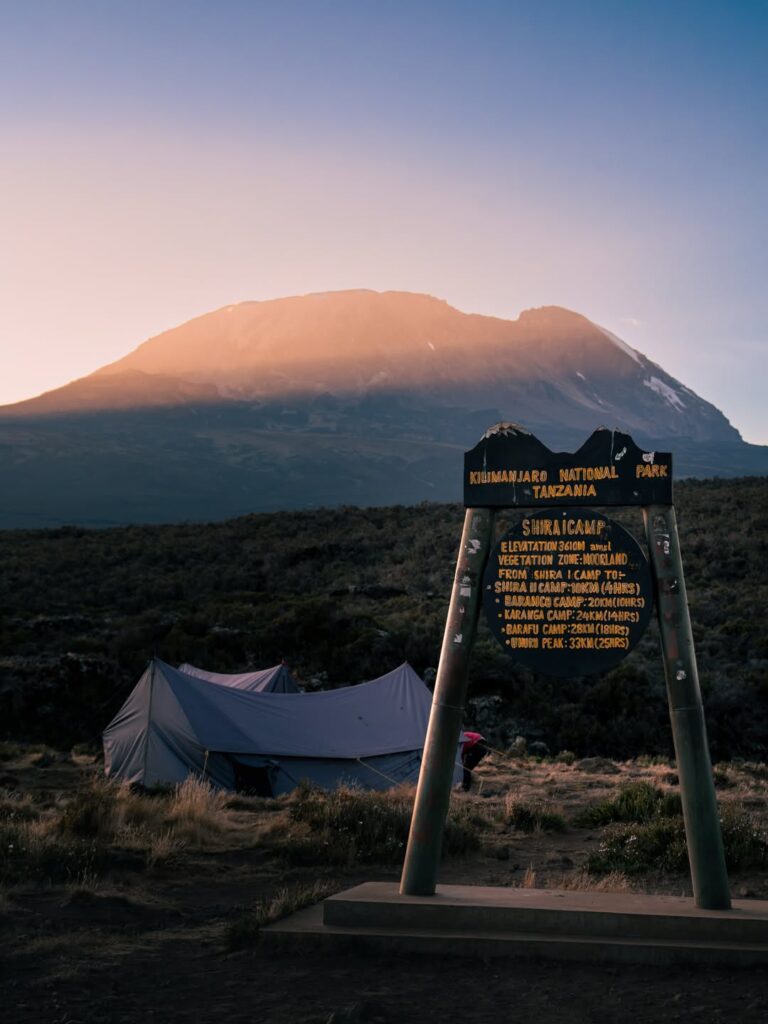
Kilimanjaro reveals itself gradually: forest, plateau, high camp and summit.
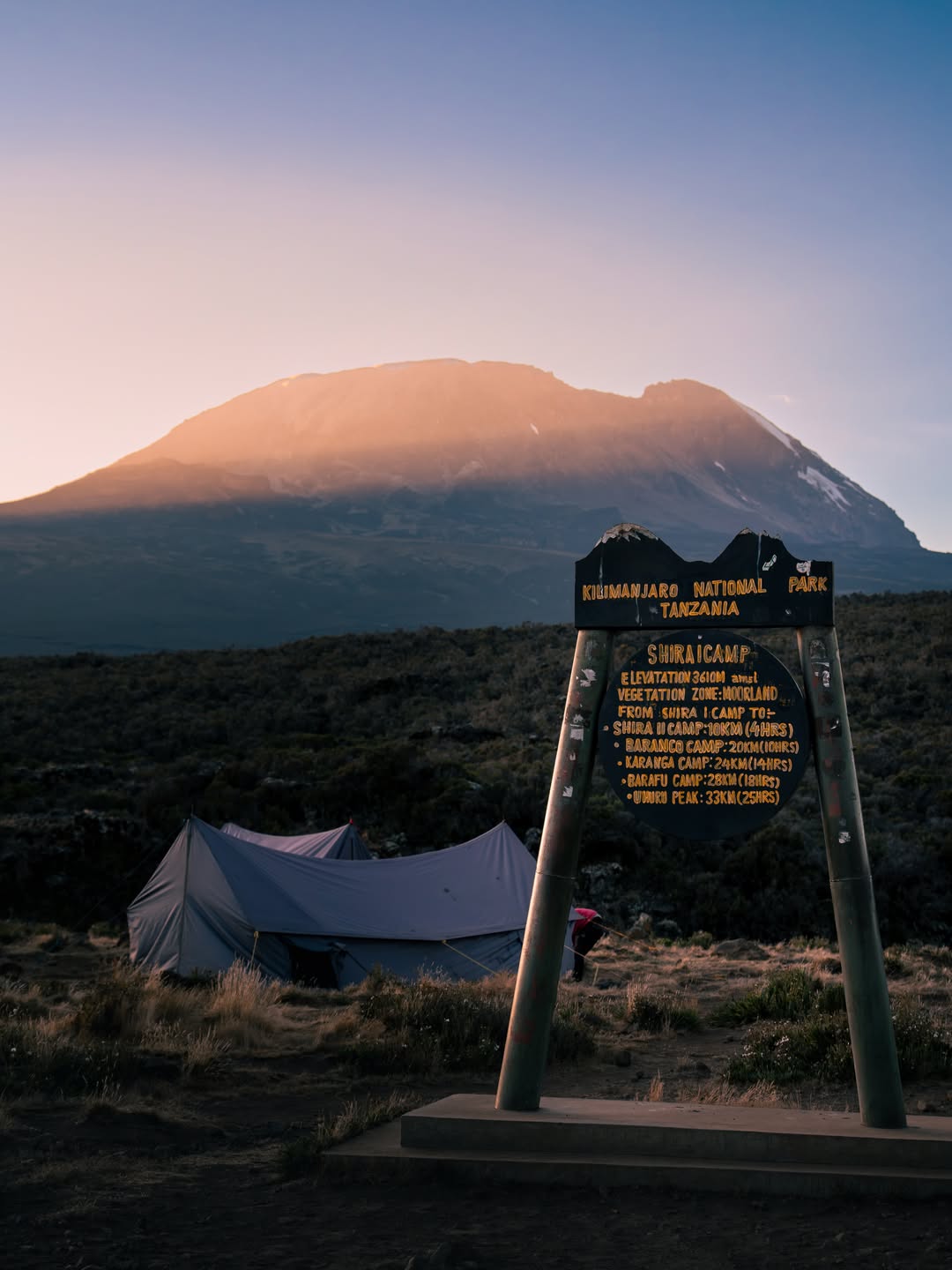
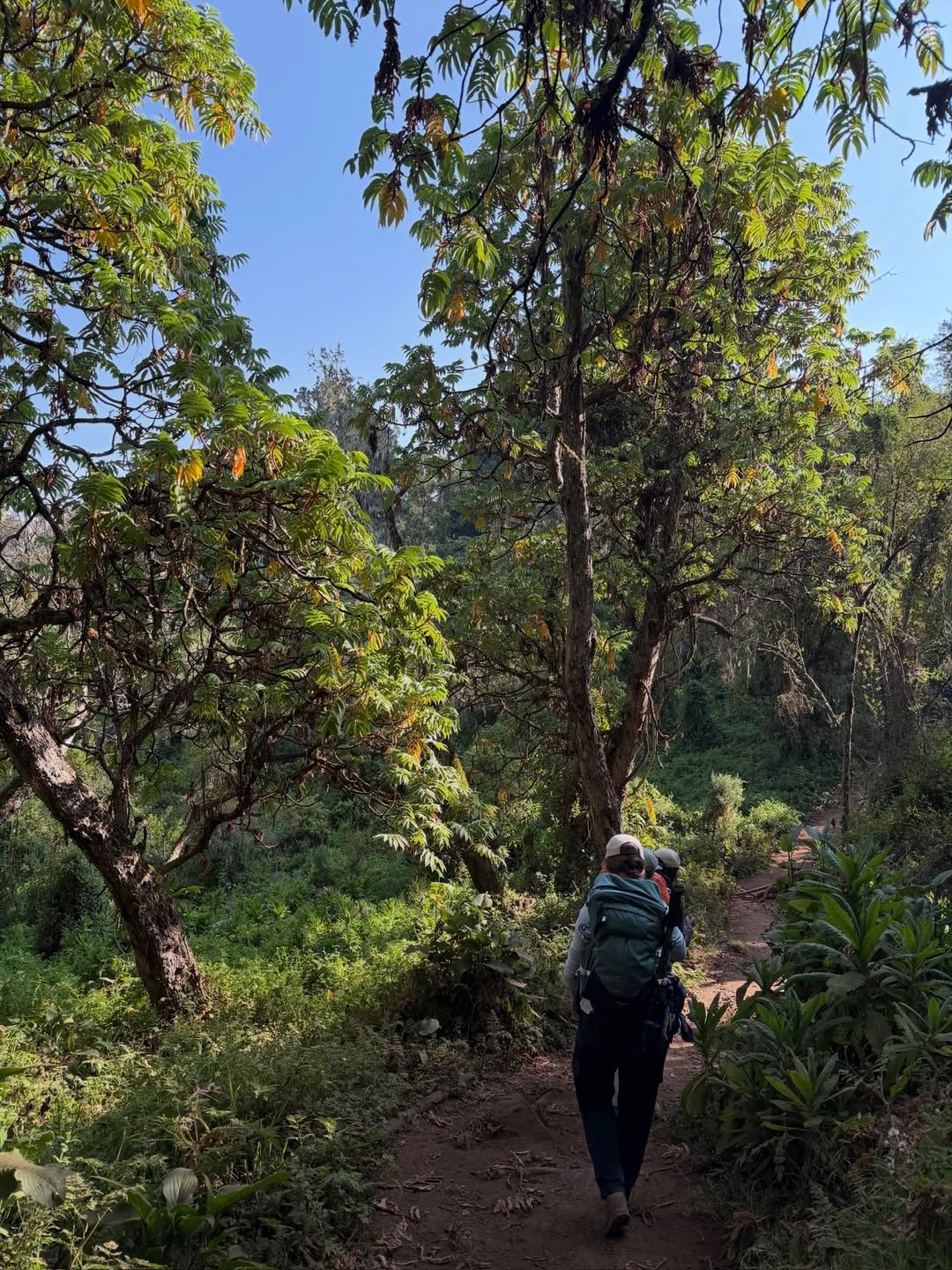
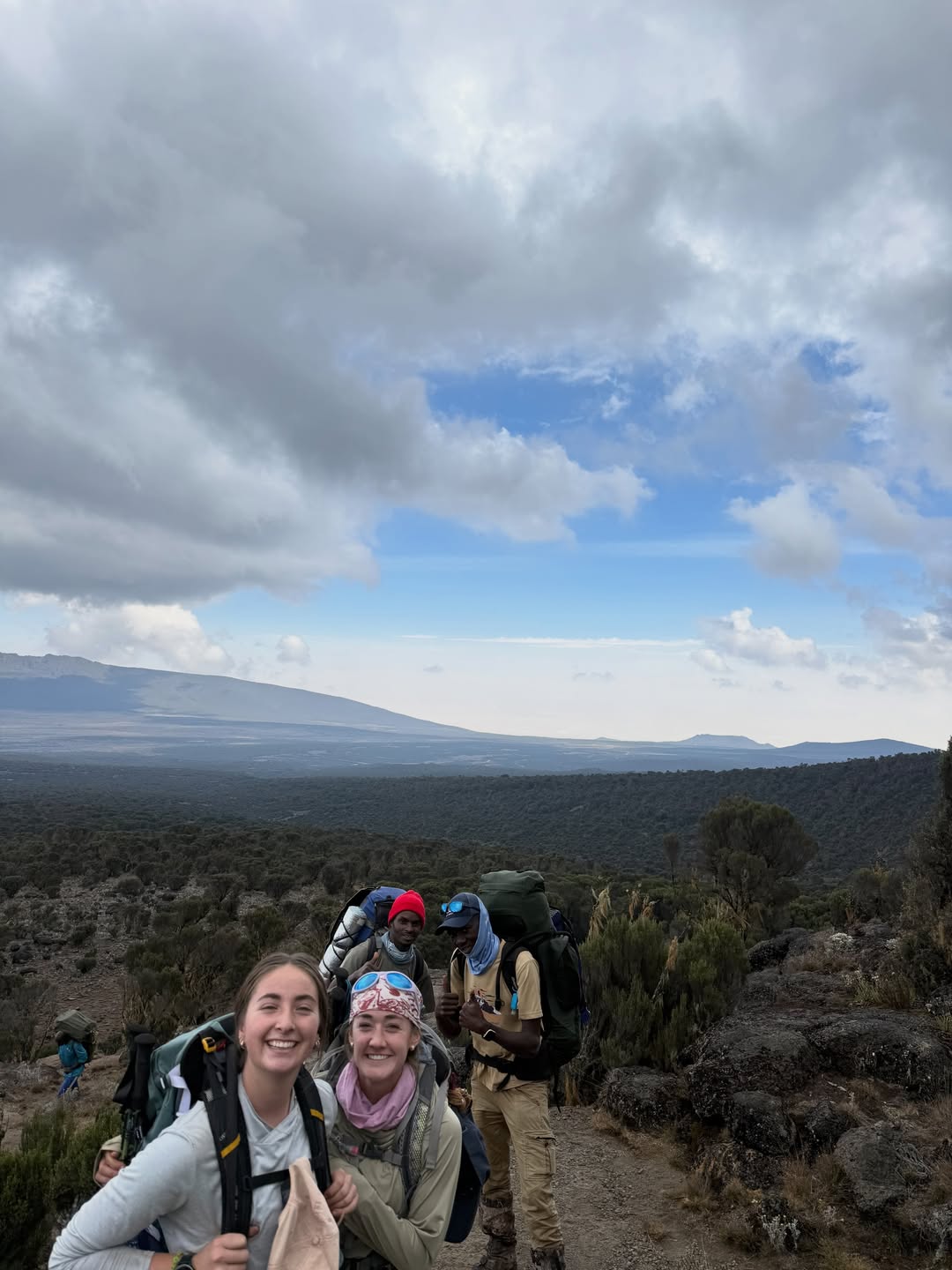
Mount Kilimanjaro is not a single cone rising neatly from the plains. It is a broad volcanic massif built around three centres: Shira, now an eroded plateau in the west; Mawenzi, a broken and technically serious peak in the east; and Kibo, the youngest and highest cone, carrying Uhuru Peak at 5,895 metres. From Moshi the mountain can disappear into cloud for most of a day, then return in the last light with its upper slopes suspended above farms and forest. On the trail it reveals itself slowly: humid montane forest, heather and giant groundsels, open moorland, wind-scoured alpine desert and, finally, the cold volcanic rim.
The standard Kilimanjaro routes are high-altitude treks rather than technical climbs. They still require consecutive days on foot, a deliberately slow pace, reliable camp systems and early communication about altitude symptoms. Summit night is long, dark and cold. Good acclimatisation, health monitoring, fair crew standards and sensible pacing matter more than bravado.
Plan the Lemosho Route with a clear view of its western approach, acclimatisation days, shared southern circuit, summit night and practical trade-offs.
Plan the Marangu Route with an honest view of its hut system, common schedule, acclimatisation limits, summit night and suitability for different climbers.
Kibo is the summit cone. Climbers on the southern and western routes usually reach the crater rim at Stella Point before continuing to Uhuru Peak. Marangu and Rongai climbers generally approach the rim through Gilman’s Point. Both ways still require the final traverse around the rim to the summit. Mawenzi is visually dramatic and substantially lower than Kibo, but its shattered rock and technical character put its summit outside an ordinary Kilimanjaro trekking programme. Shira’s collapsed caldera forms the high western plateau crossed by the Lemosho and Shira approaches.
Vegetation changes rapidly with height. Cultivated foothills give way to protected forest where the trail can be wet, root-bound and enclosed. Above the trees, heather and moorland open the views and introduce the first large daily temperature swings. Giant groundsels and lobelias survive in sheltered drainage lines. Higher still, plant cover thins across the alpine desert. Near the crater the landscape becomes mineral: scree, ash, boulders, ice and hard light. These transitions are one of the mountain’s great rewards, and a route should allow enough time to notice them.
How the seven Kilimanjaro routes differ
The seven principal ascent routes differ in much more than the name on an itinerary. They begin at different elevations and gates, join other trails at different points, use huts or tents, and offer very different opportunities to gain height gradually. The correct question is not “Which route is easiest?” but “Which pattern of height gain, terrain, camp life and trail traffic gives this climber the best margin?”
Machame earns its reputation through variety. The trail climbs from dense forest to open moorland, crosses the Shira Plateau, reaches the Lava Tower area and then drops to Barranco. That descent is valuable: the body has been exposed to a higher elevation before sleeping lower. The traverse beneath Kibo through Karanga gives the route a satisfying mountain logic before Barafu and the summit attempt. Its weakness is popularity. Camps can be busy, and six-day schedules remove the additional Karanga night that makes the seven-day pattern much more defensible.
Lemosho begins further west, usually with a quieter forest approach before reaching Shira. Its length and shape create room for gradual adaptation, especially on an eight-day mountain schedule. Once it joins the southern circuit it shares the Lava Tower, Barranco, Karanga and Barafu sequence with Machame, so it should not be marketed as lonely throughout. Its strength is the western opening and the ability to preserve acclimatisation time before the busier convergence.
The Northern Circuit turns away after the western plateau and wraps around Kibo’s northern flank. It provides a rare sense of travelling around the mountain rather than simply aiming at its summit. The traverse is longer, camps are usually quieter and the accumulated days at height suit climbers who value margin over speed. It costs more because it requires additional park days, food, crew time and logistics. That is a real operational difference, not a premium label.
Rongai approaches from the drier northern side and begins near the Kenyan border. The forest is less enclosed than on the southern slopes, and views towards Amboseli and the plains can be striking when weather permits. The route moves towards Mawenzi before crossing the saddle to Kibo Hut. It usually descends through the Marangu corridor, so climbers experience two sides of the mountain. Rongai can be a useful choice during wetter periods, although no side of Kilimanjaro is rainproof.
Marangu is the only standard route using a chain of huts rather than tents. This changes camp life but does not make the altitude easier. The broad trail and shared sleeping buildings suit some travellers; others prefer the privacy and rhythm of a tented expedition. The familiar five-day version is compressed. A six-day plan with an acclimatisation day around Horombo is more responsible, and additional pre-climb acclimatisation elsewhere may still be appropriate.
Shira reaches the plateau by vehicle and begins walking at a relatively high elevation. It shares much of Lemosho’s later scenery but loses the gentler forest approach. For a climber already well acclimatised, the high start can be practical. For someone arriving from sea level, it asks the body to adapt too quickly. It should be chosen for a specific reason, not because the vehicle approach sounds easier.
Umbwe climbs sharply through forest and along a steep ridge towards Barranco. The line is direct and visually powerful, but the early altitude gain gives little time to respond if acclimatisation is poor. Some itineraries extend the route after Barranco, yet the defining opening remains aggressive. Wilderness Alternative treats Umbwe as a specialist choice for strong, experienced high-altitude trekkers with an appropriate plan, not as a badge of toughness for a first mountain.
LIVE PRIVATE ITINERARIES
Choose a live Kilimanjaro itinerary
Open the complete day-by-day plan, inclusions and guide price for five properly paced routes. Every itinerary includes one Moshi lodge night before and after the climb; late enquiries are welcome when park, crew and lodge space can still be arranged.
Machame
7 mountain days · From USD 2,850 Shira Plateau, Lava Tower, Barranco Wall and Karanga.
Considering Shira or Umbwe? Read their route guides above and ask our Moshi team for a plan built around your experience and acclimatisation.
Why Mweka is usually used for descent
Mweka appears on many route maps and causes understandable confusion. It is primarily the descent corridor for the southern routes. After the summit, climbers descend to a high camp and then continue through forest to Mweka Gate. It is not normally presented as one of the seven principal ascent choices. Calling it an eighth climbing route makes the comparison less clear and encourages people to compare unlike itineraries.
Why acclimatisation matters on Kilimanjaro
As elevation increases, air pressure falls and each breath delivers less oxygen. The body needs time to respond. Fitness helps with the work of walking, but it does not guarantee acclimatisation. A strong runner can become ill while a slower walker adapts well. The practical tools are unglamorous: take enough days, keep the pace controlled, drink and eat consistently, communicate symptoms early and accept that the summit is optional.
Mild headache, appetite change and disturbed sleep are common at altitude, but symptoms must still be observed. Worsening headache, repeated vomiting, unusual exhaustion, poor coordination, confusion, breathlessness at rest or a wet cough demand serious attention. The guide team’s role is to assess the whole pattern, not to use a single oxygen-saturation number as permission to continue. Descent is the definitive response when severe altitude illness is suspected. No summit target outranks that decision.
A good route creates opportunities to climb higher and sleep lower, but the slogan should not replace judgement. The Lava Tower excursion on the southern circuit is useful because it exposes the body to a higher elevation before descending to Barranco. The Northern Circuit gains height more gradually across multiple camps. Marangu’s acclimatisation day around Horombo has value only if it is actually used well rather than treated as a rest day spent entirely in the hut.
What happens on Kilimanjaro summit night
Most summit attempts begin around midnight. The purpose is not romance. A night start provides enough time for the slow ascent, uses firmer ground before daytime warming and gives the team daylight for the descent. Climbers leave camp wearing the warmest layers they will use on the expedition. The line of headlamps moves slowly up scree or volcanic slope, with short controlled breaks that avoid getting cold.
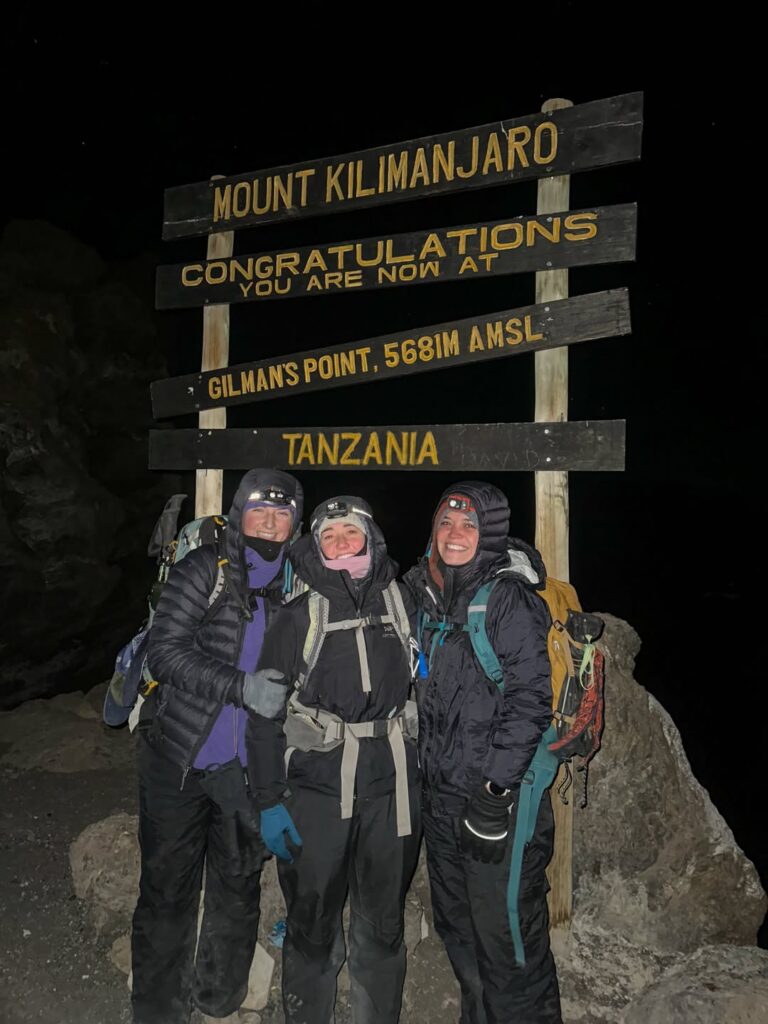
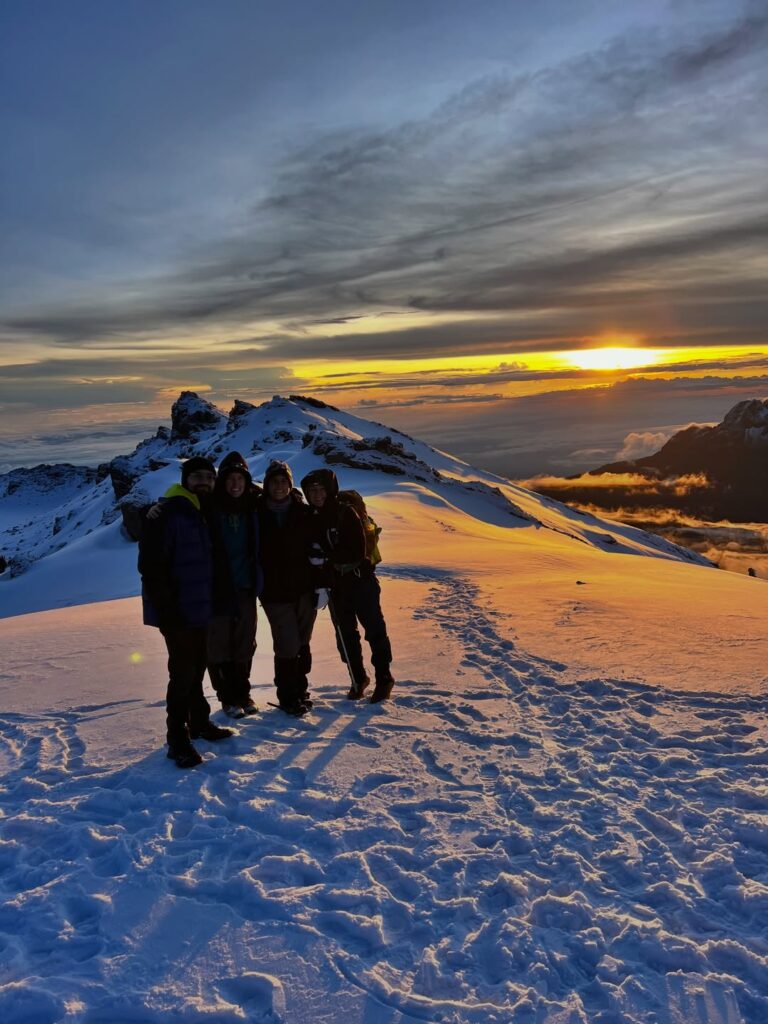
The section to the crater rim is the hardest part for many people. On the Barafu side, Stella Point is a major achievement but not yet Uhuru Peak. On the Kibo Hut side, Gilman’s Point marks the rim, followed by a long traverse. Dawn can arrive before, at or after the rim depending on pace and start time. The final distance may look modest on a map; at this elevation it can feel disproportionately long.
Time at the summit should be brief. Photographs matter, but the body is still at extreme altitude and the day is far from over. The team descends to high camp, rests and eats, then continues lower. This is why summit day cannot be judged only by the climb to Uhuru Peak: the long descent on tired legs is part of the commitment.
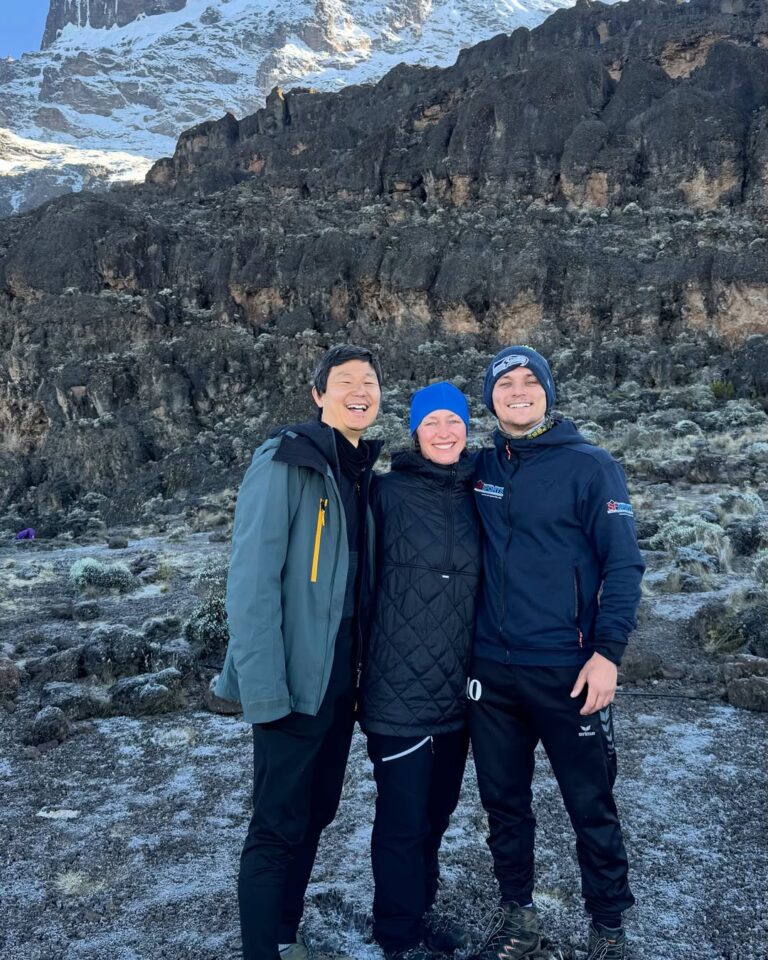
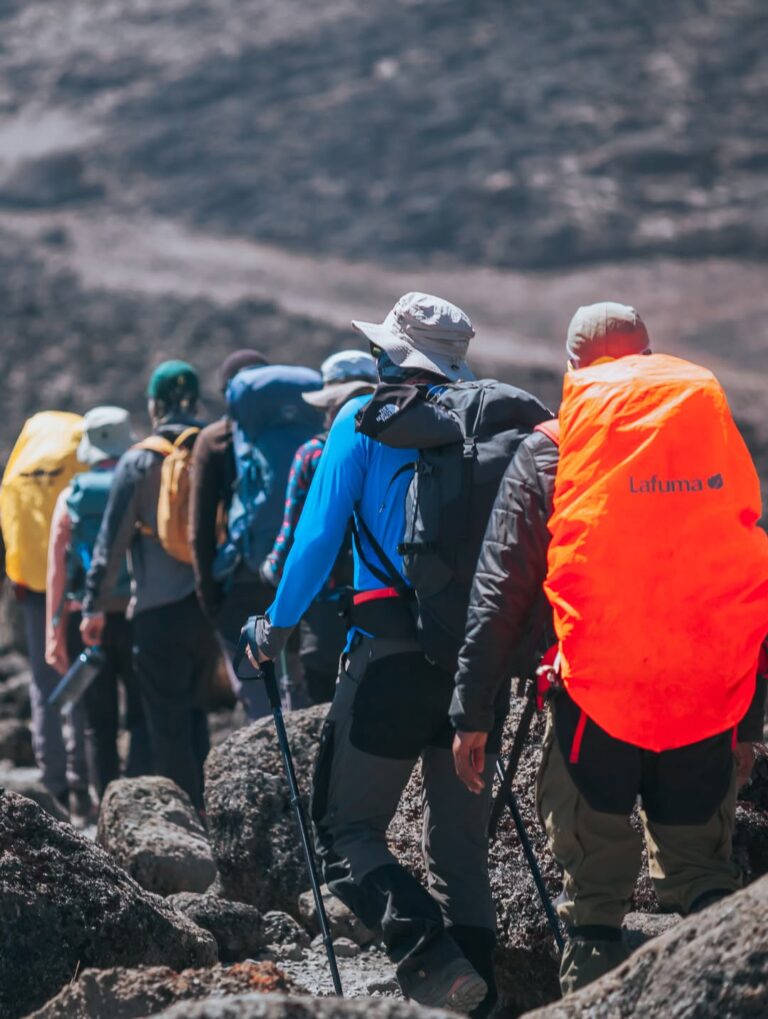
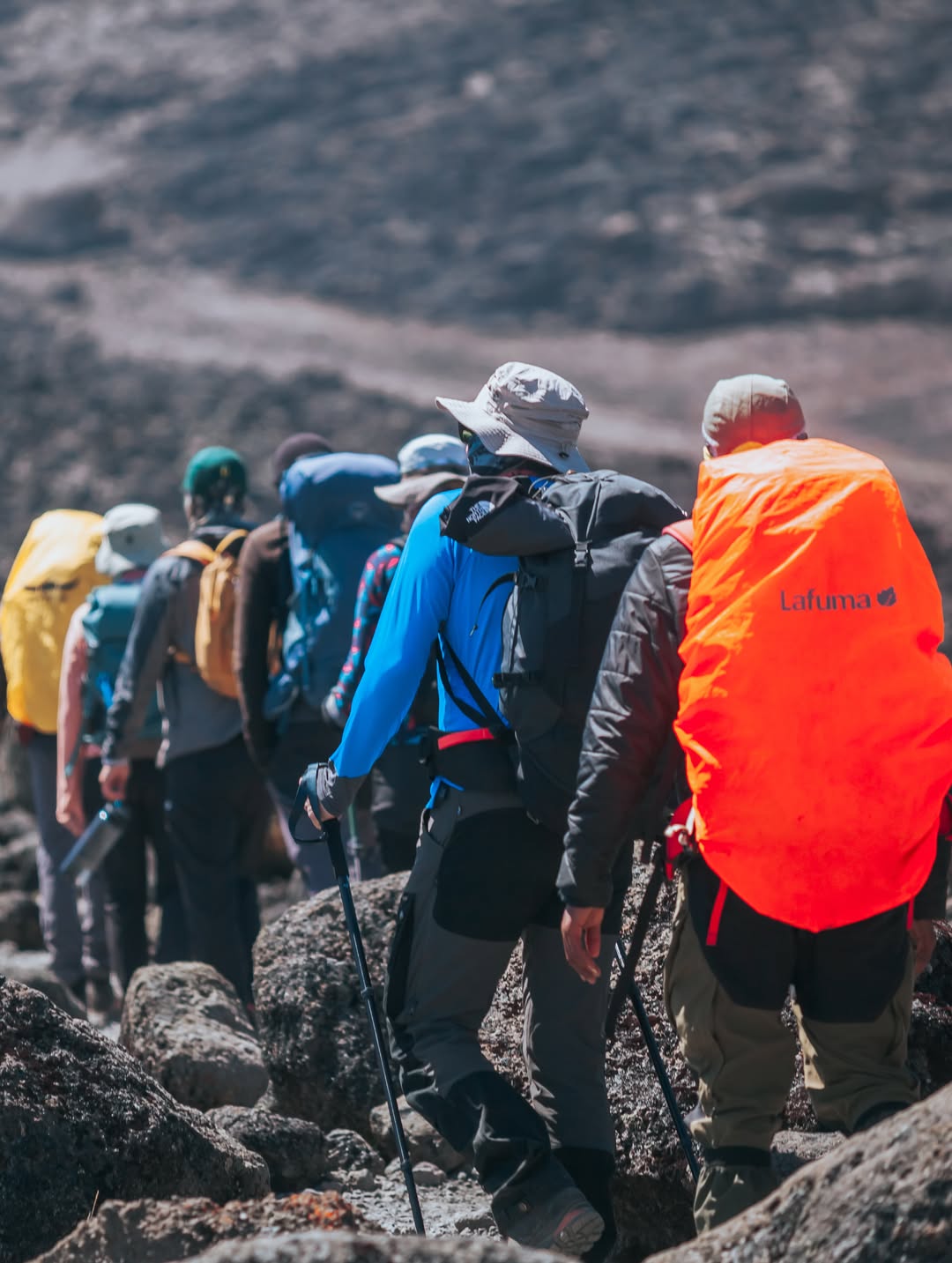
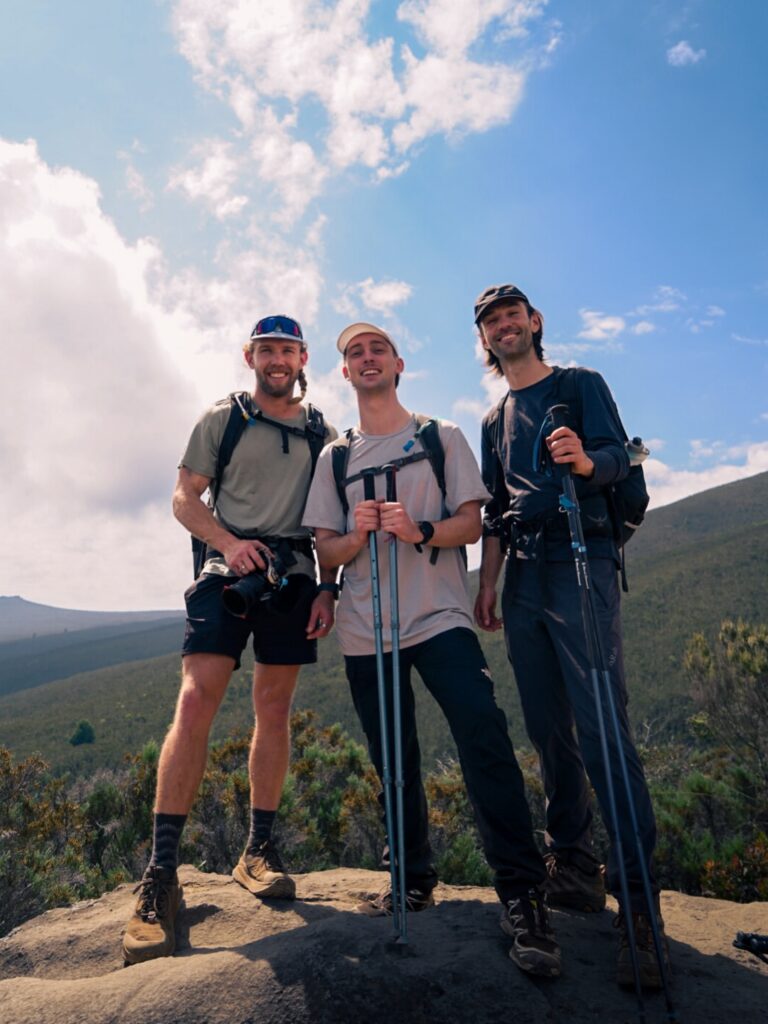
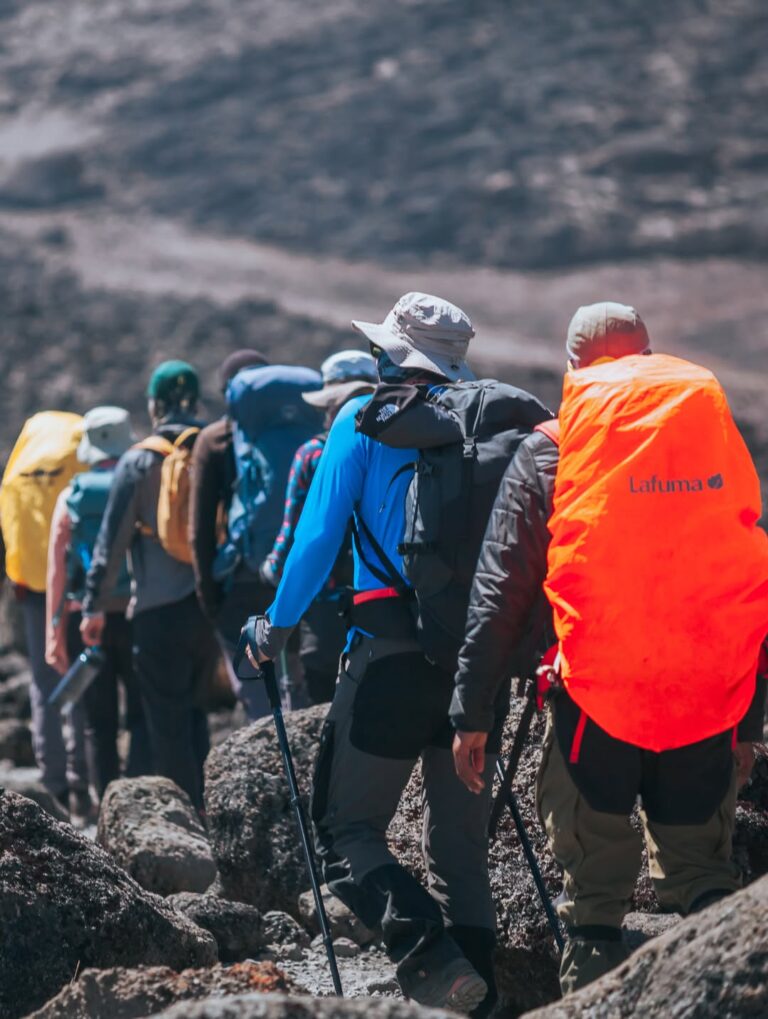
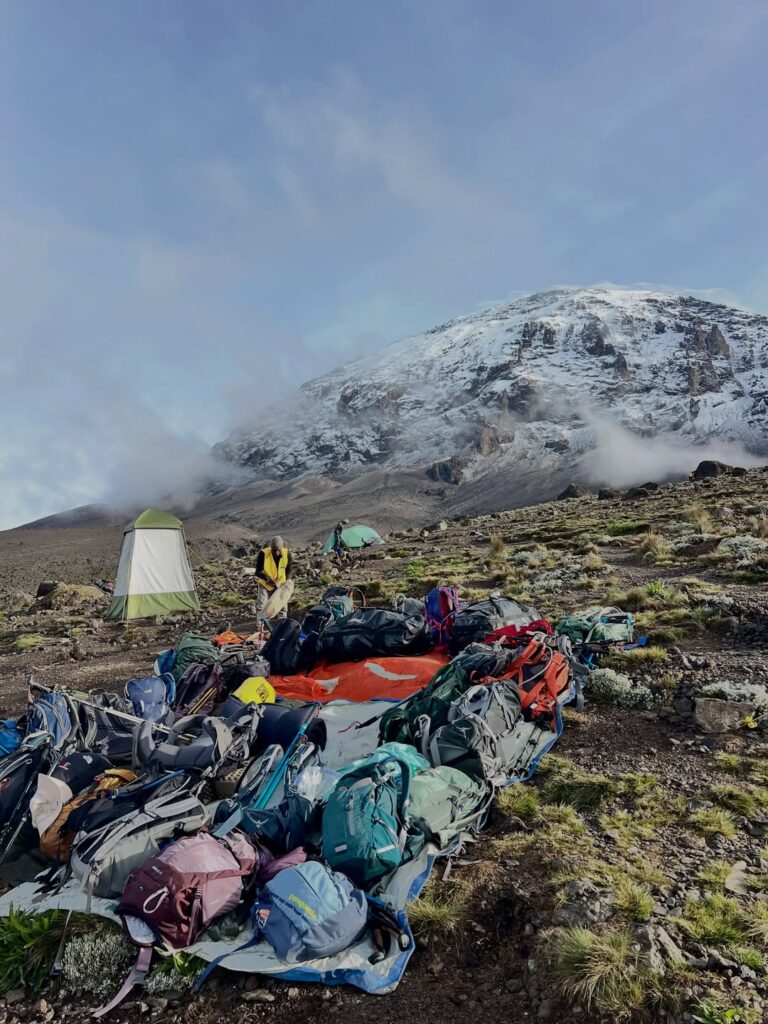
Every route begins below the alpine world, where the mountain is green and humid.A Kilimanjaro expedition is a team undertaking, not an individual performance.
The Western Breach is not a standard trekking route
The Western Breach is a steep line through the breached western wall of Kibo. It is not a normal alternative summit path to add casually to a Lemosho or Shira itinerary. The terrain is more exposed, rockfall has caused fatalities in the past, and objective risk cannot be removed by fitness or determination. Some specialist operators use the line under carefully controlled conditions; many responsible programmes do not offer it.
Wilderness Alternative presents the Western Breach here for education, not as a standard commercial promise. Before any traveller considers it, the operator’s current route policy, guide experience, equipment, emergency procedures and risk assessment must be explicit. If those facts cannot be established, the normal Barafu or Kibo Hut approaches are the appropriate choice.
Crater Camp
Crater Camp lies inside Kibo’s summit area at roughly 5,700 metres. Sleeping there allows time around the crater and can create a different summit rhythm, but it also places climbers at an extreme sleeping altitude. The appeal is clear: a rare night close to the glaciers and ash pit, away from the standard down-and-out summit pattern. The physiological cost is equally clear.
Crater Camp should only follow a long, well-paced acclimatisation programme and a favourable health assessment. It requires additional porter loads, water planning, cold-weather systems and a team experienced in operating high on Kibo. It is not a luxury upgrade and it does not improve the safety margin for an under-acclimatised climber. Where it is used, the ability to cancel the crater night and descend must remain part of the plan.
When to climb Kilimanjaro
January to early March and June to October are the periods most often chosen, broadly corresponding to drier conditions. That does not mean guaranteed clear skies or dry boots. Kilimanjaro creates its own weather. Rain can reach the forest in any month, summit wind can change quickly and snow can fall high on the mountain outside the expected pattern.
The January–March period can bring quieter trails and clear mornings, with colder or snowier conditions possible high on Kibo. The June–October period includes popular international holiday months and can be busier. Full-moon departures are sought after because the upper mountain may be bright, but cloud can hide the moon and the trail can become crowded around those dates. A headlamp is always required.
April and May are usually the main long-rain period, while November often receives shorter rains. Climbs still operate, but wet forest, damp equipment and restricted views are more likely. The northern side can be drier than the southern side in some weather patterns, which is one reason Rongai is considered in wetter months, but this is a relative advantage rather than a promise.
Training for Kilimanjaro
Training should prepare the body to walk on consecutive days while carrying a small daypack, not merely to complete one hard session. Build a base of steady aerobic work, then add long hill days, stairs or inclined treadmill sessions. Back-to-back walking days are valuable because they teach pacing and recovery. Strength work for legs, hips, back and core helps with the descent, where fatigue and loose ground expose poor control.
Use training walks to test boots, socks, trekking poles, rain layers, hydration and food. New equipment should not first be discovered at Machame Gate. Travellers without local hills can combine stairs, incline, loaded walking and longer weekend sessions. Training at altitude can help, but it is not available to everyone and its benefit fades. The itinerary must still allow acclimatisation on the mountain.
The final week is not the time to prove fitness. Reduce volume, sleep well, manage travel stress and arrive healthy. A respiratory or gastrointestinal illness can end a climb more quickly than imperfect fitness. Tell the operator about medical conditions and medication early enough for proper planning; a website cannot replace advice from a clinician who understands the proposed altitude.
What to pack
Kilimanjaro requires a layered system that can move from humid forest to sub-zero wind. The personal daypack normally carries rain protection, warm layers, water, snacks, sun protection, camera, medication and items needed before the porter team reaches camp. The duffel carried by a porter contains the bulk of personal expedition equipment and must remain within the operator’s declared weight limit.
Feet: broken-in waterproof hiking boots, suitable socks and camp footwear.
Body: wicking base layers, insulating mid-layers, a substantial down or synthetic jacket, waterproof shell and comfortable trekking trousers.
Hands and head: sun hat, warm hat, liner gloves, insulated gloves and a neck covering.
Sleep: a sleeping bag rated for the expected cold, with a clean liner if useful.
Light: a reliable headlamp and spare power.
Water: bottles or reservoirs that can be protected from freezing on summit night.
Sun and hygiene: high-protection sunscreen, sunglasses, lip protection, personal wash kit and waste bags where needed.
Documents and health: passport copy, insurance details and personal medication carried in a way that remains accessible.
A final packing list must match the selected route, season and operator’s supplied equipment. Rental items should be inspected in Moshi rather than accepted unseen on departure morning. Fashion is irrelevant; redundancy in critical warmth and rain protection is not.
Food and water on the mountain
Appetite often falls with altitude just as energy needs rise. A competent mountain kitchen answers this with familiar carbohydrates, soups, fruit, vegetables, proteins and warm drinks, served in portions that remain approachable. Dietary requirements need advance discussion because substitutions become harder once the team is above the roadhead.
Water is collected from designated mountain sources where available, treated by the expedition team and managed carefully as the route enters drier high country. Climbers should drink regularly, but forced overhydration is not safe. Urine colour, thirst, food intake, weather and exertion all contribute to the guide’s practical picture. On summit night insulated bottles are more dependable than an exposed hydration hose, which can freeze.
Hand hygiene protects the whole expedition. Climbers and crew share close camp spaces, and a stomach illness can compromise hydration and acclimatisation. Water-treatment procedures, kitchen cleanliness, separate serving utensils and clear waste handling are operational details worth asking about.
Tents, huts and toilets
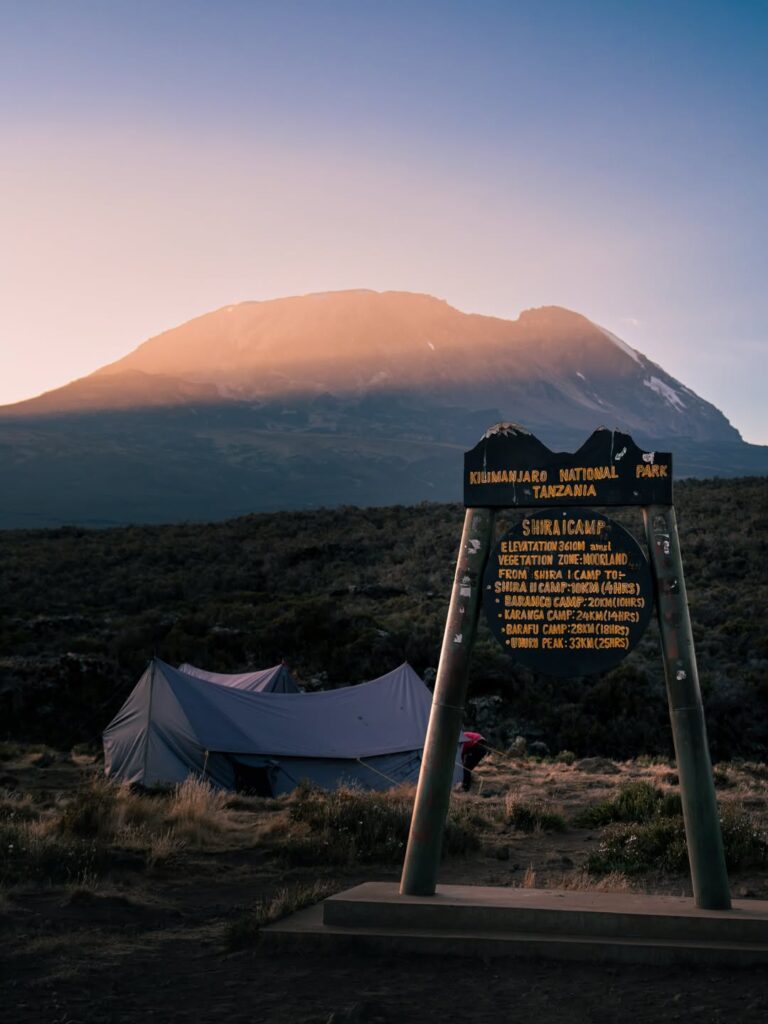
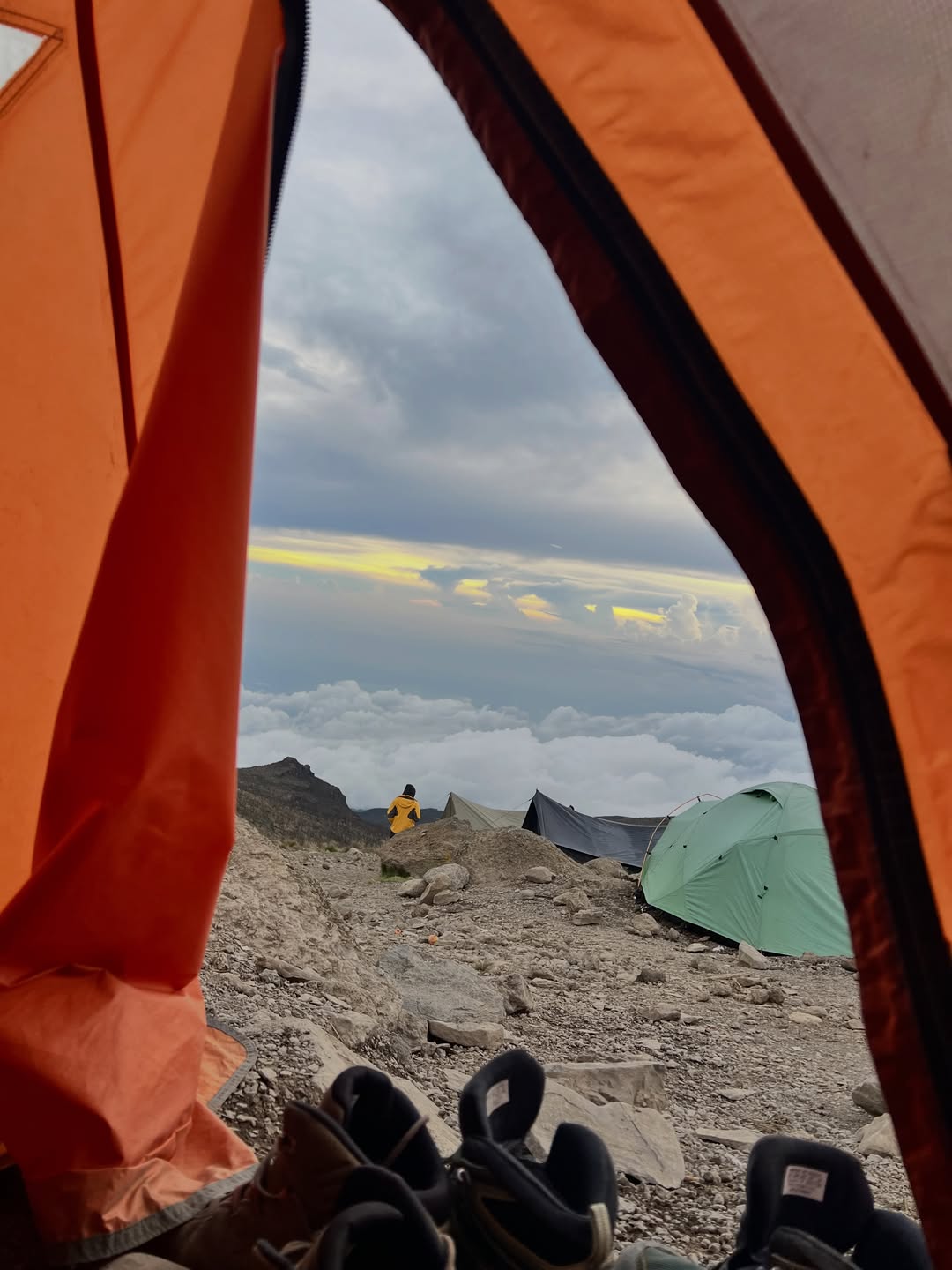
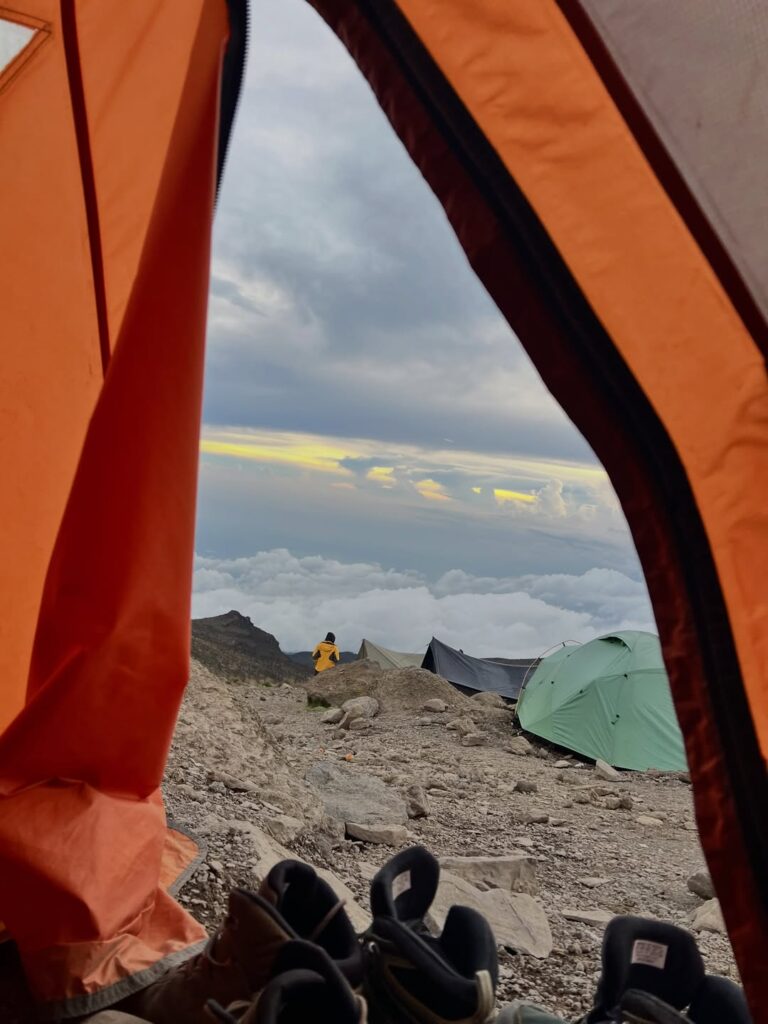
Machame, Lemosho, Northern Circuit, Rongai, Shira and Umbwe use tents. Marangu uses shared huts. Tented routes normally include sleeping tents plus a mess tent, with exact arrangements depending on group size. A larger tent is not automatically a better tent: wind resistance, waterproofing, maintenance and correct pitching matter more than marketing photographs.
Public park toilets exist at camps but condition and privacy vary. Many private expeditions carry a portable chemical toilet in a small privacy tent. Travellers should confirm whether this is included, how waste is managed and whether the quoted service applies to every camp. No system removes the need for personal hygiene supplies.
At Marangu, huts reduce the work of pitching a sleeping shelter, but bedrooms are shared and can be noisy. The route still requires a sleeping bag, cold-weather clothing and the same altitude discipline. Hut accommodation should never be described as a hotel on the mountain.
The guide and porter team
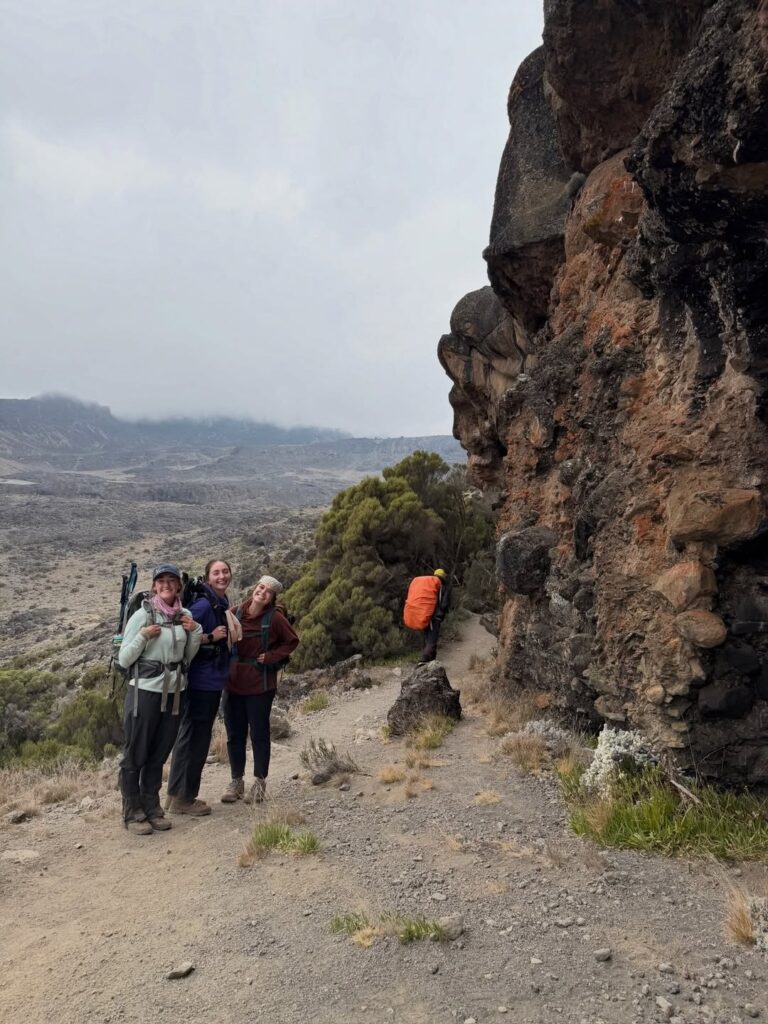
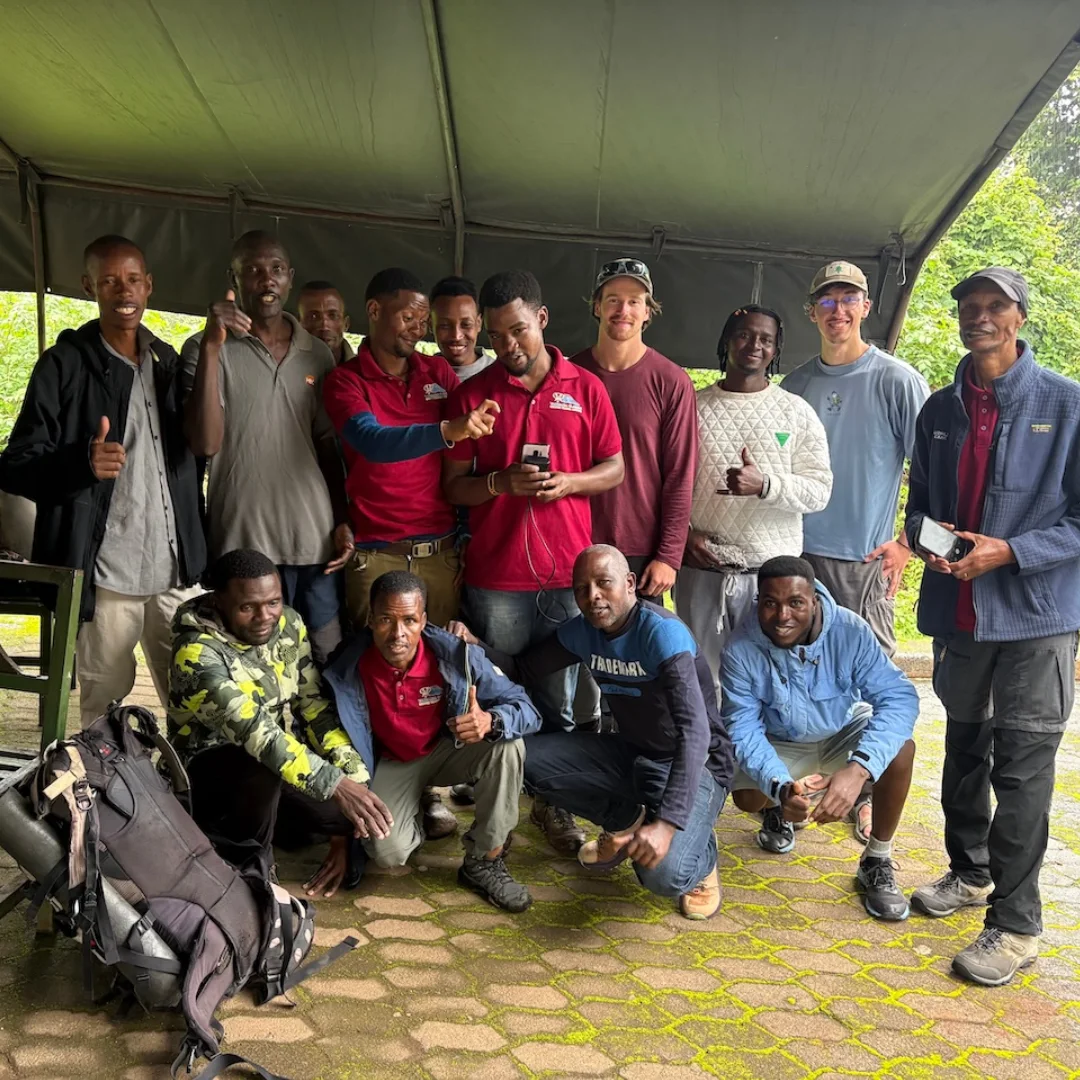
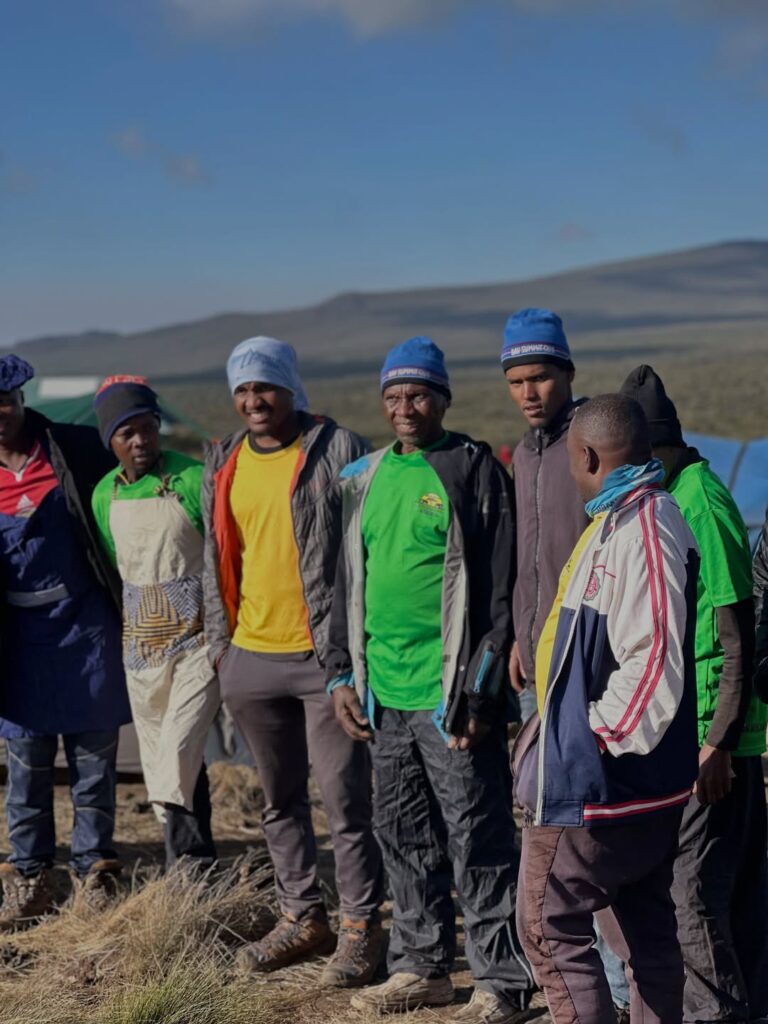
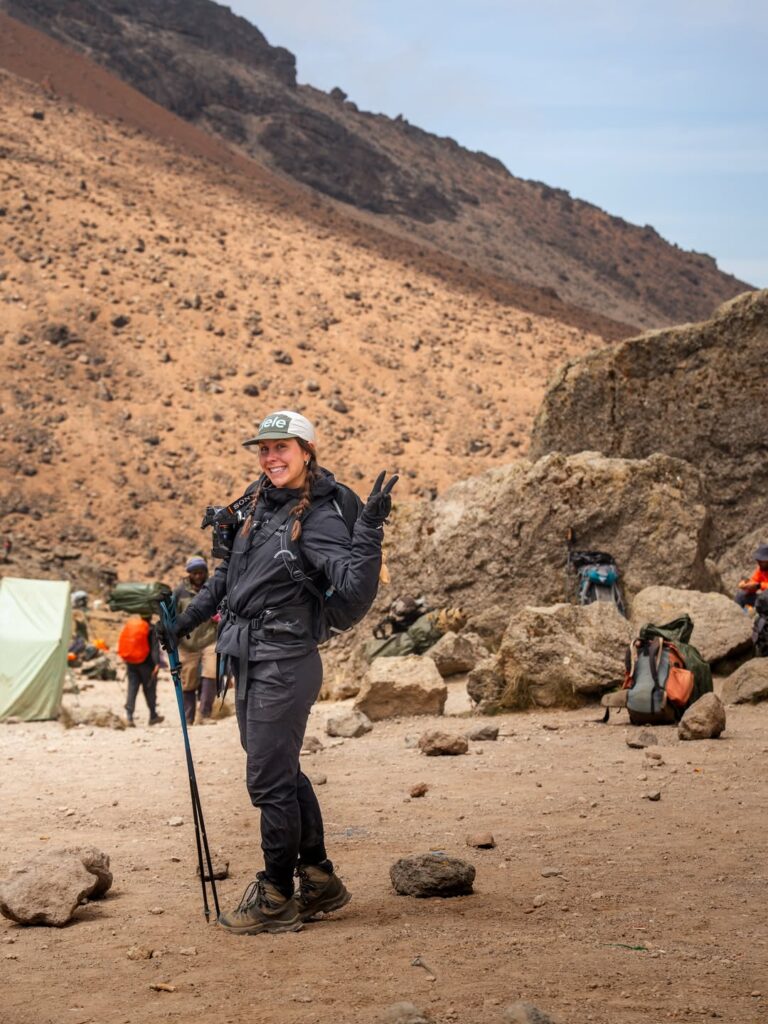
A Kilimanjaro climb is carried by people. Guides manage pace, health checks, route decisions and emergencies. Cooks produce meals in difficult conditions. Porters move tents, food, fuel, waste systems and personal duffels, often reaching camp early enough to establish shelter before climbers arrive. Their working conditions are inseparable from expedition quality.
At minimum, a responsible operation should have transparent wages and tipping, controlled loads, adequate food, proper shelter and clothing, access to medical care, fair payment after descent and a genuine way for porters to report abuse. Independent monitoring organisations publish partner standards, but Wilderness Alternative will not claim membership of a named porter association until its exact formal relationship has been confirmed. The absence of a marketing badge does not excuse weak labour practice; the presence of one does not remove the traveller’s right to ask questions.
Tipping should be explained before the climb, recorded openly and distributed in front of the team using a method designed to prevent senior staff from taking an unfair share. It should not be used to replace wages. Group size changes the number of crew because tents, food, water and waste systems create real loads. A suspiciously low package price often hides its economy in wages, food, equipment maintenance or crew numbers.
Safety systems to ask about
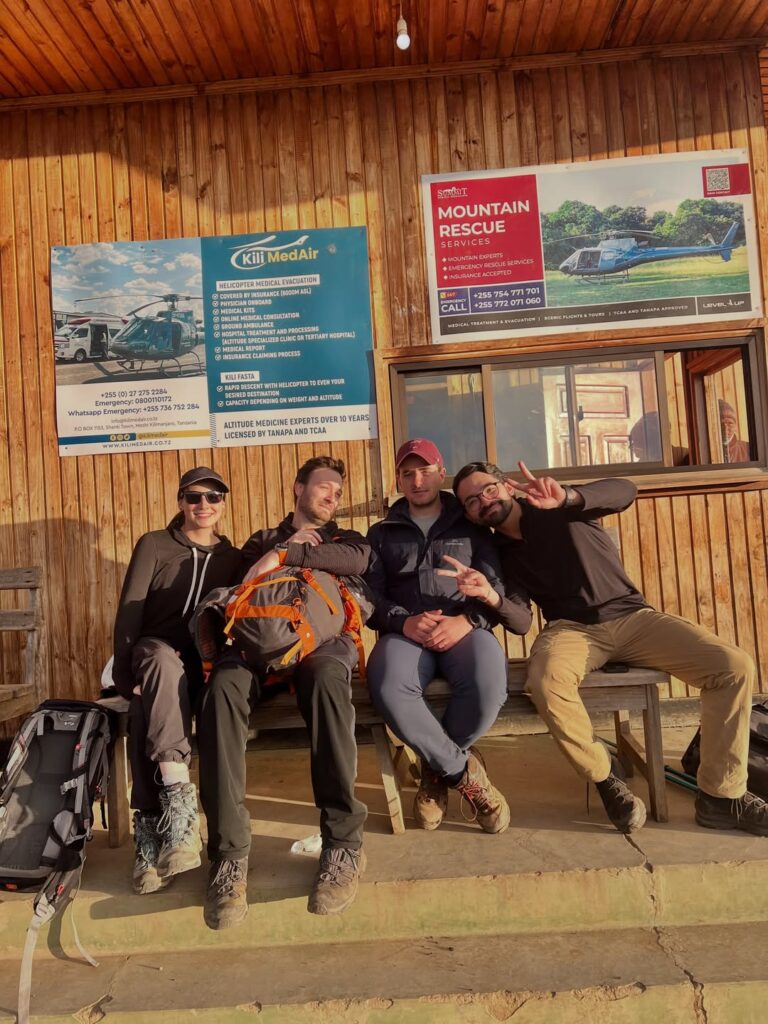
Serious operators should be able to explain daily health observation, guide communication, emergency descent, first-aid capability, oxygen policy and evacuation arrangements without hiding behind vague statements about “world-class safety”. Supplemental oxygen can be valuable in an emergency; routine oxygen should not be used to push an unwell climber upward. Helicopter evacuation is weather-, location- and service-dependent and must never be assumed.
Travellers need insurance that covers trekking to the summit elevation, evacuation and medical treatment. The insurer should confirm the actual route and highest point. The operator needs the policy and emergency contacts before departure. Any decision to descend should be supported promptly, even if it separates one climber from the group.
Moshi: the operational base
Moshi sits on Kilimanjaro’s southern side and is the natural base for most climbs. Kilimanjaro International Airport connects the region with international and domestic services, while road transfers link Moshi with Arusha, Nairobi and the northern safari circuit. Arrival times matter: a traveller landing late should not be expected to begin a full equipment check and briefing at dawn.
Wilderness Alternative maintains a small operational presence in Moshi. It supports local coordination with guides and crew, airport and road transfers, equipment checks, briefings and the final preparation of each climb. It is deliberately described as a practical base rather than a large office. The mountain programme should feel locally managed and reachable before the team enters the park.
Allow at least one full pre-climb night in the area, and preferably enough time for delayed baggage or travel disruption. After the climb, retain a recovery night before a long international departure or safari transfer. Wet equipment, laundry, appetite, sleep and the emotional change from summit focus to ordinary travel all need space.
Combining Kilimanjaro with safari
The climb usually belongs first. Starting with safari can mean long vehicle days, irregular sleep and dust immediately before the mountain. After descent, Tarangire and Lake Manyara are the closest northern-circuit transitions; Ngorongoro and Serengeti extend the journey west. A short safari should be selective rather than trying to collect every park.
Amboseli in Kenya is also geographically close in the wider regional sense, and its views interpret Kilimanjaro from the north. Combining the two countries requires a formal border crossing and a change of operating context. It can be an excellent journey when the travel day is treated honestly.
For first-time high-altitude trekkers
Kilimanjaro is possible for many healthy, well-prepared first-time trekkers because standard routes do not require technical climbing. That does not make it casual. Choose a longer route, train for repeated days, learn to use poles and layers, and arrive willing to walk more slowly than feels necessary. Tell the guide about symptoms when they are small. Hiding them protects neither pride nor the group.
The summit is a possibility, not a contractual inclusion. Weather, illness and acclimatisation can turn a sound plan around. A safe descent remains a successful expedition in the only sense that matters. The mountain will still have delivered forest, moorland, high desert, shared work with the crew and several days of genuine movement through a remarkable landscape.
Frequently asked questions
Do I need climbing experience?
Not for the normal trekking routes, but multi-day hiking experience is strongly useful. Western Breach and technical Mawenzi are separate propositions and should not be confused with a standard Kibo ascent.
Which route has the best success rate?
Published percentages are difficult to compare because operators count groups, clients and route lengths differently. In practice, longer and better-paced itineraries provide a stronger acclimatisation margin. The operator’s judgement and refusal to compress the programme matter more than a headline statistic.
Is Marangu the easiest route?
Its trail and hut system are straightforward, but the common short schedule is physiologically demanding. Accommodation type does not change the altitude.
Can children climb?
Park rules, maturity, previous trekking, health and the ability to communicate symptoms all matter. A family plan requires individual assessment and current regulatory confirmation; the minimum permitted age should be verified for the intended route and dates.
Can I climb alone?
Kilimanjaro is climbed with licensed guiding and park procedures, not as an unsupported independent trek. A private departure can be arranged around one traveller, but it still requires a full local team.
The people behind the climb deserve to be visible in its story.
Plan a Kilimanjaro climb with our Moshi team
Tell us how many mountain days are available, the traveller’s previous altitude and trekking experience, travel dates, group size, dietary needs and any safari plans. Our Moshi team will compare suitable routes and build in the preparation and recovery time the traveller needs.
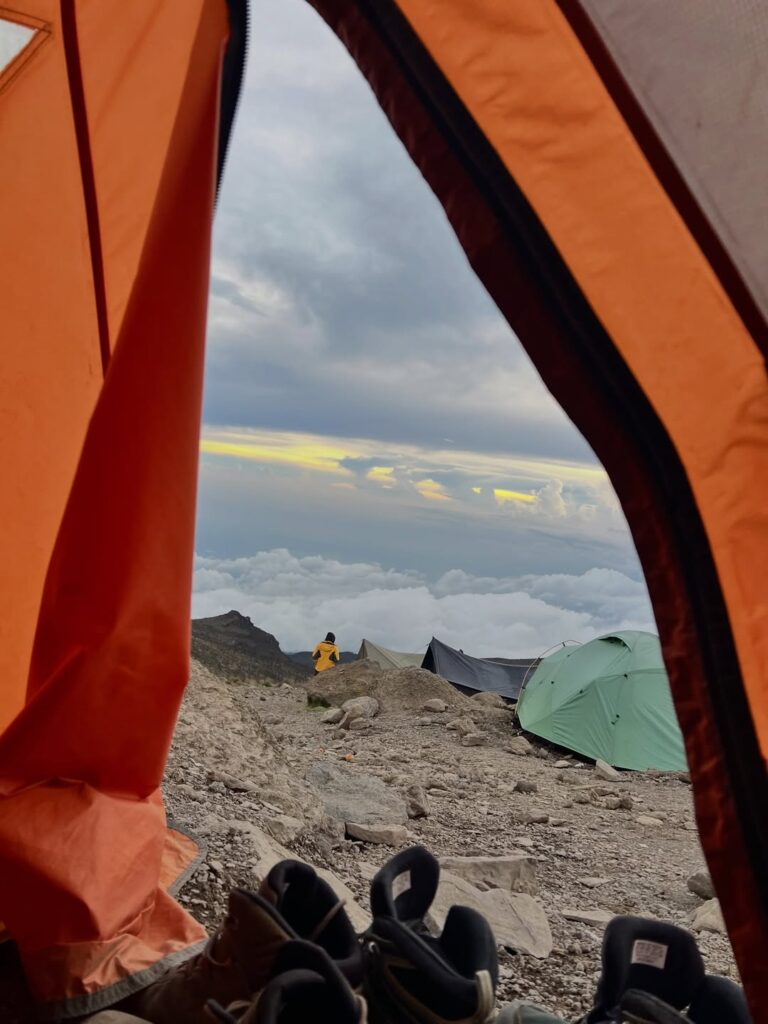
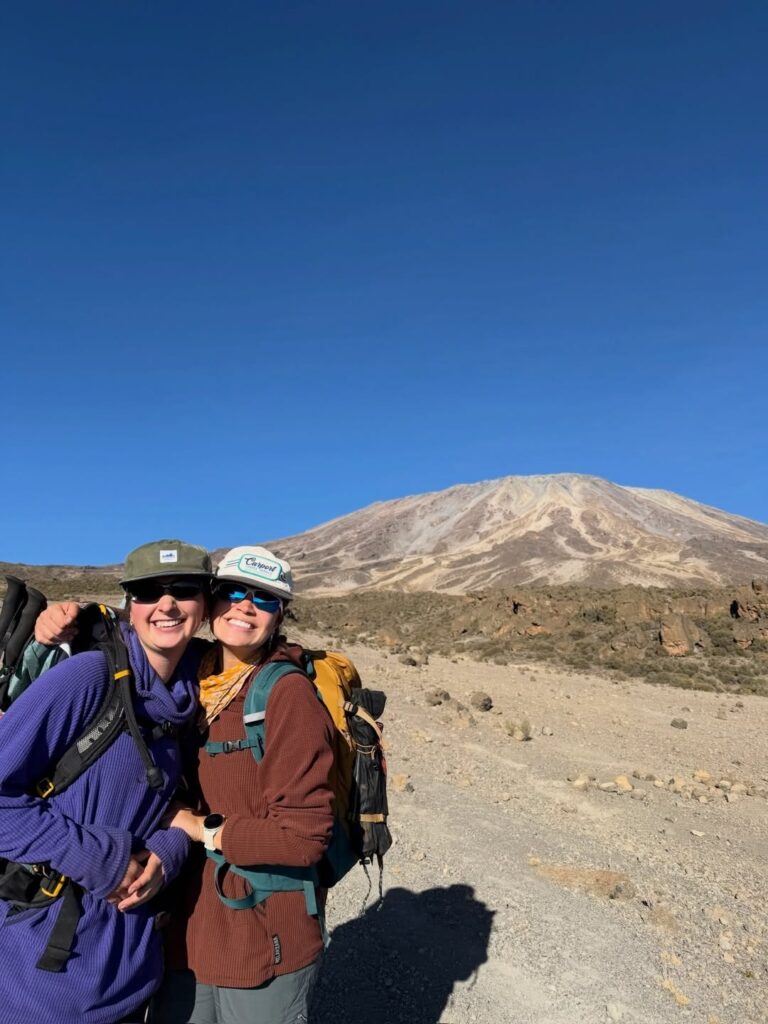
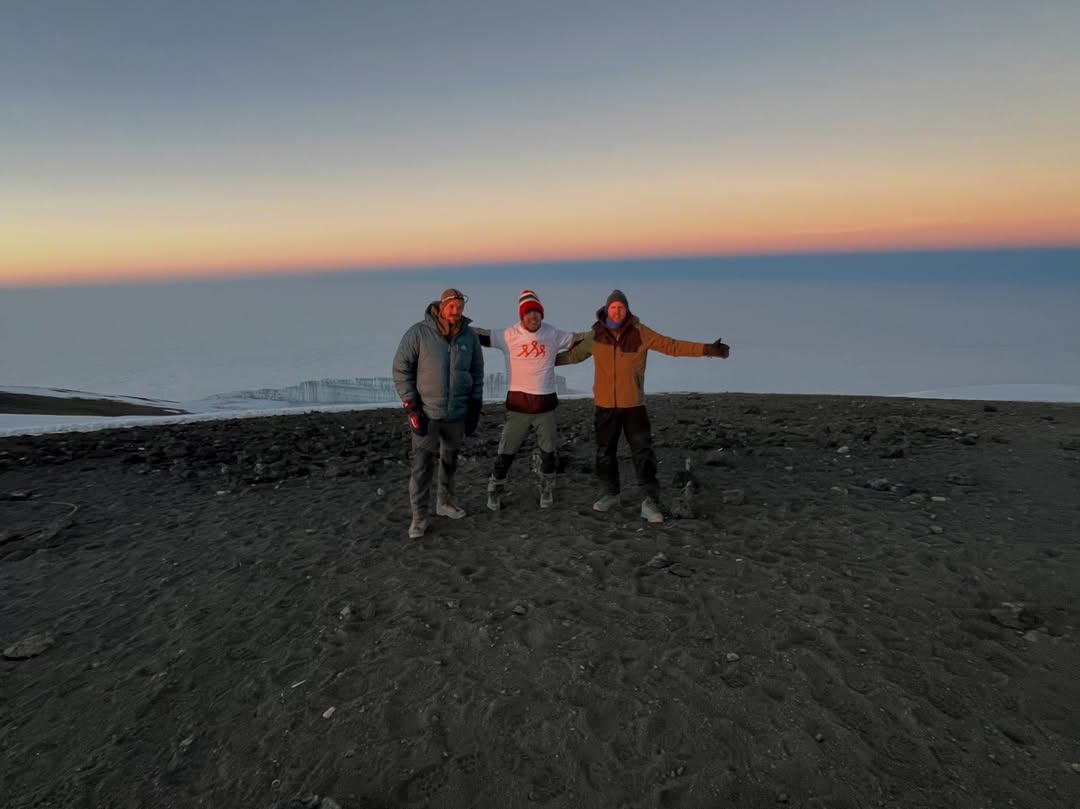
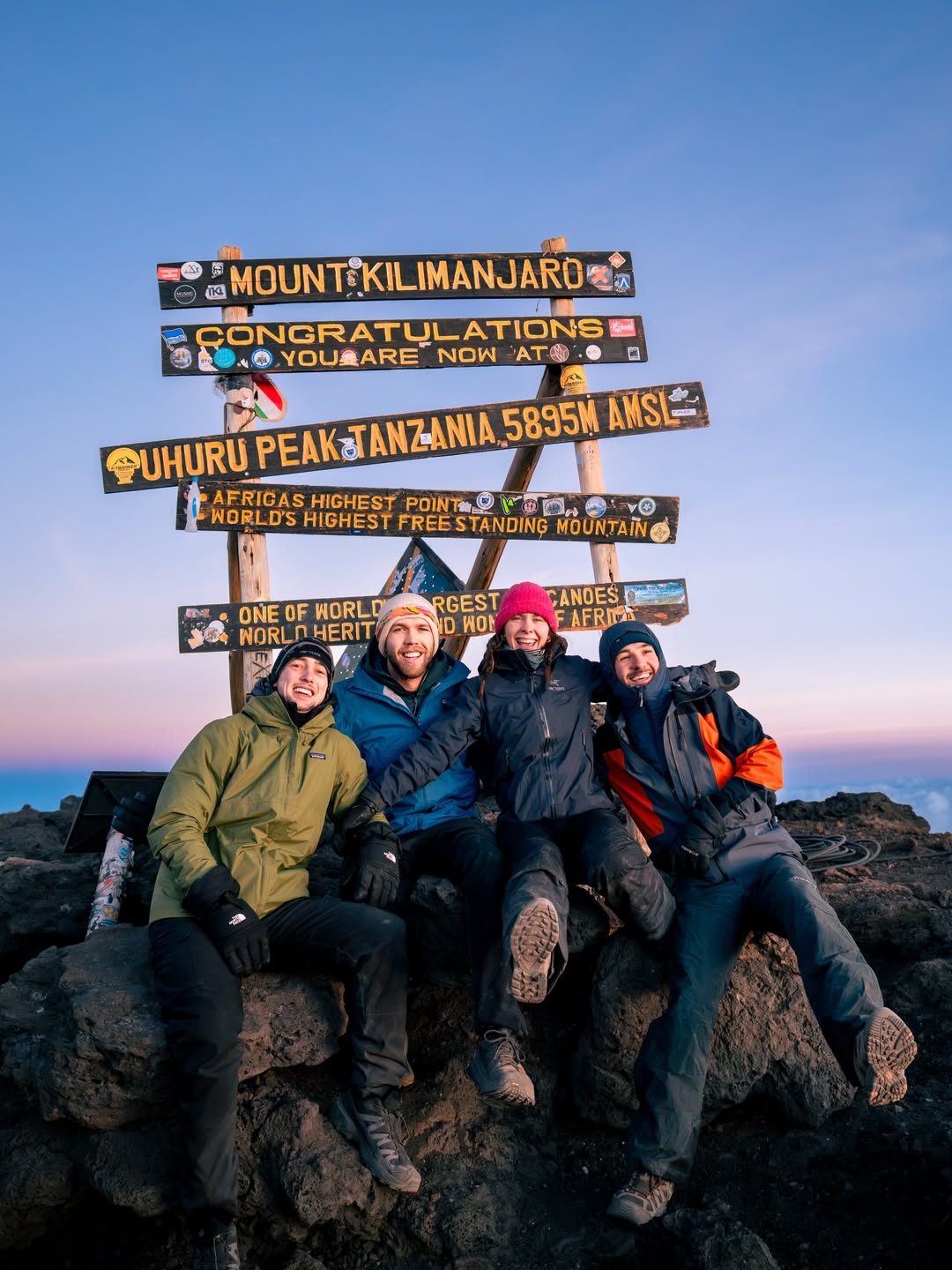
At camp, warmth, food, rest and small details become part of the safety system.Higher on the mountain, good pacing is patient and disciplined.Summit morning begins in darkness and arrives in changing light.The summit is a powerful moment, but safe decisions remain more important than the photograph.
Prepare well
Kilimanjaro planning guides
Altitude, timing, equipment, food, camp life and summit-night guidance.
Altitude is Kilimanjaro’s defining risk. Fitness helps with the work of walking, but cannot force the body to adapt to reduced oxygen pressure. Choose enough days, walk slowly,…
Every Kilimanjaro summit is supported by guides, cooks and porters. Their wages, loads, meals, shelter, equipment and medical care are core operating costs. A responsible operation controls loads,…
Food and water are part of the mountain safety system. Appetite often falls just as cold, exertion and recovery increase energy needs. Meals should remain approachable: carbohydrates, protein,…
Moshi is the working base for Kilimanjaro. Good access planning protects the briefing, equipment check and first day from flight delays and rushed transfers. Kilimanjaro International Airport is…
Kilimanjaro is often a first high-altitude expedition because standard routes do not require technical climbing. It is still a serious multi-day mountain with an uncertain summit outcome. Choose…
Pack for Kilimanjaro’s rainforest, alpine desert and cold summit night with a practical equipment framework, layering advice and final checks in Moshi.
Summit night is the longest and coldest movement of most Kilimanjaro itineraries. It begins around midnight and continues through the crater rim, Uhuru Peak and a substantial descent.…
Camp systems determine sleep, hygiene and expedition rhythm. Six principal route families use tents; Marangu uses shared huts. Neither removes cold, altitude or basic facilities. Tents should be…