A gorilla day begins before the gorillas. Boots are checked in the half-light, waterproofs are packed, and visitors assemble at a Uganda Wildlife Authority briefing point whose location was decided months earlier when the permit was secured. Rangers allocate groups, explain health and distance rules, and read the condition of the forest. Then the path leaves cultivation, enters dense vegetation and becomes a moving search.
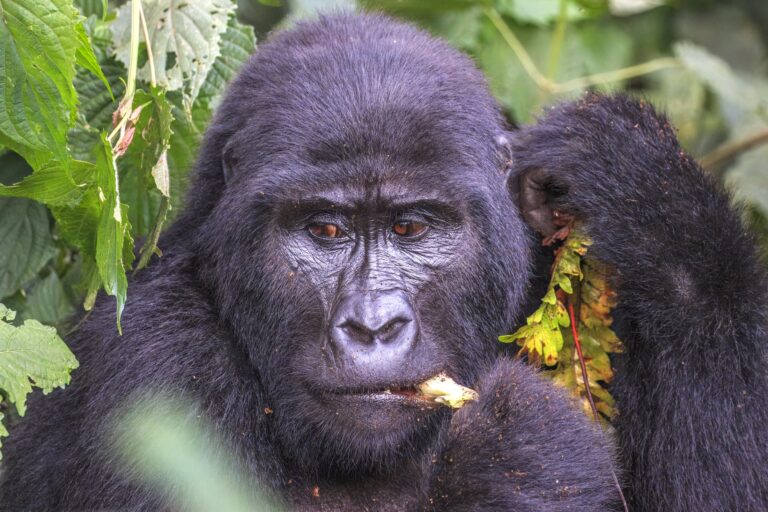
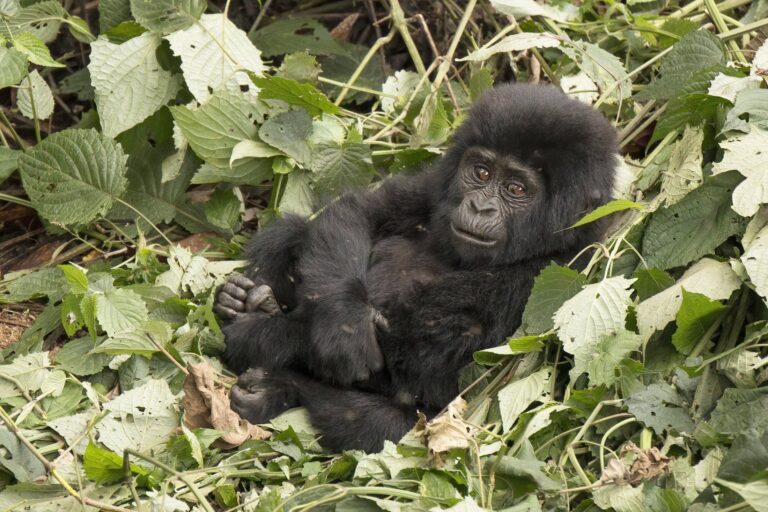
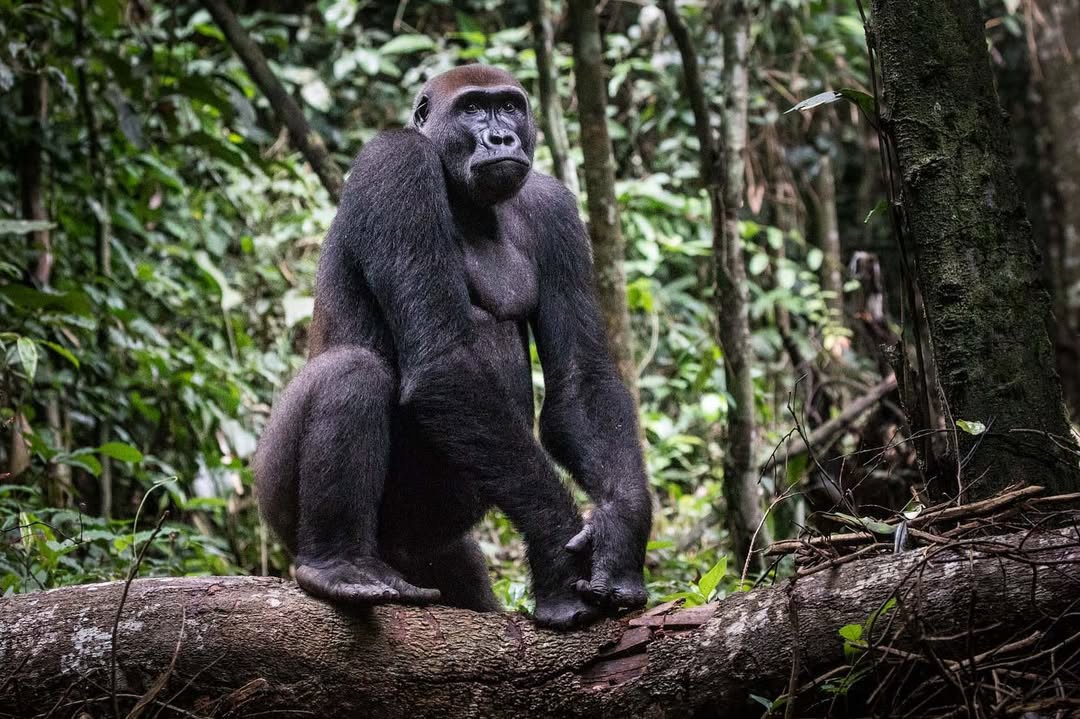
The encounter, when it comes, is quiet in a way that photographs rarely convey. Leaves move before a body is visible. A silverback may sit almost still while juveniles climb, feed or pass between stems. The permitted viewing period is controlled because the animals’ welfare comes first. The achievement is not getting closer; it is spending an hour in their habitat without asking them to behave for us.
Gorilla trekking at a glance
- Where: Bwindi Impenetrable National Park and Mgahinga Gorilla National Park.
- Bwindi sectors: Buhoma, Ruhija, Rushaga and Nkuringo.
- Standard encounter: one controlled hour with a habituated family after it is located.
- Minimum age: currently 15 for gorilla tracking; reconfirmed with UWA for every booking.
- Group size: normally limited to eight visitors per habituated family.
- Health: anyone with a contagious illness should not track; respiratory disease can pass to gorillas.
- Photography: no flash; keep the required distance and follow the ranger’s direction.
Choose the forest before the lodge
Uganda’s gorilla areas are not one interchangeable destination. The permit specifies a park, date and operational area. In Bwindi, the sector determines where the briefing begins and therefore where guests should normally sleep. A lodge advertised as “near Bwindi” may be several difficult hours from the assigned trailhead. The correct order is permit, sector, accommodation and transfer—not the other way around.
Bwindi Impenetrable National Park
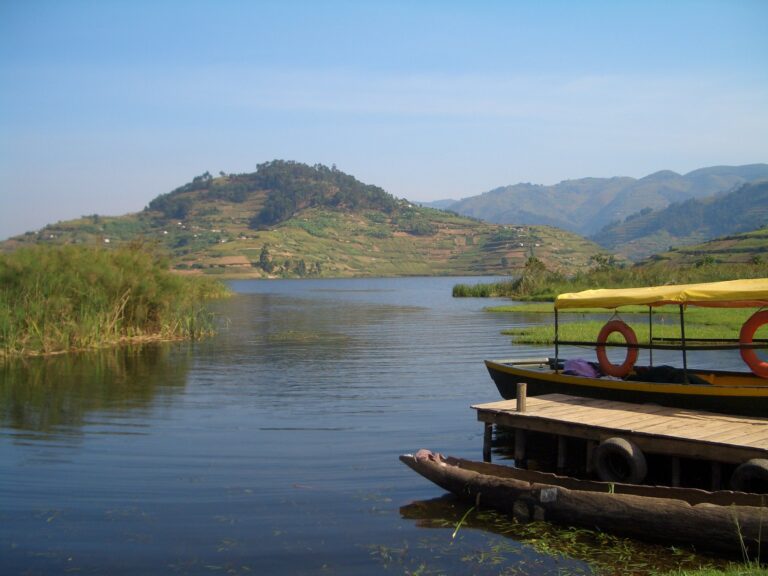
Bwindi protects a steep block of Afromontane forest in southwest Uganda. It is biologically rich and topographically complicated, with ridges, streams and cultivated edges rather than a single entrance road. Gorilla tracking takes place from four main sectors. The forest is also important for birds, butterflies, plants and other primates, but the gorilla programme dominates visitor logistics.
Mgahinga Gorilla National Park
Mgahinga occupies Uganda’s part of the Virunga volcanoes. Bamboo and montane forest rise beneath Muhabura, Gahinga and Sabyinyo. Gorilla permits are fewer, giving the park a smaller operational scale, while golden-monkey tracking and volcano hikes can justify several nights. It is reached naturally from Kisoro and can combine with the southern Bwindi sectors when roads and permit dates align.
The four Bwindi sectors
Buhoma
Buhoma lies on the northern side of Bwindi and is the park’s longest-established visitor area. It has a broad range of accommodation and works well with road approaches from Queen Elizabeth’s Ishasha sector. Forest walks and community-led activities can fill an additional day. Its popularity does not guarantee an easy trek; the allocated family’s position decides the day.
Ruhija
Ruhija sits higher on Bwindi’s eastern side, with cooler air, birding and views across ridges when cloud lifts. It connects more naturally with Kabale and the eastern approach than with Buhoma. The road can be rough, especially after rain. Travellers should sleep close enough to reach the briefing point without a stressful pre-dawn transfer.
Rushaga
Rushaga is one of the principal southern tracking areas and supports multiple habituated families. It is also associated with the longer habituation experience when that product and permit are available. The landscape of steep forest and cultivated hills leads naturally towards Kisoro and Mgahinga. Accommodation must be checked against the exact assembly point rather than a general southern-Bwindi label.
Nkuringo
Nkuringo stands on a high southern ridge with expansive views towards the Virunga volcanoes in clear weather. Treks can be physically demanding because of the relief between ridge and forest. The area pairs well with a slower walking programme and with cross-country routes towards Kisoro, but vehicle times remain dependent on road condition.
Can sectors be changed?
A permit is not a flexible ticket for any Bwindi gate. Operational allocations and rules belong to UWA. If the traveller books the wrong lodge or changes the wider itinerary, moving sectors may require changing permits and is subject to availability and the applicable terms. This is why the sector decision must happen early.
Permits and rates in August 2026
Permits are issued through Uganda Wildlife Authority and licensed tourism channels, are date-specific and have defined payment and cancellation conditions. The UWA conservation tariff publicly available when this page was prepared expired on 30 June 2026; a replacement rate card was not yet published on the authority’s website. We therefore do not quote the expired figure as current. Every proposal confirms the live UWA price, nationality category, permit type, sector and payment deadline in writing.
Availability is limited. Popular dates can close long before accommodation does, particularly in the drier travel periods and around regional holiday seasons. We will not advertise a gorilla itinerary as confirmed until the permit position is verified.
What the tracking day actually feels like
After briefing, visitors travel or walk to the relevant starting point with rangers, trackers and porters. The route may use a maintained path at first, then leave it. Trackers read nests, dung, feeding signs, broken vegetation and information from the previous day. Gorillas move continuously through their range, so no fixed walking time can be promised. A visit may involve two hours on foot or most of the day.
When trackers locate the family, the ranger prepares the group. Bags and walking sticks may be left with porters at a safe point. The one-hour clock begins under UWA procedure, and the group remains together. Vegetation, terrain and gorilla movement determine the view. A ranger may ask visitors to sit, move back, lower voices or change position.
Fitness and terrain
Moderate fitness is useful, but the unpredictable combination of mud, steep gradients and duration matters more than speed. Train by walking consecutive hilly days, practising controlled descents and carrying a small daypack. Travellers with a knee, balance or endurance concern should discuss it before permits are chosen; some operational areas can sometimes offer different terrain profiles, but no family can be guaranteed close to the trailhead.
Hire a porter
A porter carries the daypack, helps with footing and offers practical support on steep ground. This is not an admission of weakness. It can transform the day for the visitor and directs income to people living beside the forest. The arrangement should be made through the local system at the briefing point, with payment and tip explained clearly.
Health and behaviour rules
- Do not track when ill with a contagious respiratory or gastrointestinal condition; disclose symptoms honestly.
- Follow current UWA mask and hygiene instructions.
- Maintain the required distance—currently communicated as ten metres in UWA visitor guidance—unless rangers direct movement for safety.
- Never touch or feed a gorilla, even if an animal approaches.
- Use no flash and silence camera sounds where possible.
- Keep voices low, remain with the group and avoid sudden movement.
- Do not eat, drink or smoke beside the gorillas.
- If you need to cough or sneeze, turn away and follow the ranger’s instruction.
Gorillas do not know the distance rule. A curious animal may cross the space. The correct response is not to reach for a closer photograph; it is to remain calm and let the ranger manage the situation.
Conservation, communities and difficult history
Gorilla tourism has helped finance protection and has created guiding, porter, hospitality and supply-chain work around Bwindi and Mgahinga. UWA also operates revenue-sharing mechanisms for park-edge communities. These benefits matter, but they do not erase the unequal costs carried by households living beside protected forest, including crop loss, restricted access and the history of displacement.
Batwa communities have deep historical relationships with these forests and experienced dispossession when protected areas were established. A responsible account should not reduce that history to a staged “pygmy experience” or imply that a short tourist performance resolves questions of land, livelihood and rights. We favour activities that are Batwa-led, consent-based, accurately described and transparent about where visitor payment goes.
The strongest conservation behaviour is practical: arrive healthy, follow ranger rules, keep the group small, use local services fairly, avoid geotagging sensitive wildlife positions and choose operators that do not pressure staff or animals for a photograph.
Photographing gorillas in forest
Light levels are low and subjects can be close behind bright leaves. A fast mid-range zoom is often more useful than a very long lens. Raise ISO before sacrificing a shutter speed that can hold eye and hand movement. Use continuous autofocus and quiet burst modes sparingly. Flash is prohibited.
Do not spend the whole hour looking at the rear screen. Set the camera before the encounter, take short sequences, then watch. A photograph that includes foliage, gesture and family relationship often tells more than a tight face filling the frame. Respect other visitors’ sightlines and never step away from the position approved by the ranger.
Moisture protection matters. Carry the camera in a simple rain cover, keep one lens mounted and use a dry cloth in an accessible pocket. Drones are not part of a gorilla visit.
What to wear and carry
- broken-in waterproof walking boots with grip;
- long trousers and long sleeves for nettles, thorns and insects;
- light waterproof jacket and a dry layer in a lined daypack;
- gardening-style gloves for vegetation and muddy ground;
- gaiters if conditions or the sector justify them;
- water, a simple packed lunch and personal medication;
- camera rain protection, spare battery and no flash use;
- walking stick supplied locally where appropriate.
Access: drive or fly
Road access from Entebbe or Kampala is a full journey through southwestern Uganda. It can be rewarding when broken with Lake Mburo, Queen Elizabeth, Kibale or another overnight, but it should not be disguised as a short transfer. Buhoma combines most naturally with Ishasha. Ruhija aligns with the eastern highlands. Rushaga, Nkuringo and Mgahinga connect through the Kisoro side.
Scheduled domestic flights can use Kihihi for northern Bwindi or Kisoro for the southern sectors and Mgahinga, subject to timetable, weather and baggage restrictions. Airstrip-to-lodge transfer is still required. A flight described simply as “to Bwindi” is incomplete until the sector is known.
Where to stay
Choose a lodge for access to the permit sector, then refine by budget, privacy and atmosphere. In Buhoma, properties cluster around the visitor area. Ruhija options sit on higher ridges. Southern Bwindi lodges serve Rushaga or Nkuringo with different transfer times. Kisoro can support Mgahinga and some southern-sector programmes, but it is not automatically close enough for every briefing.
We confirm the actual drive from lodge to assembly point, early-breakfast arrangements, packed lunch, porter cash and laundry or boot-cleaning support. These details matter more on the tracking morning than a generic star rating.
Build a gorilla journey
A focused three- or four-night southwest programme can include arrival, one gorilla day and a weather or rest buffer. A longer journey may add a second permit, golden monkeys, forest birding or a careful connection to Queen Elizabeth and Kibale. Repeating a gorilla trek can produce a completely different experience because the family, light, vegetation and walking time change.
Tell us your preferred month, fitness, photography priorities, age of every traveller and whether the gorilla encounter is the main reason for the journey. We will check live permits first, select the correct sector, then build accommodation and transfers around the confirmed place.