Wilderness Alternative Expedition guide to Tsavo
Tsavo is where Kenya becomes immense. Red soil lifts behind elephant feet, the horizon runs into heat, and hours of thorn country can pass before a river suddenly gathers the whole landscape to water. This is not a safari built around constant sightings. It is a safari of distance, spoor, weather, patience and the privilege of watching wildlife live at the scale it requires.
Tsavo East and Tsavo West together form the core of a conservation landscape of roughly 22,000 square kilometres, enlarged ecologically by ranches, community land, corridors and neighbouring protected areas. A highway and railway separate the two national parks, but elephant and conservation history connect them. They should be planned together without pretending they are the same place.
East and West: one system, two safaris
Tsavo East
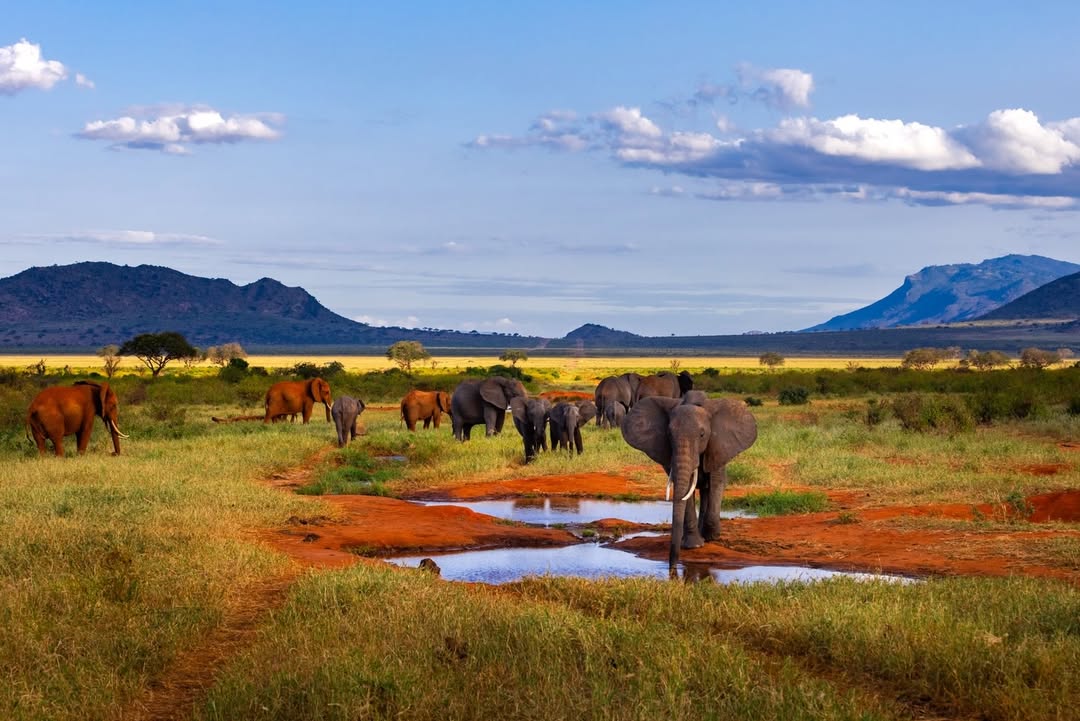
East is the larger park: open, dry and visually spare, with the Galana River, Yatta Plateau, Mudanda Rock, Aruba Dam and the water-cut rock at Lugard Falls. Its southern sector is the most accessible and visited, yet even there the scale is humbling. Elephant dusted red by the soil are the signature, not a separate race or subspecies.
Tsavo West
West is more topographically varied. Lava flows, springs, hills, wooded valleys and viewpoints break the journey. Mzima Springs brings clear groundwater to the surface; the Shetani flow records recent volcanic history; the wider Ngulia landscape carries one of Kenya’s most important black-rhino recovery stories. Vegetation can make wildlife harder to see, but the park rewards landscape-minded travellers.
Guests deciding between them should not ask only where animals are “easier”. East gives space, red earth and river country. West gives geological drama, spring water, hills and a denser mosaic of habitat. Three or more nights allow the difference to become part of the journey.
Why Tsavo’s elephants look red
Tsavo elephant coat themselves in local dust and mud, which stains the skin iron-red. Underneath, they are ordinary African savanna elephant. The colour changes after bathing and between soil types. Calling them “red elephants” describes a visible relationship with place; it should not become invented biology.
The deeper story is movement. Elephant need water, forage and routes that extend beyond a tourist circuit. Drought, fencing, farms, roads, railways and settlement can constrict those routes. Conservation planning across Tsavo has long focused on corridors connecting East, West, Taita ranches and wider landscapes. A herd crossing a road is not blocking the safari; it is showing why space matters.
A safari that must be guided by scale
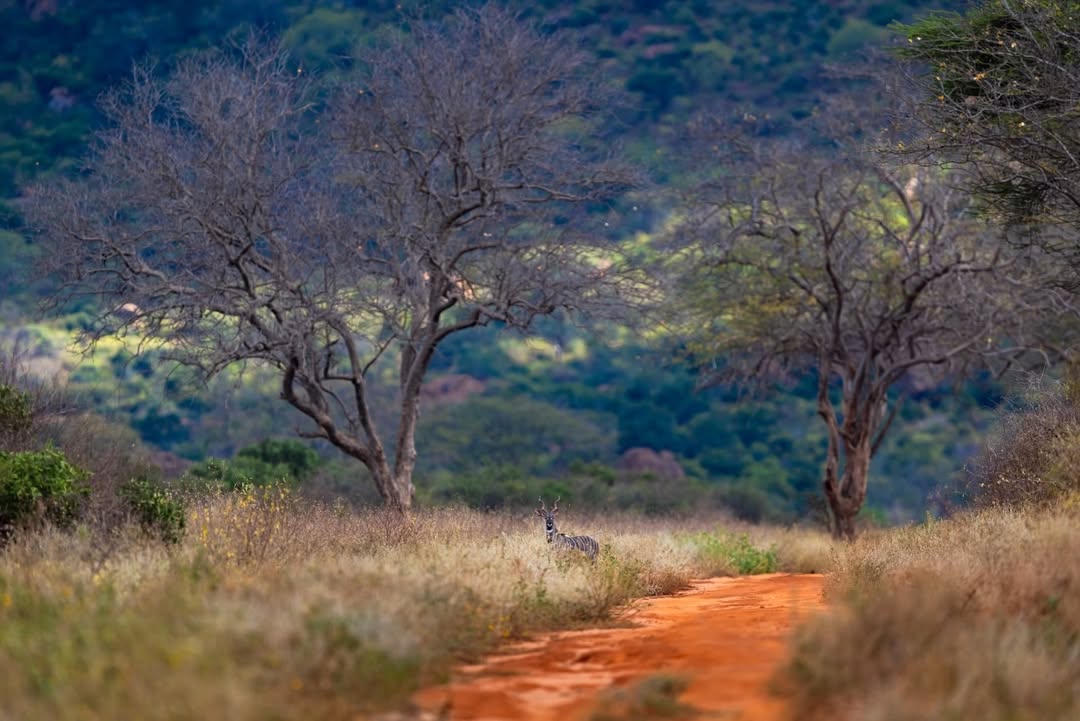
In a smaller reserve, a guide may check several known areas before breakfast. In Tsavo, distance changes every decision. A report from another vehicle may be too far away to pursue responsibly. Fuel, gate time, heat and road condition matter. The most productive plan often stays with the ecology nearby: a river bend, a waterhole, recent elephant tracks or vultures dropping towards something unseen.
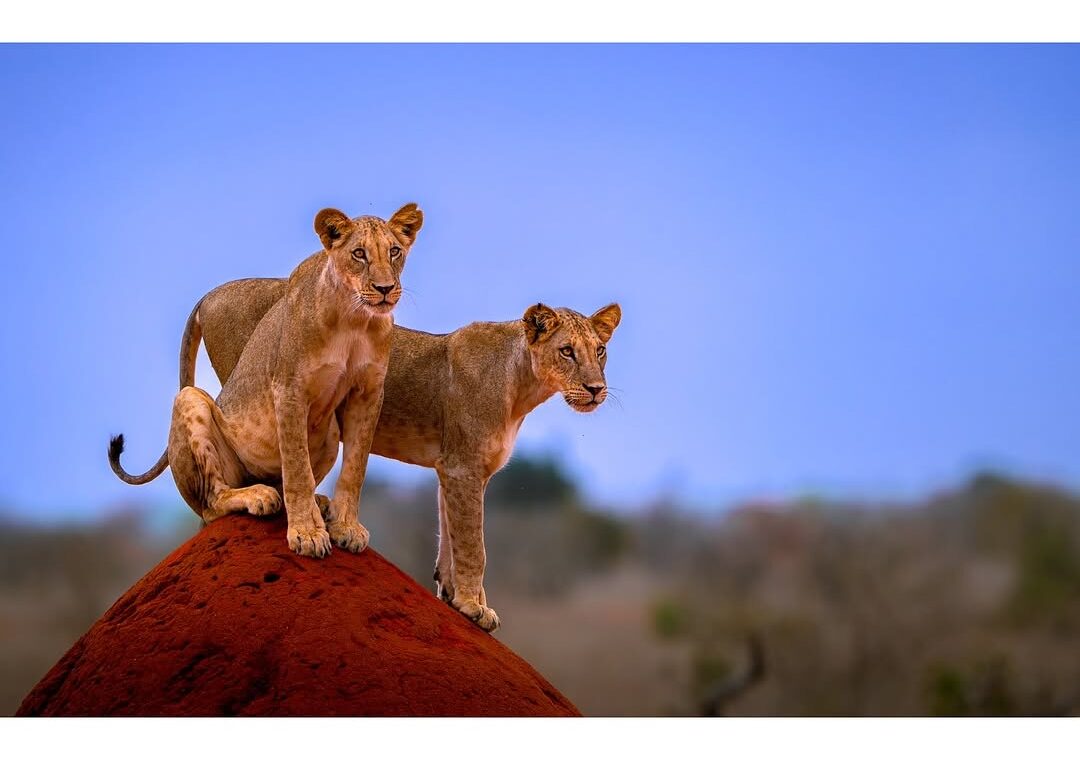
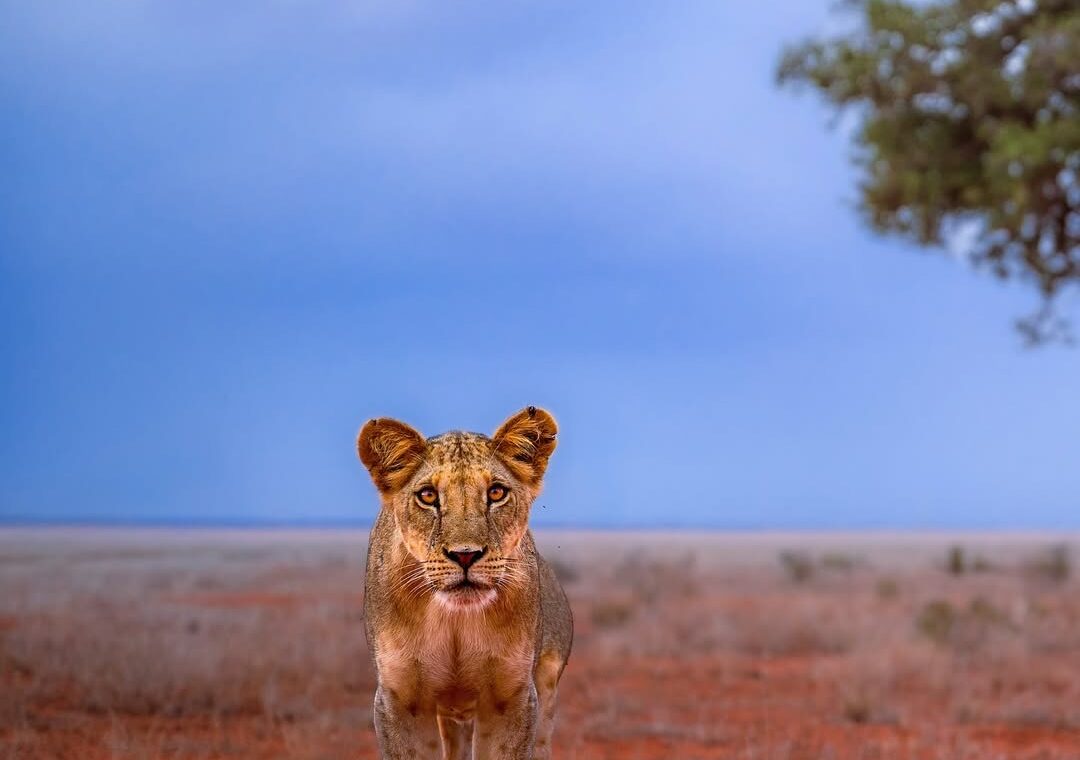
Wildlife includes elephant, lion, leopard, cheetah, African wild dog, buffalo, giraffe, zebra, oryx, kudu, hartebeest, gerenuk and many smaller species, with distribution varying across the ecosystem. Rhino are heavily protected and never promised. Tsavo’s birds number in the hundreds because dry bush, rivers, wetlands, cliffs and seasonal migrants overlap. A slow stop for hornbills, coursers or raptors often explains more than a long-distance dash for a cat.
How many nights?
Two nights can introduce one park. Three nights work for a focused East or West safari with time beyond transfer routes. Four nights—two in each park—is the minimum we recommend for a balanced first Tsavo journey. Five or six nights suit photographers, birders and guests connecting Amboseli to the coast without rushing.
A one-night road stop between Nairobi and Mombasa is possible, but it shows the most convenient corner rather than Tsavo’s character. We would rather design one deep park than claim to cover both in two hurried game drives.
Road, rail or air?
Private road journey
The Nairobi–Mombasa corridor gives access through Mtito Andei, Manyani, Voi, Bachuma and other gates. Road travel keeps the two parks, Amboseli and the coast connected in one vehicle, but distances inside Tsavo remain large after the highway transfer ends. Gate choice must match the camp.
Standard Gauge Railway
Passenger rail can connect Nairobi or Mombasa with stations such as Mtito Andei and Voi, followed by a pre-arranged safari vehicle. The train is transport, not a game drive: wildlife glimpsed from a carriage is incidental. Timetables, ticket rules and transfer access are confirmed before booking, and a guide must be waiting on the correct side of the journey.
Scheduled or charter flight
Numerous airstrips serve the parks, but not all receive scheduled services. Flying can save a transfer day when matched to the accommodation. Baggage limits, route frequency, airstrip condition and onward vehicle time must be verified for the date.
Where to stay
Tsavo accommodation ranges from public campsites and historic lodges to intimate tented camps. The first question is not luxury level but location. A camp near the Galana offers a different East experience from one around Voi; a West property near Mzima or Kilaguni gives different access from one towards Ngulia, Lake Jipe or the northern gates.
Waterholes at several lodges can bring excellent viewing without driving, especially in dry conditions. That remains natural behaviour and should be watched quietly. For families, pools, room distance and safe movement after dark matter. For photographers, charging, beanbags, vehicle policy and dawn access matter more than a long menu of facilities.
Best time to visit
Tsavo operates year-round. Drier periods generally concentrate wildlife around reliable water, reduce vegetation and improve track conditions. They also bring dust, heat and stark landscapes. Rains can transform the bush within days, scatter animals, fill seasonal pans and attract migrants. Green Tsavo is visually magnificent, though minor roads may become difficult and wildlife can be harder to find.
Temperatures vary by elevation, season and time of day. Dawn starts remain valuable throughout the year. We plan around guest heat tolerance, birding, photography, family dates and the route to Amboseli or the coast rather than naming one perfect month.
Photography with Kenny
Tsavo teaches environmental photography. Kenny helps guests resist filling every frame with an animal and instead use red road, dust, river and sky to explain scale. Elephant photography depends on reading ears, trunk, family spacing and direction long before pressing the shutter. Backlight can turn dust gold; a wide lens can show a herd moving beneath the Yatta or through West’s hills.
Long distances demand realistic equipment. Heat shimmer can defeat the longest lens by midday, so getting closer is not always the answer. Early light, stable support, controlled shutter speed and waiting for behaviour produce stronger work than pursuing every radio report.
Tsavo history without mythmaking
The railway through Tsavo carries difficult colonial and labour history, including the 1898 lion attacks during construction and the deaths of workers whose stories are often reduced to the label “man-eaters”. The region also saw fighting during the First World War East African campaign. These histories should be interpreted carefully, not used as horror entertainment.
Long before national parks, the wider landscape was known, crossed and used by African communities. Today Taita, Maasai, Kamba and other communities live around Tsavo and share the costs and opportunities created by wildlife. Tourism has a responsibility to support legitimate local livelihoods and respect people as neighbours, not scenery.
Combining Tsavo intelligently
Amboseli and Tsavo West
The Chyulu approach can link Amboseli with West, changing from Kilimanjaro wetlands to lava and springs. The connection is scenic but takes real time inside protected areas.
Tsavo East and the coast
Voi, Bachuma and Sala approaches make East a natural wildlife section before or after Kenya’s coast. This master build intentionally does not create coast pages, so every beach connection is planned manually according to the actual property and road.
Nairobi through Tsavo to Mombasa
A private road or rail-based itinerary can turn a transfer corridor into several nights of safari. The schedule must protect gate hours and avoid arriving after dark.
Who Tsavo suits
Tsavo is for travellers who value wilderness scale, landscape and observation over a guaranteed list. It suits repeat safari guests, elephant enthusiasts, photographers, birders and families comfortable with longer distances. First-time visitors can love it when expectations are set properly.
Guests with very limited time or a need for constant close sightings may be happier in a smaller reserve. Mobility needs should be discussed because some viewpoints and paths are uneven, while long drives can be tiring.
Responsible travel across Tsavo
- Give elephant herds and solitary bulls a clear path and substantial space.
- Stay on authorised roads; red soil is not permission for off-road driving.
- Do not circulate precise rhino locations or pressure guides for restricted areas.
- Carry enough water and fuel while keeping prohibited single-use plastic out of KWS parks.
- Choose camps and community experiences with clear local benefit.
- Never use a long drive as justification for speeding before a gate closes.
Tsavo FAQ
Is Tsavo one national park?
No. Tsavo East and Tsavo West are separate national parks divided by the main transport corridor, within one wider conservation landscape.
Which side is better?
East is more open and defined by red earth and the Galana; West is more varied, volcanic and spring-fed. The better choice depends on interests, camp and route.
Will we see red elephants?
Elephant are widespread, and local dust often colours them red. Sightings and the intensity of that colour depend on recent bathing, soil and movement.
How many nights for both parks?
Four nights is the practical minimum for a balanced first visit; five or six give the wilderness room to work.
Can we connect Tsavo by train?
Yes, when the current passenger timetable, station and private vehicle transfer fit the itinerary. We confirm every segment before booking.
Plan a private Tsavo expedition
Tell us your dates, start and end points, group size and whether your priority is elephant, photography, birding, geology or a slower wilderness journey. We will choose East, West or both and put the nights where they create field time instead of transfer pressure.
Plan Tsavo with Wilderness Alternative Expedition
Wildlife sightings, road access, rail and flight schedules, water conditions and specialist activities depend on natural conditions, park rules and confirmed operations.