Wilderness Alternative Expedition guide to Tsavo West
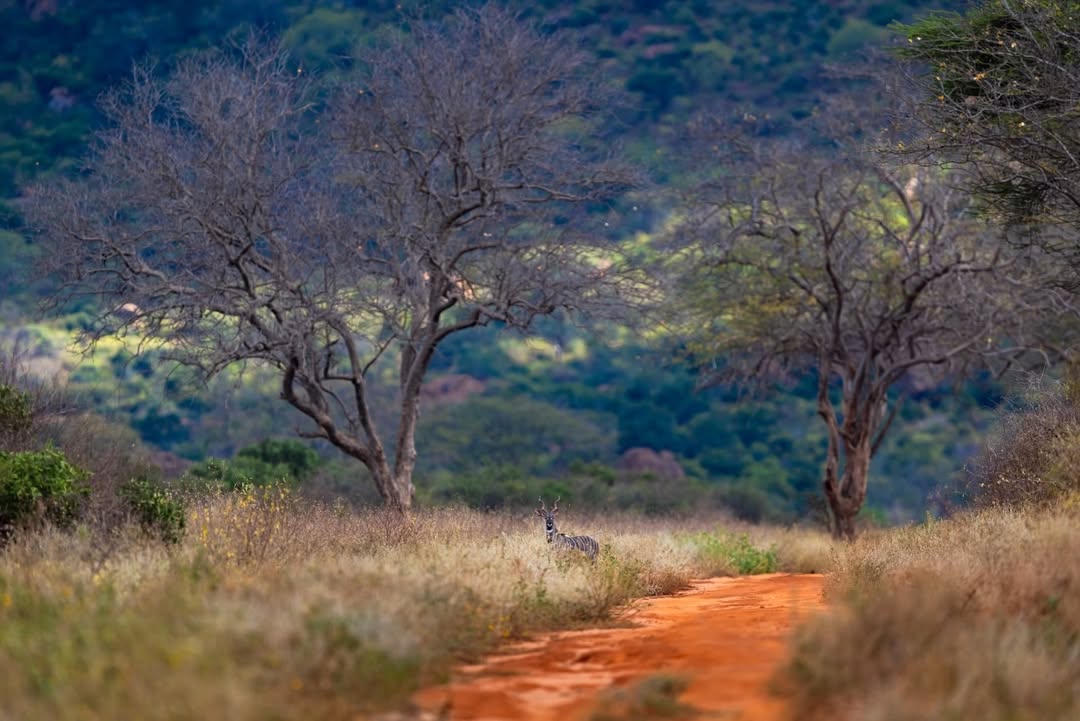
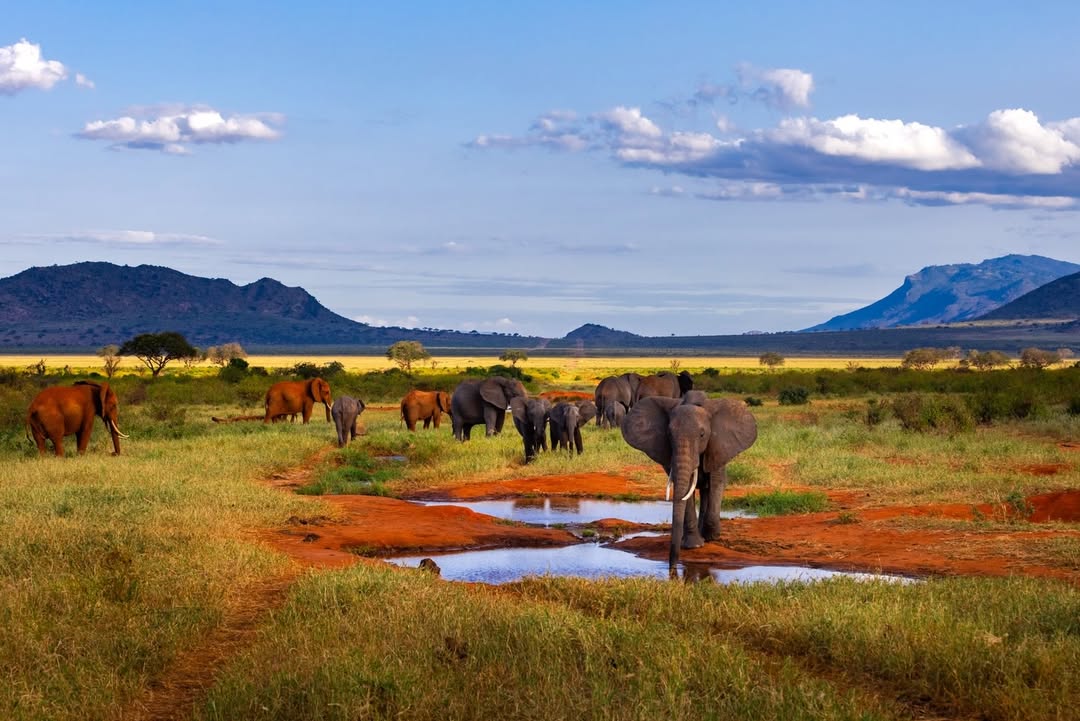
Tsavo West is built from contrast. Black lava lies across sun-burnt ground, yet clear water rises through porous rock at Mzima Springs. Elephant move beneath volcanic hills; a green river corridor disappears into thorn; the plain opens from Poacher’s Lookout and then closes again around Ngulia. It is a park that makes the ground itself part of the safari.
Covering about 9,065 square kilometres, West is smaller than Tsavo East but still immense. It is more broken, wooded and topographically varied, so wildlife may be harder to see. The reward is a journey through springs, lava, escarpments, dry savannah and distant views towards the Chyulu and Kilimanjaro country.
Mzima Springs: water travelling underground
Rain falling on the Chyulu Hills filters through porous volcanic rock and moves underground before emerging at Mzima. In a dry landscape, the clear pools and channels create an abrupt oasis of raffia and doum palms, fig trees, fish, waterbirds, primates, hippo and crocodile.
A short visitor path and underwater viewing structure have historically offered a different perspective, but visibility, facility condition and access can vary. Hippos may be away grazing or hidden in deep water. We do not promise an underwater portrait from an old brochure. The experience is valuable even without a large animal: watch fish hold position in current, vervet monkeys work the canopy and bubbles reveal water rising through the system.
Mzima also helps supply water beyond the park, connecting distant rainfall, protected catchment and human need. Guests stay on the authorised path, follow KWS instructions and never approach the water’s edge outside designated areas.
Shetani lava and the young volcanic landscape
The Shetani flow is a dark field of broken lava, its name commonly translated from a local reaction to an eruption as the work of a devil or spirit. Whether seen in hard sun or late light, it looks startlingly recent against surrounding bush. The flow, Chaimu crater and other cones belong to the active geological story of the greater Chyulu–Tsavo region.
Lava is sharp, unstable and intensely hot. Walking or cave access is only undertaken where currently authorised, with suitable footwear and guidance. We do not enter a lava tube or climb a crater simply because an old guidebook describes it. Wildlife, weather and park management decide the safe route.
Ngulia and the return of black rhino
Greater Tsavo once supported thousands of black rhino before poaching and drought drove the population to a remnant. Ngulia Rhino Sanctuary became a core recovery area, combining fencing, ranger protection, monitoring and breeding. Its success eventually created pressure within a limited sanctuary.
In 2025 KWS reported an expansion that brought approximately 150 rhinos from the Ngulia sanctuary together with about 50 already in the wider Tsavo West area, creating a founder population of around 200 black rhinos across the expanded protected landscape. The conservation achievement is important, but it does not make a tourist sighting easy or guaranteed.
Black rhino prefer browse and can vanish in dense vegetation. Security restrictions protect them. We never seek restricted access, request precise locations or publish a live position. A distant rhino seen briefly through commiphora can be a more truthful Tsavo West encounter than a promised close-up.
Hills, viewpoints and changing scale
Poacher’s Lookout and Roaring Rocks offer authorised high perspectives across plains and hills, subject to current access. The name of a viewpoint may carry difficult history, but the view reveals ecology: drainage lines, burns, waterholes and animal routes become visible from above.
The Five Sisters, Ngulia range and scattered volcanic cones shape light and weather. Early morning can be cool at elevation; midday heat shimmer hides detail; evening turns the hills violet and gives dust a copper edge. This is why West often satisfies a landscape photographer even when cats remain unseen.
Lake Jipe and the southern reaches
Lake Jipe lies on the Kenya–Tanzania border in the far south, below the Pare Mountains. Wetland vegetation, open water and surrounding grassland support waterbirds, hippo and other wildlife. It is geographically separate from the park’s common Mtito Andei–Mzima circuit and deserves time rather than being added casually to one long day.
Water level, access road and any boating arrangements are variable. If Jipe is important, we choose accommodation and gate around it, confirm local operations and treat the wetland as habitat rather than a scenic add-on.
Wildlife in thicker country
Elephant, buffalo, giraffe, zebra, kudu, waterbuck, hartebeest, gerenuk and many antelope inhabit Tsavo West. Lion, leopard, cheetah, spotted hyena and African wild dog occur, but vegetation and scale reduce certainty. A leopard may be present as fresh tracks on a road; a lion may call from a thicket and remain unseen.
This is where guiding matters. We stop for tracks, broken branches, oxpecker alarms and the direction of elephant dung. At a waterhole, stillness can bring an entire sequence: sandgrouse, impala, a wary kudu and finally a bull elephant. Tsavo should not be judged by the number of large animals photographed before breakfast.
Birding from spring to dry bush
Tsavo West’s habitat mosaic supports exceptional bird diversity. Mzima and Lake Jipe bring waterbirds; cliffs and hills hold raptors; dry woodland carries hornbills, barbets, starlings, sunbirds, bushshrikes and coursers. Migrants expand the list when seasonal conditions are right.
Ngulia is known in ornithological circles for migration research, but specialist access and timing must be arranged rather than assumed. We can build a bird-led itinerary that spends more time at water, woodland edges and elevation instead of treating birds as names between mammal sightings.
History in the Tsavo corridor
The railway construction story, including the 1898 lion attacks, is often marketed through sensational language. Real workers died under difficult colonial labour conditions, and their history deserves more than a monster tale. The wider Tsavo region also became a theatre of the First World War East African campaign, leaving sites and memories across the border landscape.
Long before railway and park boundaries, African communities knew and used this country. Taita, Maasai and other neighbouring people remain part of the landscape’s present. Any cultural or heritage stop should use accurate local interpretation and clear community benefit.
Photography with Kenny
West challenges autofocus and composition because branches, rock and shadow constantly interrupt the frame. Kenny helps guests use that structure: an elephant between dark lava and green bush, giraffe legs repeating tree trunks, or a rhino partly revealed rather than forced into an open portrait.
At Mzima, glare on water requires exposure control and often a polarising filter used carefully. On the lava, wide angles explain texture while a person or animal gives scale. From viewpoints, haze and heat are creative constraints; dawn or late afternoon gives cleaner layers.
How long to stay
Two nights allow Mzima, lava and a focused wildlife circuit when accommodation is well placed. Three nights are much better for Ngulia country, birding or a slower photographic programme. Lake Jipe often justifies an additional night in the south.
Combining West and East needs at least four nights overall. Amboseli and West also work naturally together, but the Chyulu route is a real safari day, not a quick transfer.
Getting there
Mtito Andei is the main road and rail gateway from the Nairobi–Mombasa corridor. Other gates include Tsavo River, Chyulu, Maktau, Lake Jipe and Ziwani, each relevant to a different sector. From Amboseli, Chyulu Gate can create a protected-area connection when road and gate conditions permit.
Scheduled passenger rail may serve Mtito Andei, with a private vehicle arranged in advance. Airstrips include Kilaguni, Finch Hattons, Kamboyo, Ziwani and others; actual scheduled service, charter availability, baggage and transfer time are confirmed for the date.
Where to stay
West contains historic lodges, luxury camps, public and special campsites and properties focused on waterholes or springs. Kilaguni-area stays suit central circuits; Ngulia access favours different locations; Jipe and southern gates require their own plan.
We compare camp location, vehicle policy, charging, room distance, waterhole quality and onward route. A view of Kilimanjaro is weather-dependent and should never be the sole reason to choose a room.
Best time to visit
Drier periods improve visibility and concentrate wildlife around permanent water, while dust and heat become stronger. Rain greens the hills, activates seasonal water and birdlife, and makes lava colour more dramatic, but animals disperse and some roads become difficult.
West’s elevation changes create local differences, so one forecast does not describe the whole park. Dawn departures and midday rest make sense in every season.
Combining Tsavo West
Amboseli to West is one of Kenya’s strongest landscape transitions: wetlands and Kilimanjaro give way to Chyulu lava, springs and hills. East can follow through the Mtito Andei corridor for a full Tsavo journey. The coast lies beyond East or the southern road network, with route design based on the actual property.
Responsible travel in Tsavo West
- Keep rhino information private and accept that security overrides sightseeing.
- Use only authorised paths at Mzima, lava sites, caves and viewpoints.
- Give elephant unrestricted access to water and road crossings.
- Carry water and fuel without speeding to compensate for distance.
- Do not feed wildlife at lodges or picnic areas.
- Respect neighbouring communities and obtain consent for every portrait.
Tsavo West FAQ
Can we see hippos underwater at Mzima?
Sometimes, but water visibility, animal position and facility access vary. We promise the spring ecosystem, not a staged underwater sighting.
Will we see black rhino?
Possibly, but vegetation and security make sightings uncertain. Ngulia’s success is a conservation story before it is a tourism guarantee.
Is Tsavo West better than East?
West is more varied and volcanic; East is more open and red-earth. Neither replaces the other.
Can we walk on the lava?
Only at currently authorised sites and routes, with appropriate footwear and guidance. Lava and caves are not unrestricted adventure areas.
How many nights?
Two are workable; three reveal the park more honestly. Add time for Lake Jipe or a combined East journey.
Plan a private Tsavo West safari
Tell us your dates, route, mobility, interests and preferred comfort. We will match Mzima, volcanic country, Ngulia and wildlife time to a realistic camp location without turning a huge park into a checklist.
Plan Tsavo West with Wilderness Alternative Expedition
Wildlife sightings, rhino access, water visibility, walking routes, roads, rail and flights depend on natural conditions, security, park rules and confirmed operations.