SOUTH COAST • REEF • FOREST
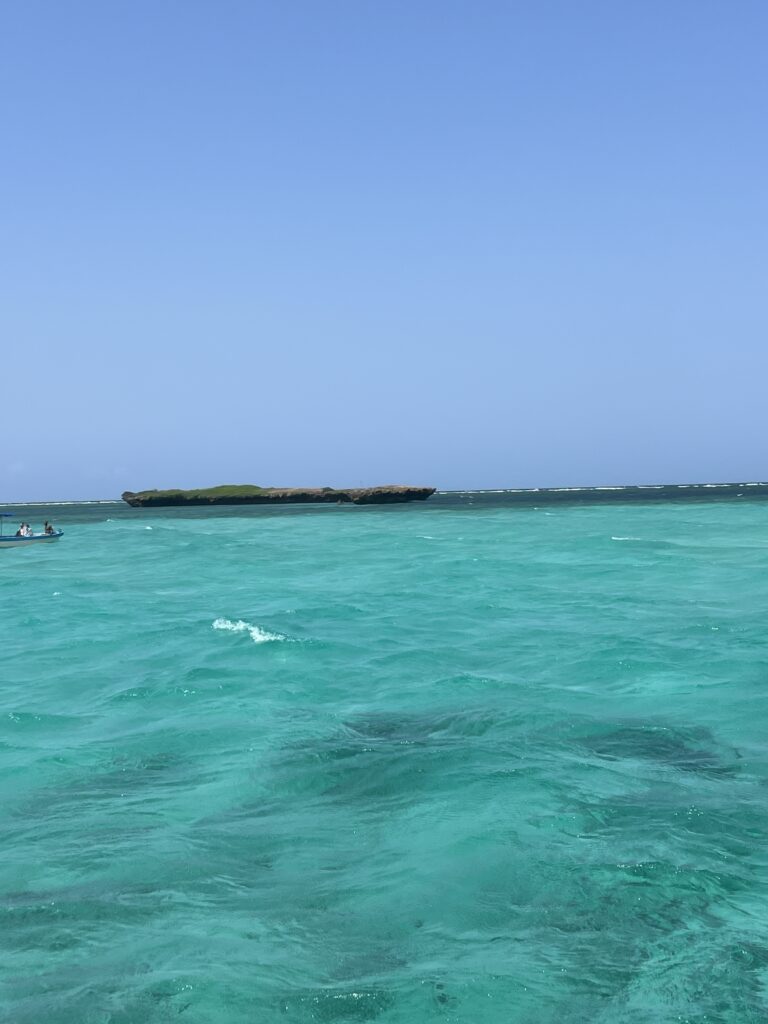
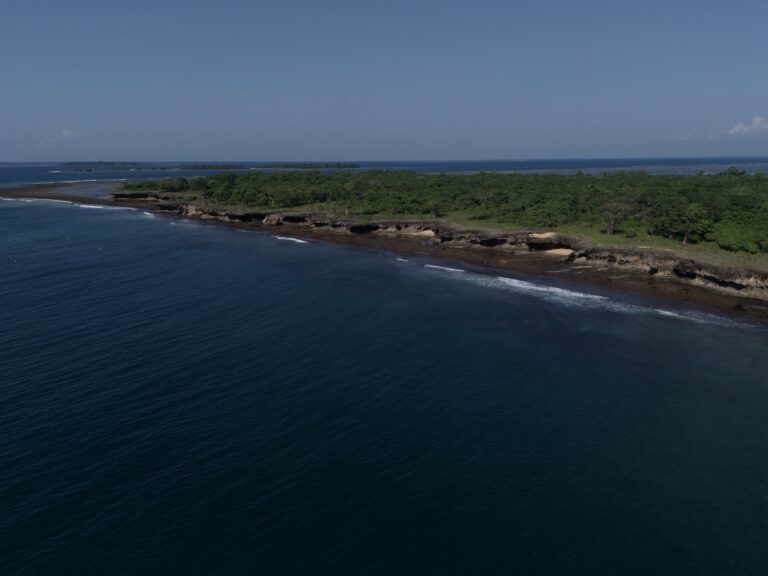
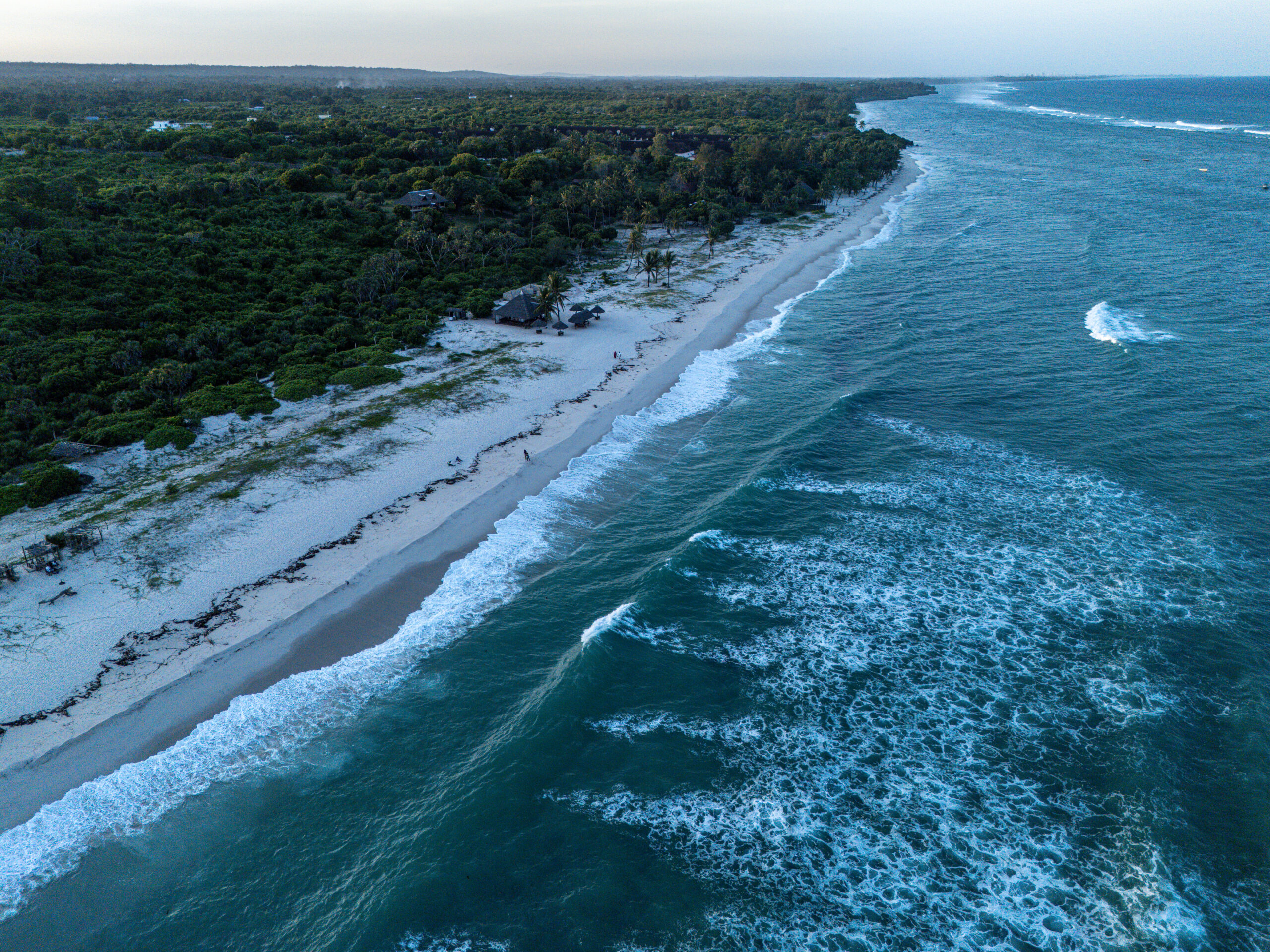
Diani is often described through its sand. The more useful way to understand it is through the reef: a long offshore barrier that shapes the lagoon, the tide, the colour of the water and nearly every decision about a day at sea.
Diani and the South Coast
Diani lies south of Mombasa Island in Kwale County, reached by air through Ukunda or by road from Mombasa and the national parks inland. Its hotel corridor runs beside a long beach, but “Diani” is also used loosely for a wider area. Ukunda is the busy commercial town and transport centre. Diani Beach carries the greatest concentration of resorts, restaurants and activities. Galu, farther south, generally feels quieter and more residential. Tiwi, to the north, is a separate coast of coves, coral ledges and smaller beaches rather than a continuation of the same uninterrupted strand.
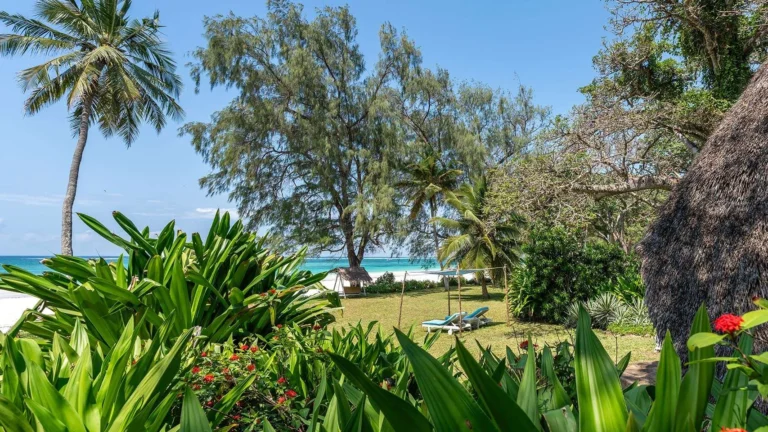
The landscape behind the beach is an important part of its character. Palms, baobabs and remnant coastal forest stand among roads, houses and hotels. Black-and-white colobus monkeys still move through fragmented canopy. Inland, the ground rises towards Shimba Hills, where forest, grassland, elephants and Kenya’s remaining breeding population of sable antelope create a striking ecological counterpoint to the reef.
Diani succeeds as a base because it can hold very different holidays. One guest can spend four quiet days between a villa and the water. Another can dive, kite, fish, visit Shimba Hills and take a full-day boat journey to Kisite-Mpunguti. Families can choose large resorts with pools and organised activities; couples can stay in small properties or private houses. The choice should begin with location and intended rhythm, not a generic star category.
Wilderness Alternative in Diani
Wilderness Alternative has a small operational presence in Diani. It is not a large resort office and we do not pretend to operate every marine activity ourselves. Its value is practical: we can coordinate transfers, help plan days around tide and weather, and arrange jet skis, scuba logistics, boats and other activities through appropriate local professionals. That continuity matters after safari. Guests are not simply delivered to a hotel and left to rebuild their journey with whoever happens to be selling an excursion that afternoon.
One beach, many versions
The tide is Diani’s daily clock. At high water the lagoon can reach close to the upper beach, covering reef flats and making parts of the shore feel narrower. Swimming may be convenient because depth begins sooner. As water falls, the beach widens, pale sandbars emerge and the lagoon separates into shallower channels and pools. Near low tide, sections of exposed seagrass and coral platform can extend towards the offshore reef.
This is why photographs of the same hotel can seem to show different beaches. Neither is misleading; they record different hours. Tides move forward by roughly fifty minutes from one day to the next, so yesterday’s ideal swimming hour will not repeat exactly today. Wind and the lunar cycle add further variation.
Swimming
Many sections are pleasant for swimming, especially when there is sufficient water inside the lagoon, but no ocean beach is uniformly safe. Channels, current, wind, seaweed, urchins and uneven coral require local attention. Ask staff or a professional guide where and when to enter. Children need active supervision even in shallow water. Reef shoes can protect feet in appropriate areas, but they do not make it acceptable to walk on living coral.
Walking and reef flats
Low tide creates long walks and excellent graphic photography: rippled sand, pools, fishers and boats sitting on their keels. It also exposes delicate life. A guided reef walk is better than wandering without context. Guides know the channels, avoid sensitive organisms and can explain what survives in pools until the sea returns. Nothing should be collected, and starfish or other animals should not be lifted for photographs.
Wind, shade and the human beach
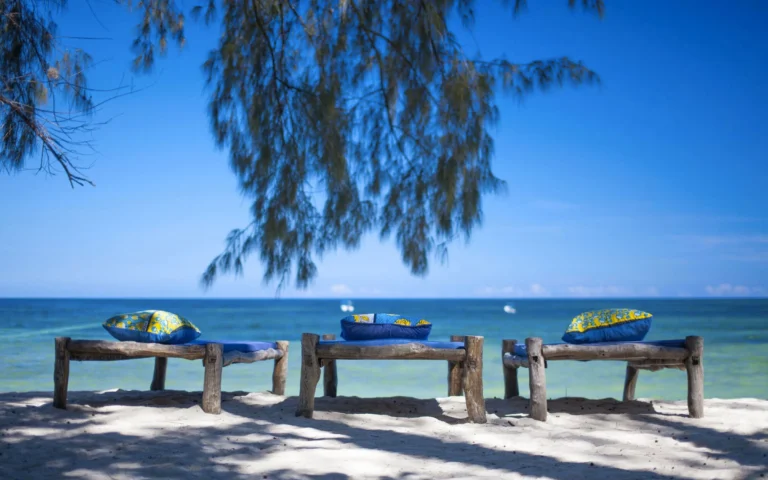
Morning is often quieter and softer. By midday the sand is bright and hot; shade from palms or hotel structures matters. Wind can cool the afternoon and power kites, but it may also make surface conditions harder for small children or first-time paddlers. Informal sellers work parts of the beach. A polite, firm refusal is usually sufficient. The issue is not that every beach seller is unsafe; it is that an unverified sale gives little evidence of insurance, boat standards, equipment maintenance or recourse if plans change.
In and on the water
Scuba diving
Diani offers access to reef sites suited to different levels, while southern day trips expand the range. Conditions vary by site and season: wind, current, plankton and rainfall all influence comfort and visibility. A professional dive centre should ask for certification, recent diving history and medical information, then match the site to the diver rather than to a marketing promise.
Beginners may take a recognised training course or a closely supervised introductory experience. Certified divers returning after a long break may need a refresher. Equipment should be correctly sized and checked; boats should carry communication and emergency equipment appropriate to the operation. Divers should confirm what is included, how marine-park fees are handled, the maximum group size and whether insurance covers scuba activity. Wilderness Alternative can coordinate diving logistics and equipment through professionals, but does not present unsupervised equipment hire as diving.
Snorkelling
Snorkelling can begin from shore in suitable tide and weather, or by boat at a designated reef. Shore access is not automatically the easiest: a long shallow walk, breaking water at a reef edge or current in a channel can challenge an inexperienced swimmer. A guide, flotation aid and properly fitted mask often matter more than travelling to the most famous site. Visibility is variable and should never be guaranteed.
Responsible snorkellers float horizontally, keep fins clear of coral, do not feed fish and give turtles room to surface. Children should have an adult within immediate reach and an operator prepared to shorten the session when fatigue or cold appears.
Jet skis
Jet skiing is available through selected Diani operators and can be arranged with our local support. It should be treated as a powered marine activity, not as a beach toy. A credible operator provides a clear briefing, correctly fitted life jackets, maintained craft, defined operating boundaries and a plan for weather or mechanical failure. Riders must remain clear of swimmers, boats, shallow reef, wildlife and conservation zones. Speed belongs in permitted open-water areas, never close to shore.
Kitesurfing and wind sports
Diani and Galu have an established kite community. The northeast monsoon often brings useful winds during the northern winter, while the stronger southeast monsoon can produce another season with a different character. Daily wind is not guaranteed. Beginners need a qualified instructor, helmet and sufficient beach space; launching among swimmers or in gusty conditions is poor practice. Advanced riders should still seek local advice about reef gaps, tide and downwind hazards.
Deep-sea fishing
Fishing boats travel beyond the reef for billfish, tuna and other pelagic species according to season and conditions. A serious charter explains the target, tackle, likely sea state, trip length, licensing and catch policy. No skipper can promise fish. We favour crews that handle billfish carefully and practise catch-and-release where appropriate, and that are candid when weather makes a departure unwise.
South beyond the resort strip
Kisite-Mpunguti and Wasini
A day to Kisite-Mpunguti begins with a road transfer south towards Shimoni, then a boat journey into a protected seascape near the Tanzanian border. Kisite National Park and Mpunguti reserve protect reefs, channels and marine life. The day may include snorkelling, sailing and a meal on or near Wasini Island, but the precise programme depends on operator, tide and sea.
Dolphins occur in these waters, yet a sighting is never guaranteed. Boats should not race towards a pod, split groups or repeatedly cut across their direction. Swimming with dolphins should not be treated as an entitlement. A quieter, well-handled encounter from the boat can be more responsible and more revealing.
Wasini is a lived island community, not a lunch stop assembled for visitors. Local guiding can open a wider story of fishing, trade, coral geology, mangroves and changing livelihoods. Confirm walking demands, sun exposure, food arrangements and the length of the road-and-boat day before choosing it for young children.
Shimba Hills
Shimba Hills National Reserve lies roughly thirty kilometres inland from Diani, reached through Kwale. The climb replaces sea glare with rolling grassland, forest edges and wide views. KWS identifies the reserve as the stronghold of Kenya’s remaining breeding population of sable antelope. Elephants also use the wider ecosystem, but neither species should be promised on a short visit.
The reserve works as a day trip for guests who want landscape and terrestrial wildlife without adding a full safari, or as a quieter overnight variation. Trails and Sheldrick Falls require current local guidance, suitable footwear, water and an honest assessment of heat and fitness. Shimba is most satisfying when presented as coastal ecology rather than a compressed Big Five drive.
Colobus and coastal forest
Diani’s Angolan black-and-white colobus are part of a fragmented coastal forest population. Roads, power lines, dogs and breaks in the canopy create serious movement hazards. Conservation work includes habitat protection, canopy connections, rescue and public education. Guests help by driving slowly, never feeding primates and supporting reputable conservation organisations rather than seeking close contact. Monkeys around hotels remain wild even when habituated to people.
Where to stay
Diani’s range is a strength, but “beachfront” alone does not describe a stay. Large resorts offer multiple pools, children’s programmes, broad menus and organised entertainment. Smaller premium hotels may provide quieter gardens, stronger personal service and a more adult rhythm. Private villas offer space and privacy but require clarity about staffing, meals, transport, beach access and security. Slightly inland properties can be good value and feel local, though crossing the main road or arranging every beach visit may become tiresome.
Galu often suits travellers seeking a quieter edge, kitesurfing access or a villa-led stay. Central Diani makes restaurants, shops and activity operators easier to reach. Tiwi is more secluded, with distinct coves and fewer casual dining choices. Families should verify interconnecting rooms, pool barriers, shallow-water access and medical logistics. Couples should ask whether the property hosts groups or loud events. Long-stay guests need practical shopping, laundry, workspace and reliable transport as much as a view.
Eating on the South Coast
Diani’s food ranges from Swahili dishes and Kenyan grills to Italian, Indian and contemporary international cooking. The most memorable meals often make good use of coconut, lime, tamarind, chilli, cassava and seafood without hiding the ingredient beneath a resort concept. Pilau is aromatic rice cooked with spice; biryani layers rice and richly seasoned sauce; fish curry can be gentle or fiery; viazi karai turns potatoes into a vivid coastal snack.
Ask what seafood is local and in season. Shellfish allergies, coconut and nuts should be communicated clearly. For street food, choose busy places with visible turnover and sensible handling. Restaurant opening days change, especially outside peak periods, so we recommend by current knowledge rather than publishing a permanent ranking.
Getting to Diani
Ukunda Airport is the most direct gateway. Scheduled flights operate from Nairobi and may connect with safari circuits, but routes and baggage limits change; smaller aircraft often require soft bags and lower allowances than international services. A transfer from Ukunda to most Diani properties is short, though exact time depends on location and traffic.
Moi International Airport and Mombasa Terminus serve the wider region. Road transfers to Diani must cross from the Mombasa side to the South Coast. Current routing may use the Likoni channel or the Dongo Kundu bypass approach depending on origin, traffic and final destination. We plan from the actual arrival point rather than quoting one universal transfer time. The SGR is an appealing Nairobi–Mombasa journey, but it ends at Miritini and still requires an onward road transfer.
Diani also pairs naturally with Tsavo by road. Amboseli and Maasai Mara combinations are often cleaner by air, sometimes via Nairobi or another scheduled connection. A direct-looking route on a map is not proof of a daily direct flight.
Best time and length of stay
Diani is warm year-round. December to March is often hotter and drier, with the northeast monsoon; July to October is generally cooler and can combine well with safari. The southeast monsoon and rainy periods can create rougher water or interrupted boat plans. Four nights offers a useful beach finish; five to seven lets guests add marine and inland days without turning the stay into a schedule.
Safety and operator standards
Use hotel safes, avoid displaying valuables and take advice about walking after dark. On the water, licensing, insurance, equipment maintenance, passenger limits and emergency procedures are more important than the lowest quote. Informal sellers may be knowledgeable, but payment should follow a verified service and clear terms. Medical and evacuation cover should include the activities planned, especially Scuba diving and powered watersports.
Photography
Plan with tide and sun. Low tide creates leading lines and scale; high tide gives cleaner water close to the tree line. Early morning works for quieter shore life, while an elevated midday view can reveal the reef. Ask before photographing fishers, vendors or local residents. Drones require current aviation, protected-area, privacy and property permissions; proximity to Ukunda Airport is an additional constraint.
Frequently asked questions
Is Diani suitable for swimming?
Many sections are, particularly with enough water in the lagoon, but daily tide, wind and local channels matter. Ask for same-day advice and supervise children closely.
Should I fly to Ukunda or Mombasa?
Ukunda is usually the most convenient for Diani. Mombasa may suit international arrivals, SGR passengers or a combined city stay. Compare the complete journey, baggage and transfer—not only the airfare.
Can a beginner scuba dive?
Yes, through a recognised professional programme with appropriate screening and direct supervision. Independent equipment hire is not a substitute for training.
Is Diani good after safari?
Very. It offers simple air access, varied accommodation and enough activity for guests who do not want to spend every day beside a pool.
Is Diani good for families?
Yes, with the right property and tide-aware planning. Prioritise room configuration, pool and beach supervision, food flexibility and short transfers.
Diani or Galu?
Central Diani is more convenient for restaurants and activities. Galu often feels quieter and suits villa stays and wind sports. The right choice depends on desired pace.
Plan Diani with people on the ground
Tell us where your safari ends, who is travelling and which marine activities matter. Our Diani presence helps us coordinate the arrival, property geography and verified specialists into one coherent South Coast stay.