
The Kenyan coast is not one reef and it is not one season. Coral gardens, outer reef walls, sheltered lagoons, tidal creeks and open-water channels behave differently from Diani to Watamu. A good marine journey begins by choosing the right base for the experience you want, then leaving enough flexibility for wind, tide, visibility and local advice.
We do not promise a particular animal sighting or treat the Indian Ocean as a fixed timetable. Instead, Wilderness Alternative builds the coast around sound operators, realistic transfer times and the conditions on the day. That approach matters whether you are a first-time snorkeller, an experienced diver or a family introducing children to the sea.
Where the main marine experiences are
Diani, Shimoni and Kisite-Mpunguti
Diani is the easiest major resort base for reaching the southern marine landscape. The beach itself is broad and reef-protected in places, while the most celebrated excursion continues south by road towards Shimoni and then by boat into the Kisite-Mpunguti marine protected area. The day combines a substantial overland transfer, open-water travel and time in the sea; it should not be described as a quick boat trip from the hotel.
Kisite is known for clear-water snorkelling over coral habitat when conditions cooperate. Dolphins may be encountered in the wider channel, but they are wild animals and never a guarantee. We choose crews that keep distance, avoid chasing and put safe water practice before a dramatic photograph. Wasini can add a community and cultural dimension to the day, with lunch and time ashore, but the quality depends on pacing rather than cramming every stop into one excursion.
Watamu and the northern marine parks
Watamu has the coast’s strongest concentration of reef, creek and coastal-forest experiences in one compact area. Protected inshore water can suit introductory snorkelling, while dive sites farther out offer different depths, coral formations and current. Mida Creek adds mangroves, birds and tidal channels rather than open-sea coral. These are complementary environments and deserve separate time.
A Watamu stay of four or five nights creates room for a marine day, a creek excursion and an unplanned weather window. A two-night stop often turns the sea into a single pass-or-fail booking. Divers should share certification level, recent experience and equipment needs before the journey so the centre can recommend appropriate sites rather than making decisions at the boat.
Malindi
Malindi’s marine park and reef system can be reached from resorts around town and Casuarina. It is useful for travellers combining heritage, the Gede landscape and marine time. Visibility and sea state vary, so the best plan may alternate a boat session with shore-based cultural exploration. The Sabaki estuary and offshore reefs are distinct ecological systems and should not be collapsed into one generic “marine safari”.
Mombasa and the North Coast
Mombasa Marine National Park lies off the North Coast resort belt. It can be a convenient introduction for travellers staying at Nyali, Bamburi or Shanzu, particularly when the wider itinerary includes Fort Jesus and Old Town. Boat access, reef condition and crowd levels differ by departure point. We prefer to arrange a specific marine session rather than assume a glass-bottom boat sold on the beach will meet every guest’s expectations.
Lamu Archipelago
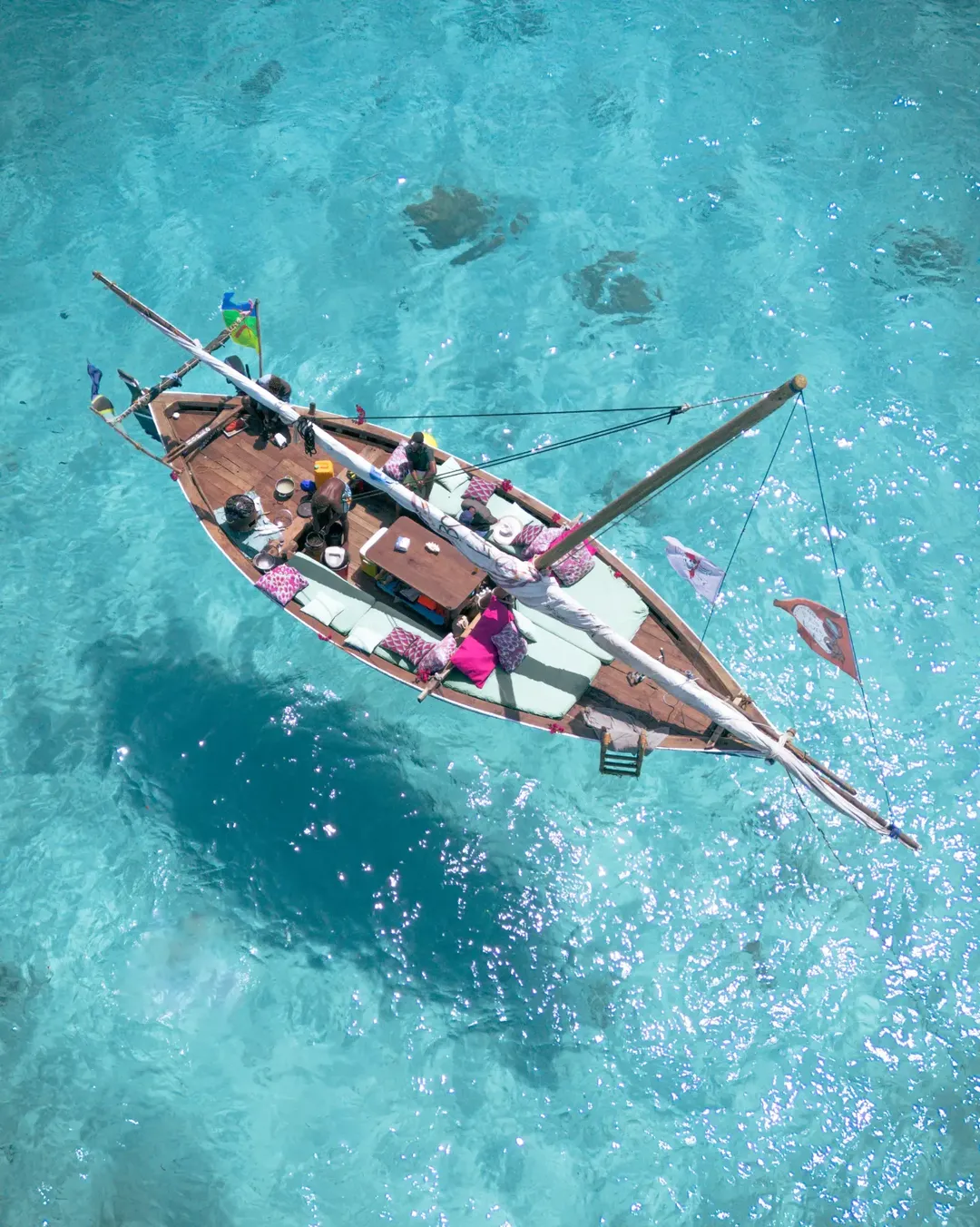
Lamu is more about channels, mangroves, sandbanks, dhow sailing and the relationship between islands than a classic resort reef programme. Snorkelling opportunities exist, but the archipelago’s commercial strength is the whole maritime culture: reading wind and tide, moving by boat, reaching quiet shores and understanding how settlement grew around the water. Experienced divers may need a specialist arrangement; Lamu should not be sold as a direct substitute for Watamu.
When to plan marine days
Conditions on the Kenyan coast are shaped by monsoon systems, local wind, swell, rain, river discharge and tide. No month is uniformly perfect across the entire shoreline. Calm mornings can deteriorate later; a protected lagoon may remain usable when an outer site is not. We therefore ask local skippers and dive professionals to make the operational call.
For a coast-only journey, build at least one spare half-day around the principal water activity. After safari, avoid placing a non-refundable dawn boat immediately after a late road or flight arrival. Families should consider energy as carefully as weather: long transfers, heat and salt water can turn an exciting day into an exhausting one.
Choosing a dive operator
A professional centre asks about certification, logbook recency, medical issues, age, comfort in current and the type of diving you have done. It explains group size, guide ratios, emergency oxygen, communication, surface support and the policy when weather changes. Equipment should be fitted before departure, not passed out hurriedly at the boat.
New divers can explore an introductory programme or complete training, but the itinerary must allow time rather than compressing instruction into a crowded beach stay. Certified divers returning after a long gap may be asked to complete a refresher. This is sensible risk management, not an inconvenience.
Snorkelling well
Strong swimming ability helps, but good snorkelling is also about comfort, fit and supervision. A leaking mask or poor fin size can ruin the experience. Children and nervous swimmers need a guide who can work at their pace, a flotation option and an entry point appropriate to the conditions. Reef shoes are useful on some shores, but standing on coral is never acceptable.
Apply reef-conscious sun protection before departure, wear a rash vest and carry drinking water in a reusable bottle. Do not feed fish, collect shells from protected areas or pursue turtles and dolphins. A calm observer sees more than a swimmer trying to close every distance.
Photography under and around the water
Underwater photography is demanding even in clear water. Secure the camera, understand your housing and practise buoyancy before concentrating on the frame. A wide-angle action camera can record family snorkelling, but it should never justify crowding wildlife or dropping onto coral. On a dhow or small boat, protect equipment from spray and carry only what can be handled safely during boarding.
Our founder and guide Kenny is a working wildlife photographer and can help guests think about light, background, behaviour and patience throughout a journey. Marine photography requires specialist in-water skill, so we pair that guidance with the safety authority of the boat crew or dive professional.
How we build the right marine journey
Tell us whether the priority is relaxed snorkelling, certified diving, a family day, dhow sailing, marine photography or simply time beside the ocean. We then select the coast base, accommodation and number of nights accordingly. Diani works well after Amboseli or Tsavo; Watamu pairs naturally with a flight or rail-and-road routing through Mombasa; Lamu deserves enough time to enter the archipelago’s slower rhythm.
Every proposal states what is private, what may be shared, what equipment is included and which decisions remain dependent on conditions. That is the difference between selling an excursion and planning a marine journey.