
Wilderness Alternative Expedition guide to Lake Nakuru National Park
Lake Nakuru is remembered as a pink lake, but the honest safari begins after that old image is put aside. The water has risen, fallen and changed chemistry. Flamingos move through a network of Rift Valley lakes according to food and conditions; sometimes they gather here in great numbers, sometimes they do not. What remains is a remarkably varied national park: rhino moving through short grass, buffalo below the escarpment, Nubian giraffe in woodland, lion in the fever trees and hundreds of bird species using lake, marsh, cliff and forest.
This is a compact safari with depth. In one field day a traveller can move from an alkaline shoreline to yellow-barked woodland, rocky viewpoints, open grazing ground and the Makalia waterfall. The boundaries are visible and Nakuru city lies close, yet the landscape inside holds some of Kenya’s most important conservation history.
A lake that refuses to stay still
Lake Nakuru occupies a closed basin on the floor of the Great Rift Valley. It is shallow and naturally alkaline, fed by rivers and runoff but without a surface outlet. Water level, salinity, algae, fish and waterbird distribution influence one another. When water rises and the lake is diluted, the microscopic food on which lesser flamingos depend may decline or shift. The birds then move to Bogoria, Elementaita, Magadi or other suitable wetlands.
The park’s current 188 square kilometres include far more than open water: grassland, sedge and marsh, acacia woodland, euphorbia forest, rocky escarpment and hills. Lake Nakuru has been a Ramsar Wetland of International Importance since 1990 and forms part of the UNESCO-listed Kenya Lake System in the Great Rift Valley with Lakes Bogoria and Elementaita.
These labels do not freeze the lake in one photogenic state. Urban runoff, pollution, catchment change, invasive species and extreme water levels continue to affect the system. A guide should explain the change rather than apologise because the shoreline no longer resembles a twentieth-century photograph.
The truth about flamingos
Both lesser and greater flamingos may occur at Nakuru. Lesser flamingos filter microscopic algae; greater flamingos take larger organisms and can often be recognised by their size and paler colour. Their numbers are mobile and cannot be predicted from a calendar alone.
We do not sell “millions of flamingos” as a guaranteed attraction. Before a trip we check current field information, but even a recent report cannot promise what a flying bird will do tomorrow. Binoculars matter because feeding groups may be far from an authorised road. When flamingos are scarce, pelicans, cormorants, grebes, herons, egrets, storks, ducks, waders and raptors still make the lake one of Kenya’s strongest birding classrooms.
For photographers, a small natural group in clean light can produce a better image than a distant mass. Kenny helps guests expose pale plumage, work with reflection and separate birds through patient position rather than chasing the shoreline.
Kenya’s first government rhino sanctuary
Lake Nakuru became Kenya’s first government-managed rhino sanctuary in 1987, building on a perimeter fence established the previous year. It protects both eastern black rhino and southern white rhino. White rhino often graze in open areas; black rhino browse and use thicker cover, which can make them harder to find.
The park’s compact size creates good opportunities, but a sighting is never guaranteed. Rhino protection depends on monitoring, security, habitat management and the wider national strategy of maintaining viable populations across several secure areas. We keep our distance, leave animals an open path and do not share precise live locations.
The fence reduces some human–wildlife conflict and helps protect rhino, but it also makes the park a highly managed ecological island. Water, habitat condition and animal numbers must be watched closely. There are no resident elephants, an important distinction for first-time visitors expecting every member of the Big Five.
Wildlife beyond rhino
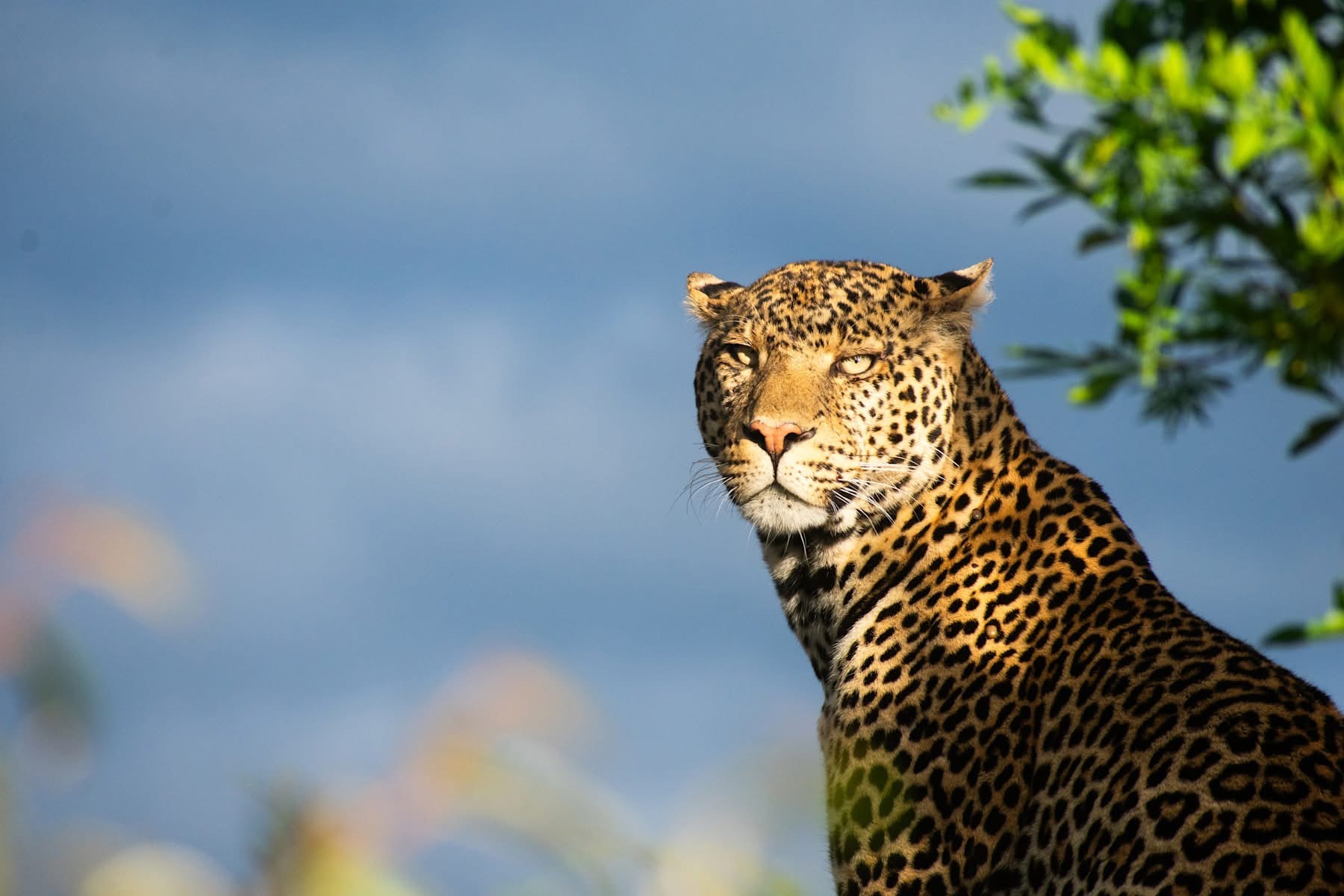
Buffalo are prominent and often gather near water or rest in woodland. Lion are resident; leopard use dense vegetation and rocky ground but remain elusive. Spotted hyena, jackal and smaller carnivores occur. Defassa waterbuck, impala, bushbuck, eland, zebra, warthog and olive baboon occupy different habitats around the lake.
Nubian giraffe were introduced as part of conservation efforts and are an important attraction. Many older guides and signs use “Rothschild’s giraffe”; current taxonomy commonly treats that population within the Nubian giraffe. Their pale lower legs and large pattern are most memorable when explained through conservation history rather than presented as another subspecies tick.
Colobus monkeys move through forested sections, rock hyrax use outcrops and smaller life rewards slow driving. A family watching a dung beetle, chameleon or fish eagle can learn more than one racing between reported lion locations.
Reading the park by habitat
The lakeshore and floodplain
Current water level decides which shoreline roads, mudflats and feeding areas exist. Rhino, buffalo and waterbuck may use open ground beyond the birds. Vehicles remain on authorised roads even when a closer lakeside angle appears tempting.
Fever-tree and euphorbia woodland
Yellow-barked acacias create some of the park’s most beautiful light, while tall candelabra euphorbias give the escarpment a distinctive silhouette. Giraffe, leopard, lion, primates and woodland birds use this structure. Flooding has killed or stressed trees in some low areas, another visible record of lake change.
Makalia and the southern sector
Makalia Falls varies with rainfall. The route south can feel quieter than the main lakeshore and adds woodland, grassland and cliff country. The waterfall and designated picnic or campsite should be approached under current park rules; slippery rock and wildlife require ordinary caution.
Cliff viewpoints
Baboon Cliff, Lion Hill and other authorised viewpoints reveal the shape of the basin better than any map. Water can appear silver, blue or brown depending on light and sediment. Baboons are capable and opportunistic: food should stay secured and guests should never feed or confront them.
How we guide Lake Nakuru
An overnight stay allows entry at opening and a route based on light. We normally check open grass and rhino country early, read the lake edge for birds, then use woodland and higher viewpoints as the day warms. On a day visit from Naivasha or Nairobi, gate choice and traffic determine how much field time remains.
A private vehicle is especially valuable here. Rhino observers, birders and photographers want different speeds. We can spend twenty minutes comparing flamingo feeding or wait for a giraffe to enter clean woodland rather than joining a circuit of five-minute stops.
Photography with Kenny
Nakuru teaches background discipline. A white rhino against pale grass needs careful exposure; a black rhino may appear and disappear through branches; giraffe patterns can merge into woodland. Kenny helps guests choose a position before the animal reaches it, lower the camera when behaviour changes and work within the road network.
At viewpoints, a wide frame can hold lake, escarpment, forest and weather. Telephoto compression shows layers of birds on water but can make distances look deceptive. Captions should never imply that a close-looking frame was taken closer than park rules allow.
How long to stay
One night is enough for a strong first visit when the journey is well timed. It gives an afternoon and a dawn, or one long game drive without returning to Nairobi the same day. Two nights suit birders, photographers and families who want both the northern and southern sectors at a relaxed pace.
A same-day return from Nairobi is possible but vulnerable to highway traffic and leaves little margin for wildlife. Combining Nakuru with Naivasha makes a better short Rift Valley programme because boating, walking and cycling complement Nakuru’s vehicle-based safari.
Getting there
The park lies roughly 156 kilometres northwest of Nairobi by the main highway, with access through gates including Main, Lanet and Nderit according to the route and current operations. Travel time depends on Nairobi departure point, escarpment traffic, roadworks and Nakuru city congestion.
Naivasha connects by road to the south; the Maasai Mara lies onward through longer and more variable road sections. Naishi airstrip exists inside the park but scheduled services are not assumed. If flying is proposed, we confirm the operator, airstrip condition, baggage and ground transfer for the date.
Where to stay
Several lodges and camps operate inside the park, giving the best access to opening and closing hours. Options outside the gates or in Nakuru city may offer value and broader facilities but add daily transfer time. The correct choice depends on the gate, room configuration, guiding plan and whether the trip continues towards Naivasha or the Mara.
We do not choose solely by a lake view. High water and vegetation can change that view; location for early game driving may be more valuable than a balcony photograph taken years earlier.
Best time to visit
Lake Nakuru is open year-round. Drier periods often improve road conditions and shorten grass; wetter months bring green woodland, active waterfalls, migrants and dramatic skies. Rain and high water can close or alter minor routes. Flamingo presence depends on lake ecology, not a fixed tourist season.
Early and late light are best for photography in every month. Weekend and holiday traffic may make popular viewpoints and cat sightings busier.
Combining Lake Nakuru
A two-lake itinerary with Naivasha gives the strongest short Rift Valley contrast. For a longer safari, Nakuru can lead west towards the Maasai Mara or connect back through the highlands towards Mount Kenya. Each route should be built around actual drive time, not the straight line on a map.
Responsible travel at Lake Nakuru
- Do not demand a closer rhino or shoreline position outside authorised roads.
- Never publish precise live locations of rhino.
- Keep food secured around baboons and never feed wildlife.
- Use viewpoints and picnic sites only as designated, checking surroundings before leaving the vehicle.
- Carry no prohibited single-use plastic into the national park and remove all waste.
- Describe flamingo numbers honestly and never reuse old mass-flock claims as current fact.
Lake Nakuru FAQ
Will the lake be pink with flamingos?
Possibly, but never reliably. Flamingos move according to water chemistry and food. We check recent conditions and still treat their presence as natural, not guaranteed.
Is Nakuru good for rhino?
Yes. It protects both black and white rhino and often offers strong viewing, but animals can be hidden by habitat and no sighting is certain.
Are there elephants?
No resident elephant population. The park’s strengths are rhino, birdlife, buffalo, giraffe, woodland and a compact variety of habitats.
Can we visit from Nairobi in one day?
Yes, with an early departure, but one night gives better light and less time pressure. Highway traffic must be allowed for.
Is Lake Nakuru or Naivasha better?
They are complementary. Nakuru is a fenced national park for rhino, game drives and alkaline-lake ecology; Naivasha offers freshwater boating, walking and Hell’s Gate.
Plan a private Lake Nakuru safari
Tell us your dates, interests and onward route. We will plan around current lake and road conditions, giving rhino, birding and landscape enough time without promising a flamingo photograph nature may not provide.
Plan Lake Nakuru with Wilderness Alternative Expedition
Wildlife sightings, flamingo numbers, waterfall flow, route access and airstrip operations depend on natural conditions, park rules and confirmed services.
