
Western Serengeti is where the endless plain begins to fold into river country. Tall grass replaces the close-cropped southern lawns. Dark woodland gathers around the Grumeti River. Hippos crowd the deeper pools, crocodiles hold the banks and, in the migration season, wildebeest appear in restless lines between storm clouds and acacia shade.
This is one of the most misunderstood parts of Tanzania because “Grumeti” is used for several distinct places. The Western Corridor inside Serengeti National Park is not the same experience as the private Singita Grumeti reserve adjoining the park, and neither should be confused with one particular lodge carrying the Grumeti name. The geography is connected; the access, activities and atmosphere are not.
The Western Corridor inside Serengeti National Park
The park narrows west towards Lake Victoria, following the Grumeti and Mbalageti river systems through woodland, open plains and pockets of riverine forest. It feels more enclosed than Seronera and more textural than the southern plains. The change suits elephant, giraffe, buffalo, hippo and a rich variety of birds, while lion and leopard use the cover along the rivers.
Migration herds commonly move through the west between May and July, but this is a broad tendency governed by rain. The Grumeti crossings are very different from the steep, concentrated Mara River drama in the north. Herds may gather and cross in several places over a long stretch of river, sometimes quietly, sometimes with sudden urgency. Giant Nile crocodiles are part of the river’s reputation, but no ethical operator can promise a crossing.
Grumeti in three parts
Kirawira and the park’s western reaches
Kirawira and the Western Corridor suit travellers who want to remain inside the national park and connect by road with Seronera. The appeal is the journey itself: changing vegetation, fewer vehicles once you move away from the central circuits, and the possibility of migration movement in season. A camp on the wrong side of the region can still involve long drives, so exact location matters.
&Beyond Grumeti Serengeti River Lodge
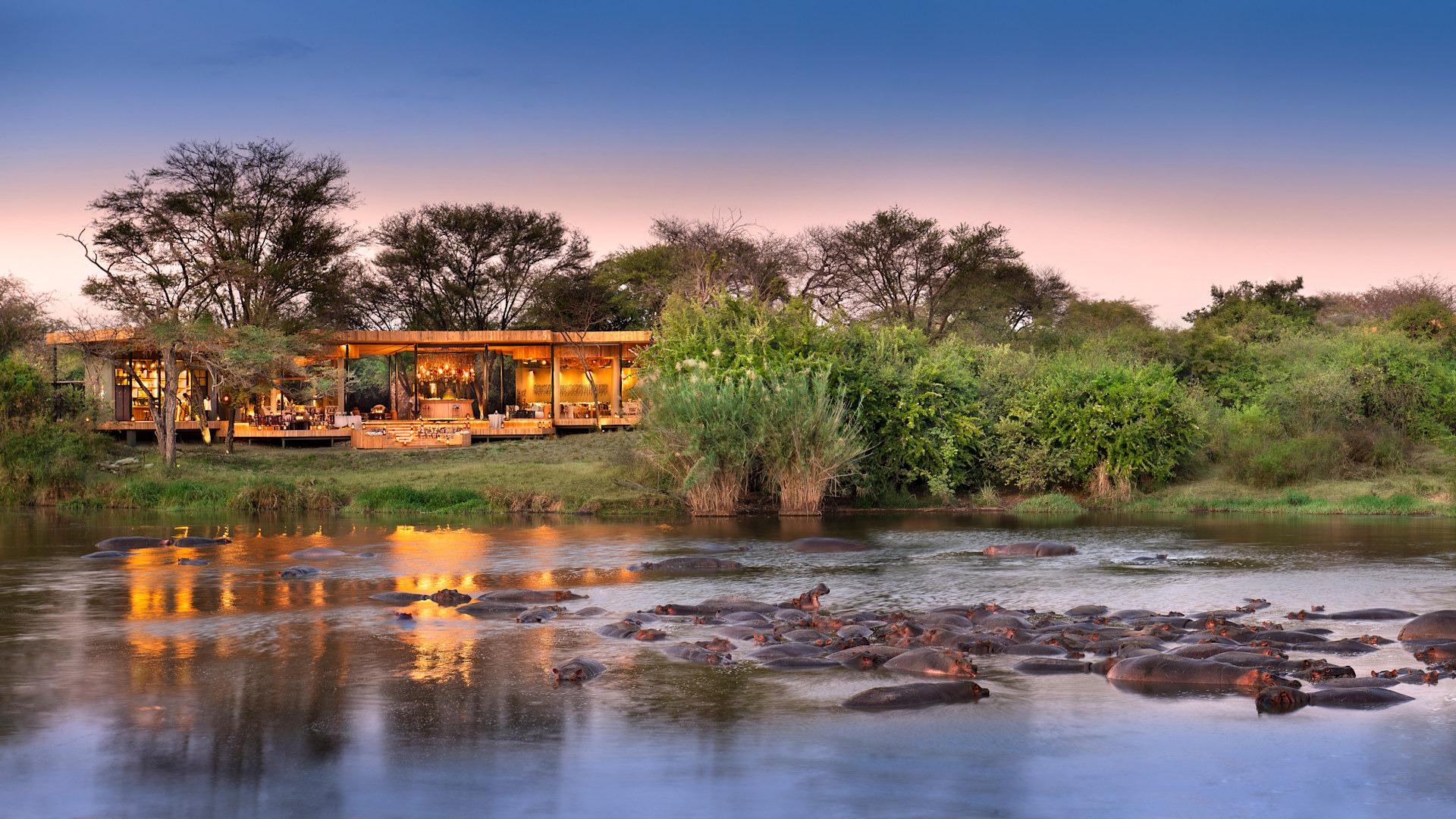
Set beside a hippo-rich stretch of river in the remote west, &Beyond Grumeti Serengeti River Lodge offers a polished but landscape-led stay. The official lodge experience includes game drives, stargazing and, at additional cost, ballooning, wellness and a visit connected to community work at Lukungu. We recommend it for guests who want strong hosting and comfort without losing the sound and presence of the river.
Singita Grumeti private reserve
North of the Western Corridor, Singita Grumeti protects a vast private reserve within the wider Serengeti–Mara ecosystem. It is not simply an expensive address inside the national park. The private-reserve setting allows a different rhythm, lower vehicle density and a broader range of activities than standard park rules may permit. The Grumeti Fund’s long conservation work has helped restore wildlife populations, including buffalo, elephant and critically endangered eastern black rhino.
The properties have distinct personalities. Sasakwa sits high above the plains and is the grandest, with private cottages and expansive views. Faru Faru is lighter and more contemporary beside the Grumeti River and a busy waterhole. Sabora is an intimate tented camp on open grassland, for travellers who want canvas and firelight without giving up exceptional comfort. Families, couples and private groups should not automatically be directed to the same one.

Singita Sasakwa
For sweeping views, generous space, private plunge pools and families or groups who value a substantial lodge.

Singita Faru Faru
For a relaxed, contemporary river setting, easy indoor-outdoor living and an atmosphere closer to a small bush lodge.
When to come
May to July is the period most associated with migration movement through the west, including rutting herds and possible river crossings. The timing shifts every year. June to October brings drier roads and concentrated wildlife around water. November to March is greener, quieter and excellent for travellers who care about resident animals, birds and dramatic weather more than following the migration.
Black-cotton soil can become difficult after heavy rain. That is not a reason to avoid the west; it is a reason to plan camp location and transfers intelligently.
How long and how to combine it
Allow at least three nights. Four is better if the Western Corridor is a principal part of the safari. A road journey from Seronera reveals the ecological transition; a flight is useful when the route would otherwise sacrifice a full day. The west can combine with central Serengeti, northern Serengeti later in the dry season, or a private Grumeti stay designed as a destination in its own right.
Do not choose Grumeti because a package promises a crocodile crossing. Choose it for the river, the woodland, the migration when it is present and the quality of a quieter, more complex landscape.
The Western Corridor is not one address
“Grumeti” is used loosely in safari marketing. The Serengeti’s Western Corridor extends towards Lake Victoria through riverine woodland and open plains. The Grumeti River runs across this country, while private reserves and concessions lie beyond parts of the national-park boundary. Those distinctions affect access, vehicle rules, activities and price. We explain exactly where a camp is and what its guests can actually do.
When the migration moves west
In many years, herds spread into the west from roughly May into July as the southern plains dry, but rain can shift the movement. The Grumeti is not a scheduled crossing venue. Some animals cross quietly, some remain on either side and much of the spectacle is movement across the plains rather than a dramatic river leap. Anyone promising a crossing on a particular date is selling a calendar, not wildlife.
The resident safari matters
Even when the largest herds are elsewhere, the west holds resident elephant, giraffe, buffalo, plains game and predators. Riverine habitat creates a different texture from Seronera or the short-grass south. The best guides use woodland edges, drainage lines and open country rather than treating the region as migration-only.
National park or private reserve?
Inside Serengeti National Park, game drives follow park regulations and public tracks. Private areas may offer greater flexibility, potentially including walking, night drives or off-road access where legally permitted by that operation. They are not automatically better; they are different products. A private reserve can be superb for space and camp experience, while a national-park camp may position guests closer to a particular wildlife movement.
How many nights?
Three nights is a sensible beginning in the main migration window. Four gives photographers and repeat visitors time to work both riverine and open habitats. A single night rarely justifies the flight or the drive from central Serengeti.
Combining west and central Serengeti
Pairing the west with Seronera can work well because the landscapes and wildlife patterns differ. The transfer may be a meaningful game-drive day, but distances and road conditions still matter. We do not describe every inter-camp move as a seamless safari if most of it will be spent covering ground.
Who should choose the west?
Choose it in the right season for migration movement, or at other times for riverine landscape, privacy and a lodge you genuinely value. It suits couples, photographers and return visitors particularly well. Travellers whose only priority is the best chance of July–October Mara River crossings should normally look north instead.