Wilderness Alternative Expedition guide to Ol Pejeta
Ol Pejeta is where a safari becomes a conversation about how wildlife survives. On the Laikipia plateau, open grassland meets whistling-thorn country, cattle and wild herbivores share carefully managed rangeland, and Mount Kenya can appear beyond the plains when the air clears. Rhino may be the first reason many travellers come, but the destination earns its place through a much wider story: predators, elephant movement, rescued chimpanzees, working conservation and the people whose farms, schools and homes surround the conservancy.
Why Ol Pejeta feels different
Ol Pejeta is a private, not-for-profit conservancy rather than a conventional national park. That difference is visible in the way the landscape is managed. Wildlife protection, veterinary care, ecological monitoring, tourism, community programmes and a working livestock operation all occupy the same 90,000-acre property. The result is not a wilderness without human influence. It is a closely watched landscape trying to make room for wildlife in modern Kenya.
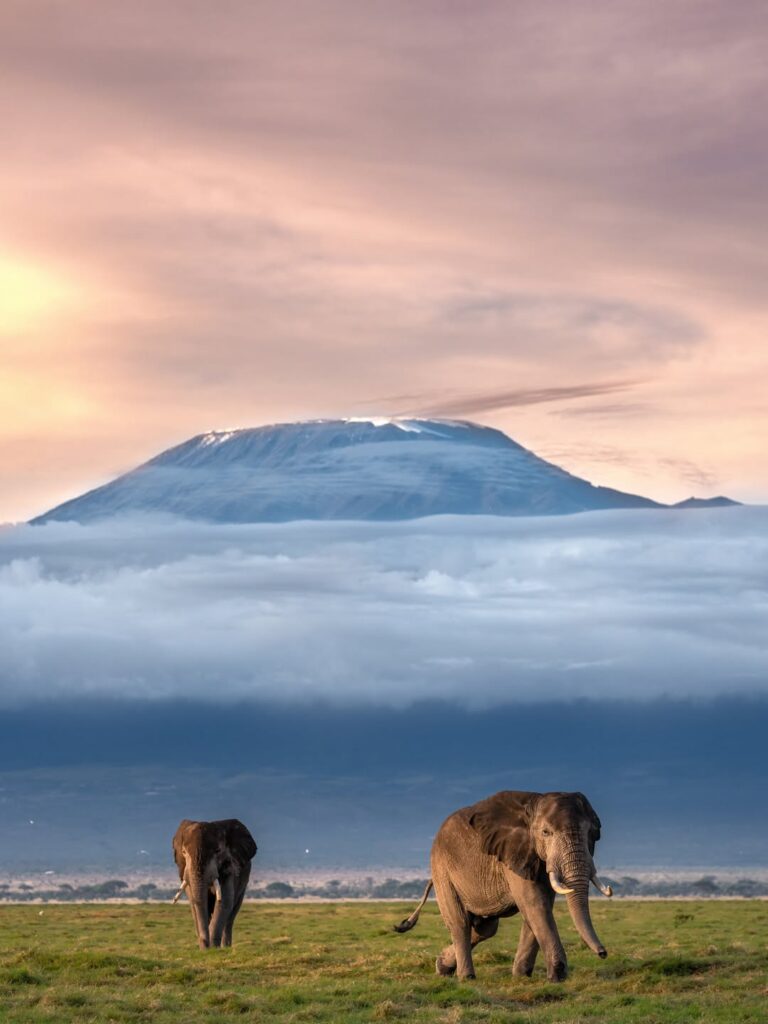
The plateau sits between the Aberdare highlands and Mount Kenya in Laikipia. Its open ground often makes animals easier to read than in dense bush, while river lines, marsh, acacia woodland and grazing lawns give the conservancy more variety than a simple grass plain. On a clear morning, the mountain adds scale rather than decoration: an immense northern horizon behind rhino, giraffe or elephant.
A rhino stronghold, not a single-animal exhibit
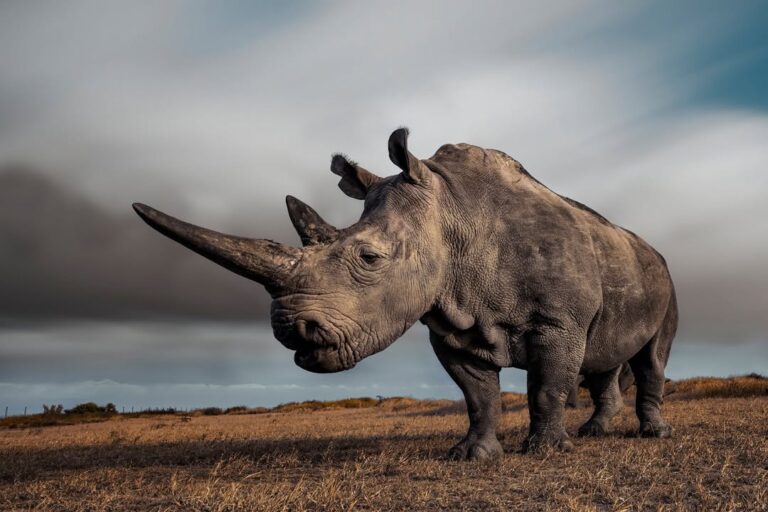
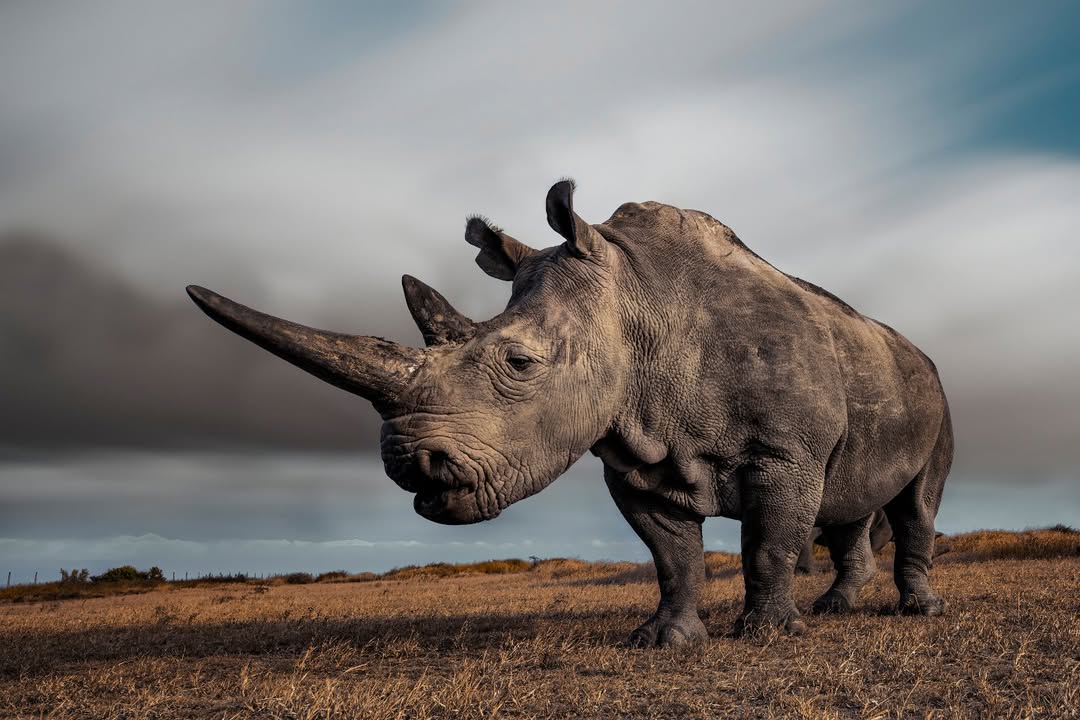
Ol Pejeta protects one of the most important eastern black-rhino populations in Africa. By 2025 the conservancy reported more than 180 black rhinos, and its success has created a new conservation responsibility. A healthy population cannot continue expanding inside fixed boundaries indefinitely. In partnership with the Kenya Wildlife Service and other conservancies, Ol Pejeta has begun contributing animals to wider range-expansion work across central Kenya. The point is not to accumulate rhinos behind one secure fence; it is to rebuild viable populations across a connected landscape.
That work requires rangers, intelligence teams, veterinary support, individual identification, habitat monitoring and difficult decisions about carrying capacity. A guest may see a black rhino quietly browsing through whistling thorn without witnessing any of that infrastructure. Good guiding makes the invisible work legible without turning the animal into a statistic.
Najin, Fatu and the northern white rhino
Ol Pejeta is also home to Najin and Fatu, the world’s two remaining northern white rhinos. Both are female, so the subspecies is functionally extinct through natural breeding. Their presence is emotionally powerful, but it should be explained accurately. They are not the whole Ol Pejeta story, and a visit is not a promise that science will reverse extinction.
An international assisted-reproduction programme continues to develop northern white rhino embryos using eggs collected from Fatu and stored genetic material. In April 2026 the BioRescue partnership reported a further embryo, bringing the number produced to 39. The work is complex, experimental and still dependent on surrogate southern white rhinos. Meeting Najin and Fatu, where the current programme and booking rules allow, is best understood as an encounter with both loss and disciplined scientific effort.
Sweetwaters Chimpanzee Sanctuary
Chimpanzees are not native to Kenya. The Sweetwaters Chimpanzee Sanctuary exists because rescued animals from West and Central Africa needed lifelong refuge after abuse, illegal trafficking and the closure of a sanctuary in Burundi during civil war. Established in 1993 through Ol Pejeta, the Kenya Wildlife Service and the Jane Goodall Institute, it is the only place in Kenya where chimpanzees can be seen.
The sanctuary is not a zoo-style wildlife checklist. Its purpose is care, rehabilitation, education and advocacy. The chimpanzees live in large natural enclosures in social groups, with professional keepers and veterinary support. Viewing depends on operating hours, animal welfare and current sanctuary arrangements. We plan the visit around those realities rather than presenting it as guaranteed entertainment.
Wildlife beyond the conservation headlines
Ol Pejeta supports a broad Laikipia wildlife community. Lion, leopard, cheetah and spotted hyena use the plains and river lines; African wild dogs move through the wider landscape and are always a privilege rather than a promise. Buffalo, Jackson’s hartebeest, Grevy’s zebra, reticulated giraffe, hippo and many antelope species add a northern character. Elephant are mobile: wildlife corridors in the northern boundary allow them and other migratory animals to move between Ol Pejeta and the greater Laikipia–Samburu ecosystem while rhinos remain protected.
Birding rewards time at marshes, dams, open grassland and acacia. Raptors hunt above the plains, waterbirds gather where drainage creates wetter ground, and smaller species bring colour and behaviour to the hours when larger mammals are resting. A private vehicle lets a birding family, first-time visitor or photographer decide when a ten-minute stop should become half an hour.
The conservation model in the landscape
Ol Pejeta still runs Boran cattle alongside wildlife. Managed herds can break hard soil, fertilise selected areas and create nutrient-rich grazing lawns that attract wild herbivores. Predator losses, disease risk and competition for resources make the system difficult, which is precisely why it matters. Conservation here is not based on pretending livestock and wildlife never meet.
The conservancy also works with neighbouring communities in education, health, water, roads, agriculture and livestock services. These programmes should not be used as decoration in safari marketing. They are part of the practical bargain required when protected wildlife lives beside people carrying the costs of crop damage, livestock loss and restricted land use. Responsible travel begins with choosing experiences and accommodation that contribute to that wider system, then behaving with respect when visiting it.
What to do at Ol Pejeta
Private game drives
Early and late drives remain the foundation. A guide reads tracks, light, animal posture and recent movement rather than racing between reported sightings. The open country is particularly good for learning how rhino use habitat and how predators position themselves around grazing herds.
Conservation-led experiences
Ol Pejeta may offer lion tracking, rhino monitoring, guided bush or bird walks, visits with the northern white rhinos, night drives, anti-poaching dog experiences and insight into livestock–wildlife integration. Availability, age limits, timing, vehicle arrangements and additional conservation charges can change. We only include an activity after confirming it directly for the travel date.
Photography
The plateau offers clean horizons, lower eye-level compositions and the possibility of Mount Kenya in the background. Rhino photography demands patience: black rhino often browse through cover, light changes quickly and the strongest frame may depend on waiting for an animal to step into space. Kenny can help guests work with shutter speed, exposure, background separation and ethical vehicle position, whether they carry a long lens or a phone.
Who Ol Pejeta suits
It is an excellent first safari for families who want wildlife and learning in the same place, for photographers interested in rhino, and for travellers who want conservation to be more than a paragraph in a brochure. Good all-weather roads and a range of accommodation can make it practical for multi-generational groups. Some specialist experiences have minimum ages or fixed operating times, so family planning must be specific rather than assumed.
Guests looking only for immense unfenced horizons may prefer a different landscape. Ol Pejeta is intensively managed, and parts of its conservation infrastructure are visible. That is not a flaw to hide; it is the reason many species are still there.
How long to stay
One night can work as a compact introduction from Nairobi or Nanyuki, especially when the main interests are rhino and the sanctuary. Two nights are better. They provide two dawns, a full field day and enough room to add one conservation experience without sacrificing ordinary game viewing. Three nights suit photographers, families moving slowly or guests combining specialist activities.
Getting there: drive or fly?
By road, Ol Pejeta is normally reached through the central highlands and Nanyuki. Journey time from Nairobi changes with the starting point, traffic and road conditions; it should be treated as a transfer day with useful views of the country, not advertised as a fixed three-hour promise. The conservancy’s main approaches lie west of Nanyuki.
Scheduled flights to Nanyuki can remove much of the Nairobi road transfer, followed by a private vehicle to the conservancy. Flight times, baggage rules and through-connections change, so we confirm the operating plan for each date. Flying is most valuable when Ol Pejeta forms part of a wider safari and the saved road time protects an afternoon in the field.
Where to stay
Staying inside the conservancy gives the cleanest access to early and late wildlife hours and can reduce daily gate logistics. Options range from simple, intimate camps to higher-comfort lodges and private houses. Properties outside the conservancy or around Nanyuki may suit a broader Mount Kenya programme, but the daily distance should be weighed against the quality of the room.
We choose accommodation by location, guiding access, room configuration, atmosphere and value—not merely by the most familiar name. Families may need connected rooms or private-use space; photographers may value fast gate access and safe equipment charging more than a large spa.
Best time to visit
Ol Pejeta operates year-round. Drier periods can concentrate wildlife and make tracks easier, while greener months bring dramatic skies, richer colour, young animals and strong birding. Rain can change minor roads and daily movement; dry conditions can bring dust. Mount Kenya visibility is a matter of weather and often improves around the cooler edges of the day, but it is never guaranteed.
Rather than naming one universal best month, we plan around the guest’s priorities: photography, family dates, birding, budget, green landscapes or onward connections.
Combining Ol Pejeta intelligently
Ol Pejeta and Mount Kenya
The pairing is geographically natural. A safari can follow time on the mountain, or Ol Pejeta can introduce the northern side of Mount Kenya without requiring a summit. Explore our Mount Kenya guide for routes, foothills and high-country planning.
Ol Pejeta and the Maasai Mara
Laikipia’s conservation landscape contrasts strongly with the Mara’s rolling grasslands and predator ecology. Scheduled air connections may operate directly in some seasons or route through Nairobi Wilson; we never describe a connection as nonstop until the date is confirmed. See the Maasai Mara guide and our published 10-day Kenya signature safari.
Responsible travel at Ol Pejeta
- Give rhinos, predators and elephant space; a photograph is never worth altering behaviour.
- Keep chimpanzee welfare ahead of viewing expectations and follow sanctuary instructions.
- Do not request precise live locations for sensitive animals outside the managed guiding context.
- Choose legitimate conservation experiences and question vague claims about where fees go.
- Ask permission before photographing staff, neighbouring residents or community visits.
Ol Pejeta safari FAQ
Is Ol Pejeta only about rhinos?
No. Rhino conservation is central, but Ol Pejeta also supports predators, elephant movement, northern species, birdlife, rescued chimpanzees, community programmes and a working livestock–wildlife model.
Will we see the northern white rhinos?
Access is through a managed, bookable conservation experience and depends on current operating arrangements. We confirm it before promising it in an itinerary.
Can children visit?
Yes, and the conservation story can be particularly meaningful for families. Specialist activities may have age restrictions; accommodation and daily pace should be chosen around the youngest traveller.
Is one night enough?
It is possible, but two nights produce a better safari. One full day allows ordinary game viewing and a conservation experience without compressing both into a transfer schedule.
Can Ol Pejeta be visited after climbing Mount Kenya?
Yes. The geography makes it one of the most sensible safari additions after a Mount Kenya journey, with the final route depending on the mountain exit, recovery time and accommodation.
Plan a private Ol Pejeta journey
Tell us your dates, group size, preferred comfort level and whether your priority is rhino conservation, photography, family learning or a wider Kenya circuit. We will recommend the right number of nights, realistic activities and the best road or air connection for the confirmed date.
Start planning with Wilderness Alternative Expedition
Wildlife sightings, mountain views, specialist activities and flight routings are subject to natural conditions, welfare rules, availability and current operations.