PORT CITY • OLD TOWN • REEF
Mombasa is heard before it is explained: matatu horns on the island, the call to prayer above Old Town, port traffic across Kilindini and the slow slap of water against the sea wall below Fort Jesus. It is not a pause on the way to a beach. It is the city that makes the coast legible.
An island at the centre of the coast
Mombasa grew where a coral island, deep natural harbour and Indian Ocean routes met. The historic centre occupies Mombasa Island; bridges connect it north and west, while the Likoni channel and newer South Coast road connections shape movement towards Diani. The old port faces Tudor Creek. The modern Port of Mombasa works around Kilindini Harbour, one of the region’s most important maritime gateways.
The city is Kenya’s principal coastal metropolis, but its identity is not a neat layer cake of Swahili, Portuguese, Omani, British and South Asian influence. Those histories overlap in language, neighbourhood, worship, food and commerce. A carved doorway may stand beside a concrete shopfront; a mosque lane may open onto a traffic corridor; an old warehouse may still belong to a living supply chain.
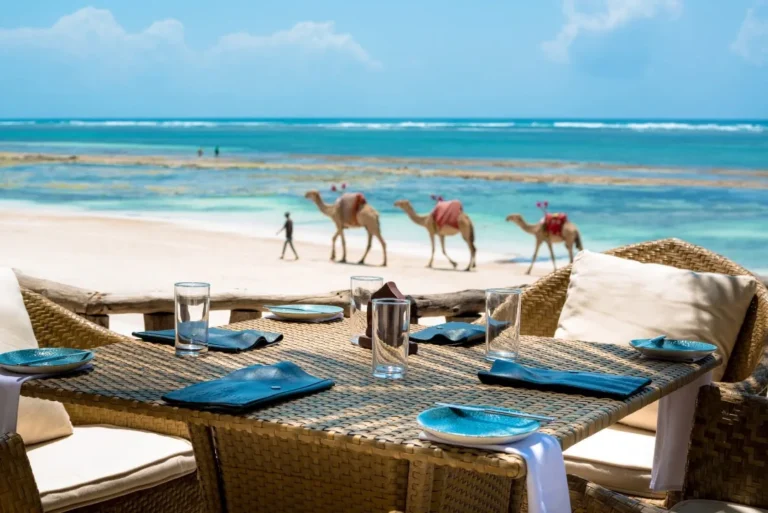
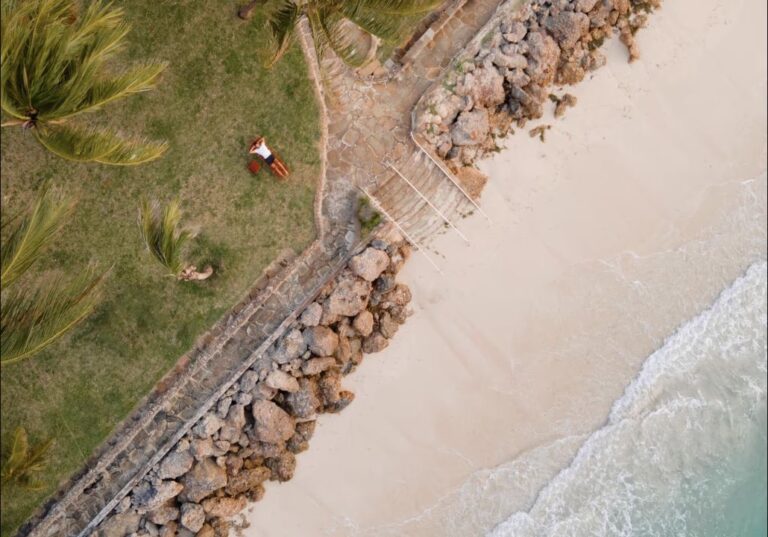
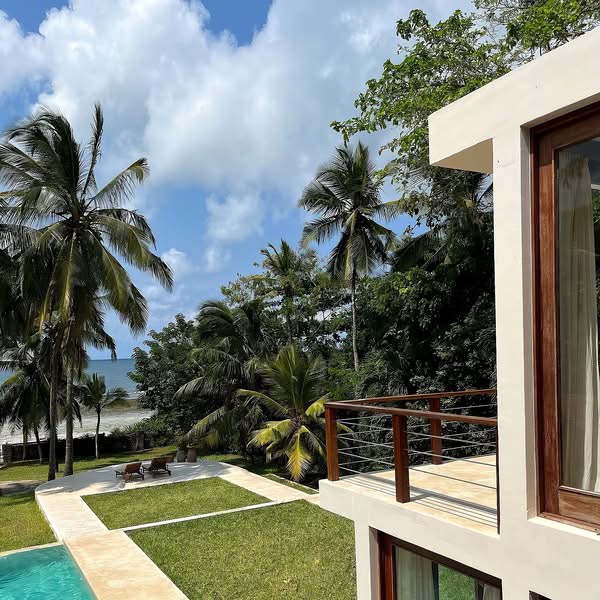
For travellers, Mombasa can be three things. It is a cultural city stay centred on Fort Jesus, Old Town and food. It is a beach base north of the island in Nyali, Bamburi or Shanzu. And it is the transfer hinge connecting airport, SGR, port, Diani and the north coast. Trying to make one hotel serve all three purposes can create unnecessary hours in traffic. Choose the location to match the role.
A port contested and remade
Long before European fortification, Mombasa belonged to a network of Swahili settlements linked by sea to Arabia, Persia and India and by trade routes to the African interior. Local African foundations, Islam, Kiswahili and maritime commerce shaped the town. Sailors worked with monsoon winds; merchants exchanged cloth, ceramics, grain, spices and other goods through a system that also included ivory and enslaved people. The cosmopolitanism was real, but it should not be romanticised into a history without conflict.
Portuguese forces entered this ocean world at the end of the fifteenth century and sought to control its trade routes. Fort Jesus was built between 1593 and 1596 on a coral ridge overlooking the old harbour entrance. Its position made Mombasa strategically valuable and repeatedly contested. The fort endured sieges and changed hands, including a major Omani capture after the siege of 1696–1698. Portuguese power briefly returned before Omani influence prevailed.
Mombasa’s later relationship with Zanzibar, the spread of plantation and caravan economies, British colonial intervention, and construction of the Uganda Railway changed the scale and direction of the city. The railway tied the port more tightly to the interior. Asian labourers, merchants and families became essential to the city’s commercial and social fabric. Under British rule the fort served as a prison; the port and city expanded through racially segregated colonial planning whose traces have not entirely disappeared.
Modern Mombasa is not simply the outcome of foreign empires. It is a Kenyan city continuously made by coastal communities, migrants from across the country, traders, port workers, religious institutions, artists and families. Its history is visible, but never finished.
Fort Jesus and Old Town
Fort Jesus
Designed by Giovanni Battista Cairati and built by the Portuguese, Fort Jesus is both a military structure and evidence of a much wider struggle for Indian Ocean power. Its angular bastions, thick walls and commanding position express Renaissance fortification principles adapted to a coral promontory. Later occupiers altered the interior, leaving Omani, British and local histories within an originally Portuguese plan.
A visit becomes more valuable when the architecture is read alongside the sieges, port geography and artefacts recovered from coastal archaeological sites. The fort’s museum status and UNESCO inscription recognise its global significance, but its strongest lesson is local: Mombasa was never peripheral to world history. Allow at least ninety minutes; more if using a specialist guide or photographing slowly. Heat and glare build through the day, so morning is often better.
Old Town
Immediately beyond the fort, Old Town compresses history into lanes scaled for shade and foot travel. Coral-stone buildings, plaster walls, enclosed balconies and carved doors show adaptations to climate, privacy and dense urban life. Indian-influenced balconies sit beside Swahili forms. Mosques structure neighbourhood rhythms. Small shops, homes, workshops and cafés continue to use buildings visitors may be tempted to see only as heritage façades.
A local guide can distinguish original features from later repair, explain why a doorway faces a certain way, and connect street names with communities and trade. Walk without blocking entrances. Dress modestly. Ask before photographing people, doorways into private homes or worshippers. Old Town residents are not exhibits, and the most successful photographs often come after conversation rather than from a long lens used at a distance.
Markets elsewhere on the island add another layer: spice, produce, cloth, household goods and fish belong to daily commerce. They can be crowded and hot. Carry little, keep valuables secure and follow a guide who understands both the place and when photography becomes intrusive.
Food as a map of movement
Mombasa’s food makes its history edible. Swahili rice dishes use spice with restraint and depth. Biryani carries South Asian connections but has a coastal expression of its own. Coconut appears in fish, beans, vegetables and sweets. Grilled meat, cassava, viazi karai, samosas, mahamri and spiced tea move from breakfast to late-night street eating. Tamarind and lime cut through richness; chilli may arrive separately so each diner controls heat.
A city food walk works best when it is not reduced to sampling. Ask why a dish is associated with a community, a religious season or a time of day. Eat at busy places with good turnover. Communicate shellfish, nut and coconut allergies clearly. During Ramadan, evening food culture can be especially vivid, while daytime routines in Muslim neighbourhoods require respect.
Island, Nyali, Bamburi or Shanzu?
Island and Old Town
Stay on or near the island for history, food and a stronger sense of city life. It suits a one- or two-night cultural stop but is not the usual choice for a resort beach. Traffic, noise and heat are part of the experience.
Nyali
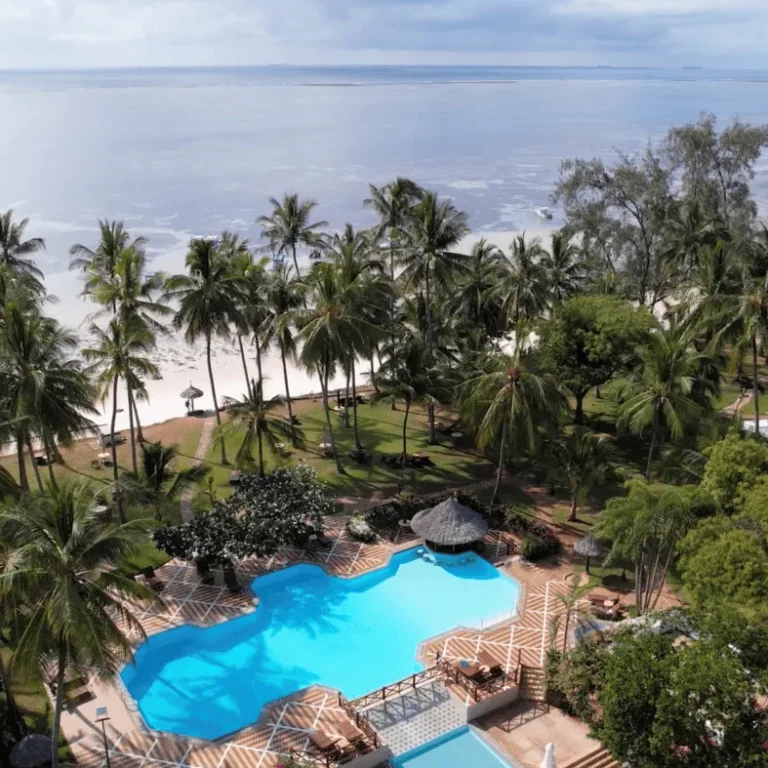
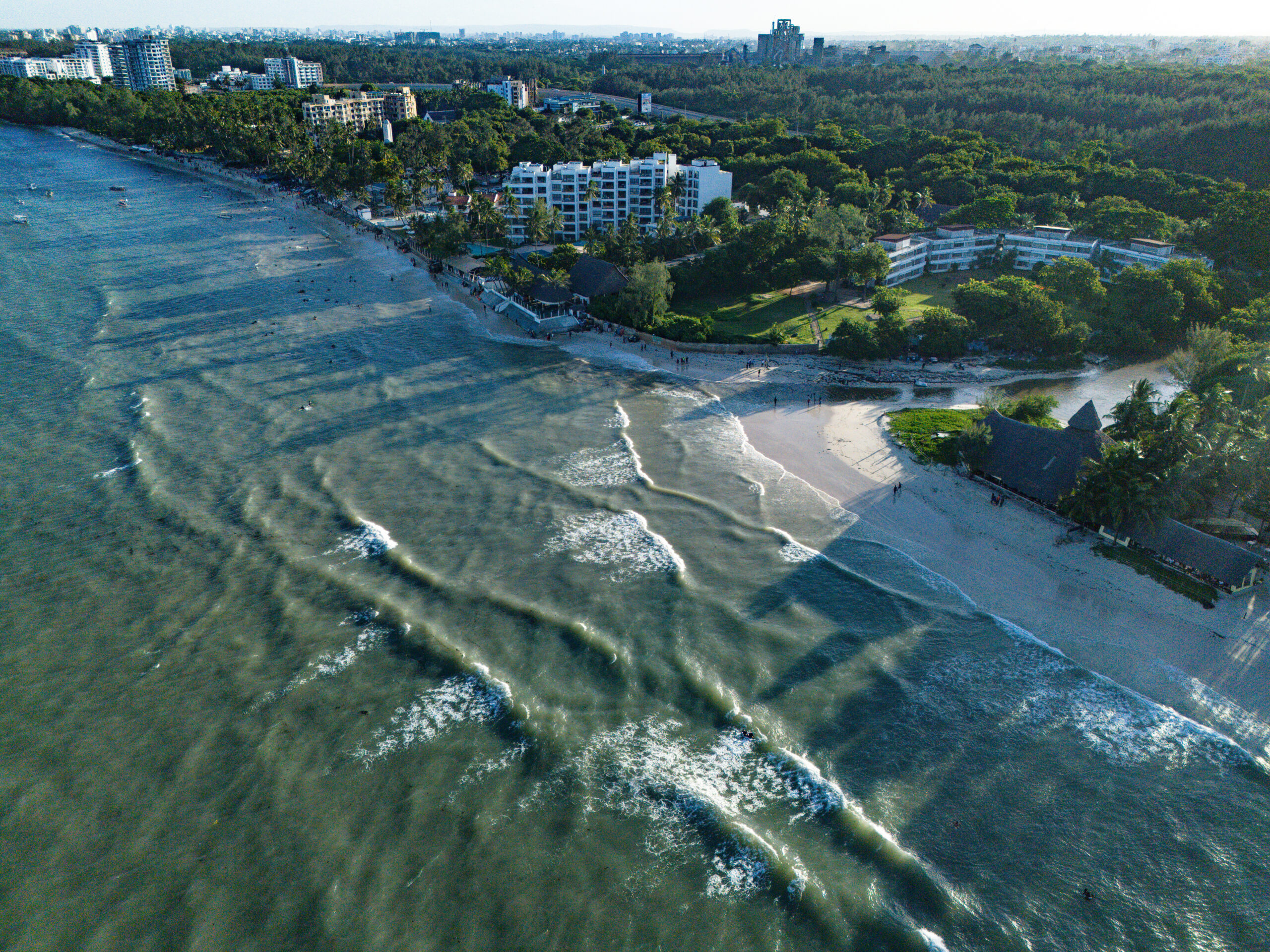
Nyali lies immediately north of the island across the creek. It combines residential areas, hotels, restaurants, shopping and beach access, and is often the most practical compromise for travellers who want both city and sea. Fort Jesus can be relatively close in distance, though traffic still decides the real transfer.
Bamburi
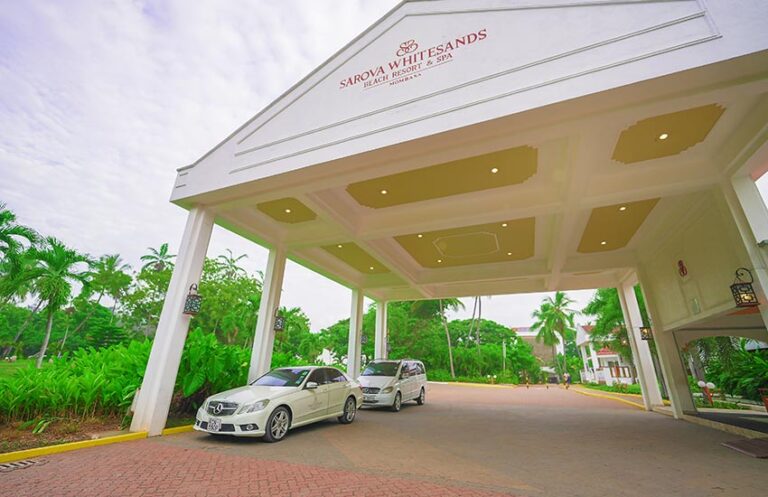
Bamburi has a denser resort corridor, broad services and access to the northern beaches and marine park departure points. It can work well for families and organised stays. The road can be busy, so selecting a property merely because it is “Mombasa” may conceal a significant journey to Old Town.
Shanzu
Farther north, Shanzu tends to feel more removed from the island and may suit a resort-led holiday. It is useful for northbound travel towards Kilifi, Watamu and Malindi, but less convenient for repeated Old Town visits.
Haller Park and other urban nature attractions may suit families or guests with limited time, but standards, opening arrangements and the nature of animal encounters should be checked before inclusion. We do not use captive wildlife as a substitute for conservation in the wild.
Mombasa Marine National Park
Mombasa Marine National Park protects a core reef area off the North Coast, with a much larger surrounding reserve. KWS gazetted the protected area in 1986. Boats depart from designated beach points around Nyali, Bamburi and Shanzu, so the practical experience depends on where a guest is staying and which operator is used.
Snorkelling and diving reveal coral gardens and reef fish close to a major city. That proximity is part of the park’s importance and its pressure. Use licensed boats, follow park requirements and do not stand on coral or feed fish. Glass-bottom boats can help non-swimmers, though vessel condition, capacity and shade should be checked. Visibility changes with weather and water movement; urban convenience does not guarantee perfect reef conditions.
Arriving and moving onward
Moi International Airport handles domestic and international services. Mombasa Terminus at Miritini is the coastal end of the Madaraka Express from Nairobi. Neither is in Old Town or on the North Coast hotel strip, so the onward transfer is part of the booking. Time estimates should be given as ranges and reconsidered around peak traffic, road works and public events.
For Diani, route planning depends on whether the traveller starts at the airport, SGR terminus, island or North Coast. The Likoni crossing remains part of some journeys, while the Dongo Kundu bypass has changed others. We choose the route for the actual day rather than repeating an old assumption that every South Coast transfer must follow the same path.
Northbound road travel reaches Kilifi, Watamu and Malindi. Lamu is usually better reached by air to Manda rather than by a long road journey, particularly for first-time visitors. Tsavo connects naturally by road; Nairobi can be reached by air, rail or a full-day drive.
How long should I stay?
One night permits little beyond arrival and a focused Old Town walk. Two nights gives Fort Jesus, food and a slower city reading. Three nights allows a marine or North Coast day without sacrificing the city. Travellers interested only in a beach resort may stay longer north of the island, but should still set aside a properly guided half-day for the place that gave the coastline its principal city.
Safety and comfort
Mombasa is a large working city. Use trusted transfers after dark, keep phones and cameras discreet in congested areas, and follow local advice about walking routes. Heat can be more tiring than expected; carry water, use sun protection and slow the programme. Dress for religious neighbourhoods as well as climate. Current travel and security advice should be checked at booking.
Photography
Fort Jesus works in low morning or late-afternoon light. Old Town demands patience with contrast between bright sky and shaded lanes. A small camera can be less intrusive than a large setup. Port and infrastructure photography may be restricted; do not photograph security sites, bridges, vessels or officials without checking permission.
Frequently asked questions
Is Mombasa worth staying in?
Yes, especially for travellers interested in Swahili history, Fort Jesus, food and a living port city. It adds something no resort transfer can provide.
Mombasa or Diani?
Mombasa is stronger for urban history and transport; Diani for a long reef beach and marine-resort stay. Combining two Mombasa nights with Diani often works better than forcing one to imitate the other.
Can I visit Fort Jesus on a transfer day?
Sometimes, but luggage, traffic, opening hours and heat must be planned. A rushed stop between airport and hotel rarely gives the fort or Old Town enough time.
Where should families stay?
Nyali, Bamburi and Shanzu offer more resort infrastructure. Select by pool supervision, room setup, beach conditions and transfer distance—not simply by area name.
Can I snorkel from Mombasa?
Yes, through suitable operators serving the marine park. Tide, weather, boat quality and the swimmer’s ability should shape the plan.
Plan Mombasa as more than a gateway
We can build Mombasa into a wider Coast journey, connect it cleanly to Diani or the north coast, and arrange the specialist guiding that turns walls, doors, food and harbour geography into a coherent story.