
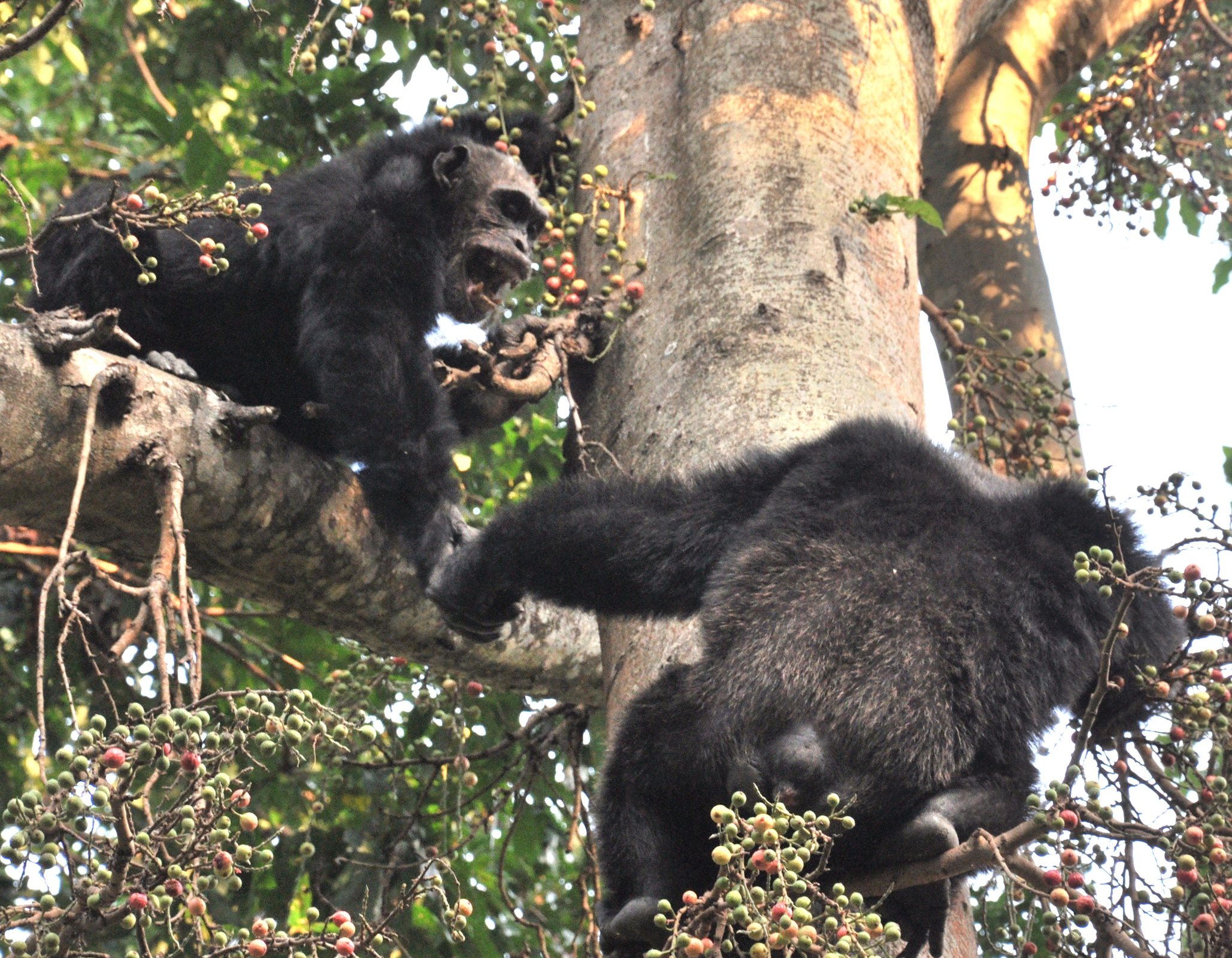
Mahale Mountains National Park rises from the eastern shore of Lake Tanganyika. There is no normal road arrival at the lodge door. Travellers fly into western Tanzania, transfer to the lakeshore and complete the journey by boat. That sequence is not an inconvenience to hide; it is what makes Mahale feel entirely different from a savannah safari.
The headline experience is chimpanzee trekking, but the lake and forest matter just as much. Mornings may begin with news from trackers. The walk then follows the chimpanzees’ movement through steep, humid terrain. Afternoons slow beside the water, where clear shallows, forested ridges and changing light are part of the stay.
Chimpanzee trekking in reality
Habituated chimpanzees remain wild and mobile. Their location determines the effort. A trek may be short, or it may involve hours on narrow, steep and slippery trails. Heat and humidity add difficulty. Viewing time, group size, age limits, mask rules and health restrictions are controlled by current park regulations.
Guests must follow the ranger’s distance and behaviour instructions. Respiratory illness is a serious reason not to approach great apes. We check current permit conditions and discuss fitness honestly before confirming the journey.
Lake Tanganyika
The lake changes the daily rhythm. It can offer swimming and boating where the lodge and conditions allow, but safety guidance comes first. Wind can roughen the surface and affect transfers. Travellers should not assume every water activity is available on every day.
Access and luggage
Western flights are limited and may operate only on certain days. Shared services can make intermediate stops. Soft bags and strict weight limits are standard. The boat transfer is coordinated with the flight and lodge; enough margin is essential before an international departure.
How long to stay
Four nights gives multiple trekking opportunities and time to experience the lake without rushing. Five is better for travellers who have come primarily for chimpanzees or who want a rest day. A two-night stop leaves too much exposed to weather and flight timing.
Mahale, Gombe or both?
Mahale offers a larger wilderness setting and the strongest combination of forest and beach. Gombe is smaller and has exceptional research history, usually accessed by boat from Kigoma. Doing both can be rewarding, but only when flight and boat schedules support it and the traveller has enough nights. Otherwise, depth in one place is preferable.
Mahale pairs most naturally with Katavi, linking primates and lake with a remote western savannah safari.
Mahale is a forest journey beside an inland sea
The Mahale Mountains rise directly from Lake Tanganyika. There are no ordinary road transfers into the experience: guests arrive by light aircraft and boat, then move between beach, forest and camp on foot. The setting is as important as the chimpanzees—clear water, steep green slopes and evenings when the lake becomes the horizon.
Chimpanzee trekking: what to expect
Trackers follow the daily movement of habituated chimpanzee communities, but the forest decides the walk. Some days the animals are close to camp; on others the climb is longer, steeper and humid. Sightings and duration are governed by park rules and guide judgement. We never describe the trek as a guaranteed, easy encounter.
Fitness and forest conditions
Roots, leaf litter, slopes and heat can make a short distance demanding. Guests should carry water, wear supportive shoes and be ready to move quietly as a group. Health rules protect the chimpanzees; anyone unwell must tell the guide, even when missing a trek is disappointing. Age restrictions and current park requirements are confirmed before booking.
The lake is not downtime
Lake Tanganyika gives Mahale a second identity. Depending on conditions and camp operations, days may include swimming close to camp, kayaking, fishing, boat excursions or simply watching storms travel across the water. Hippo, crocodile and changing weather mean local safety instructions always take priority.
How many nights?
Four nights gives more than one opportunity to trek and enough time to experience the lake. Five or six suits wildlife enthusiasts, photographers and anyone pairing Mahale with the demanding logistics of Katavi. A two-night stay is vulnerable to flight delays, weather and one difficult tracking day.
When to travel
Chimpanzee ranging patterns, rain and food availability change through the year. Drier months can make trails more manageable, while greener periods bring dense forest atmosphere. Lake conditions also matter for boat transfers. The best month is therefore a balance between trekking, camp season and the wider Tanzania journey.
Camp choice
Mahale has very few places to stay. Location, guiding depth, boat operation and camp closure dates matter more than a generic star label. We explain the remoteness, electricity, communications and transfer sequence before guests commit.
Who Mahale suits
It is ideal for active travellers, primate enthusiasts, honeymooners who want wilderness rather than resort formality and repeat safari guests seeking a completely different rhythm. It is not the easy way to add chimpanzees to a short holiday; it is a destination worth building a journey around.