
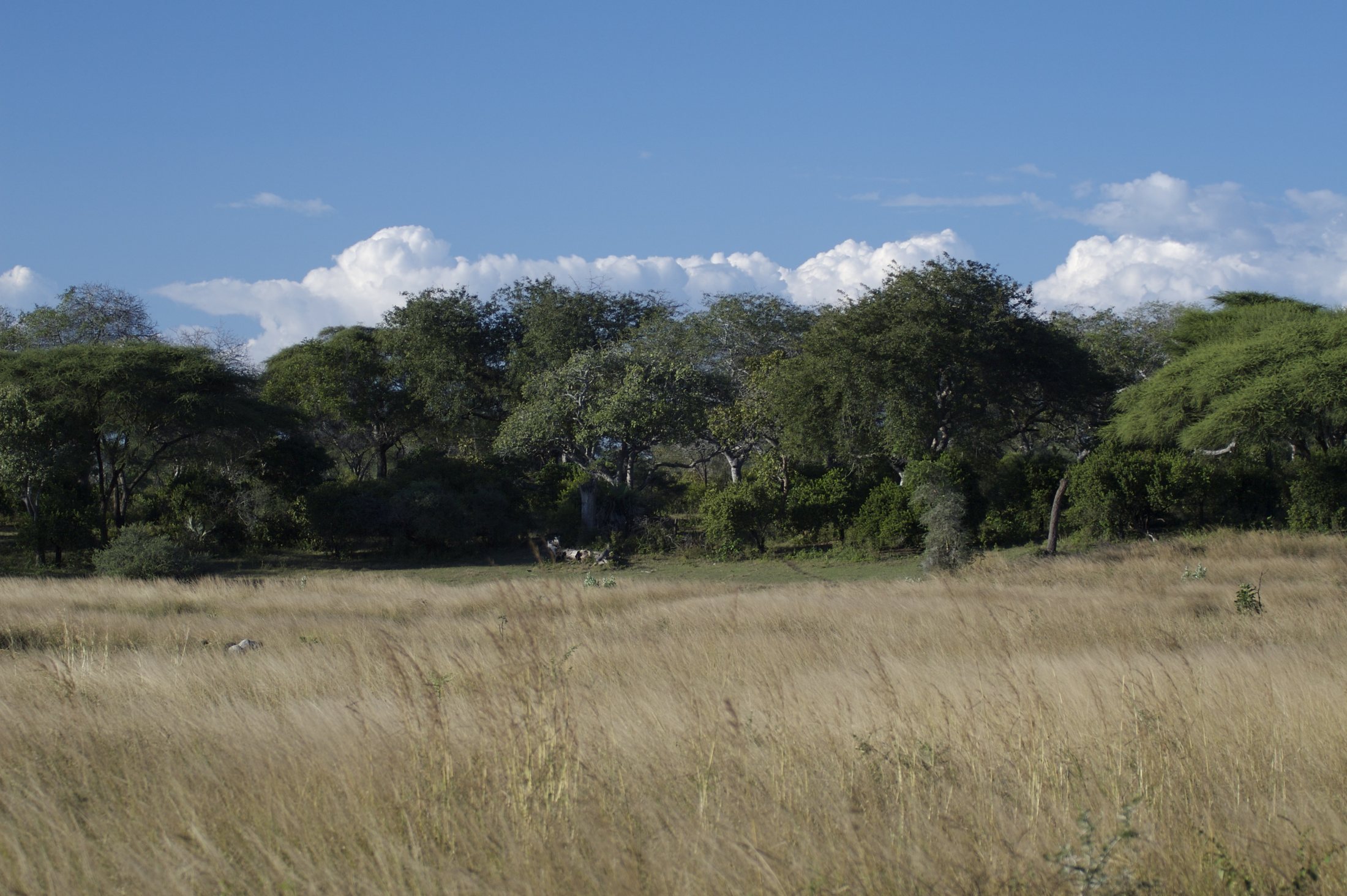
Katavi is often described through numbers—park size, visitor scarcity, concentrations around pools—but the experience is better understood through water. Seasonal floodplains spread across the park during the rains. As the dry season advances, the Katuma system and remaining pools become the organising force for wildlife, tracks and camp life.
Remoteness does not guarantee constant sightings. Katavi is large, hot and sometimes slow. Its value lies in the space, the lack of a standard circuit procession and the chance to watch how animals use a shrinking landscape.
What the safari feels like
Game drives move between floodplains, woodland, riverine areas and pools. Later in the dry season, hippos and crocodiles can be concentrated where water remains. Buffalo, elephants, plains game and predators use the same system in different ways. Birding remains strong, especially around wetlands and woodland edges.
A guide’s local reading matters more than a promise of a species list. Dust, heat and distance are part of the park. Travellers who enjoy field interpretation and can wait through a quiet hour are a better fit than those measuring success by the speed of sightings.
Access
Flights are limited and may run on set days or through several stops. Schedules change seasonally and charter pricing can be significant. The final airstrip transfer depends on camp. For that reason, Katavi should be placed in the itinerary only after the whole western flight pattern has been checked.
Road access is a serious overland undertaking, not a normal transfer from the northern circuit. It may suit an expedition-style journey with a specific purpose, but flying is the practical choice for most visitors.
How many nights?
Four nights is a useful starting point. It gives three full field days if flights align well and reduces the risk that one weather-affected or quiet day defines the park. Moving camps inside a short stay rarely adds enough value to justify the packing.
Seasonality
July to October is the classic dry-season window, with increasing concentration as water retreats. The hottest late-season conditions can be demanding. During the rains, the park becomes green and expansive again, but some camps close and roads can be difficult. We verify camp operation and the actual flight schedule before proposing any shoulder- or green-season date.
Combining Katavi
Mahale is the natural contrast: forest, chimpanzees and Lake Tanganyika after savannah and dust. The combined journey usually needs at least eight nights in the west, plus margin around international or domestic connections.
Katavi is not polished—and should not be
Katavi is one of Tanzania’s great remote parks: broad floodplains, miombo woodland and seasonal rivers far from the northern circuit. In the dry months, retreating water pulls wildlife towards a shrinking network of pools and riverbeds. The resulting scenes can be intense, but the deeper value is the absence of traffic and the time to watch a landscape change.
Katisunga, Chada and the seasonal rivers
The Katisunga Plain creates Katavi’s sense of scale, while river systems and remaining pools organise dry-season movement. Camp location matters because distances are large and tracks change with water. A guide who understands where animals moved yesterday is more valuable than a long list of promised species.
What the dry season can bring
Large buffalo herds, elephant, giraffe, antelope, lion and other predators may gather around the increasingly limited water. Hippo and crocodile concentrations are a well-known feature, but their exact numbers and accessibility vary by year. Late-season heat and dust are part of the experience, not flaws that can be edited out.
The green months
Rain releases pressure from the rivers, disperses wildlife and transforms the plains. Birdlife and storm light can be superb, but road access and camp operations become more difficult. Many travellers should plan for the established drier-season window; specialists considering the green season need an itinerary confirmed around real camp and flight availability.
Game drives and walking
Game drives cover the main plains and river corridors. Walking, where offered by the camp under current permissions, adds tracks, plants and the physical scale of the bush. Activity policy varies, so we confirm it rather than using “walking safari” as a generic label.
Four nights is not excessive
Flights are limited and the first and last days may be shortened by shared schedules. Four nights gives time to work different habitats and absorb a slower style of safari. Five can be right for photographers and travellers who have come west specifically for Katavi.
Combining Katavi with Mahale
The classic western journey continues to Mahale. It is a powerful contrast: dust and floodplain followed by rainforest and Lake Tanganyika. The link depends on operating days, baggage rules and camp transfers. We secure that structure before promising a sequence.
Who Katavi suits
Choose it for remoteness, patience and landscape—not for a first-safari checklist. It suits repeat travellers, naturalists and guests who can accept heat, small aircraft and a camp network with fewer backup options. That honesty is what protects the experience.