
Why stay here
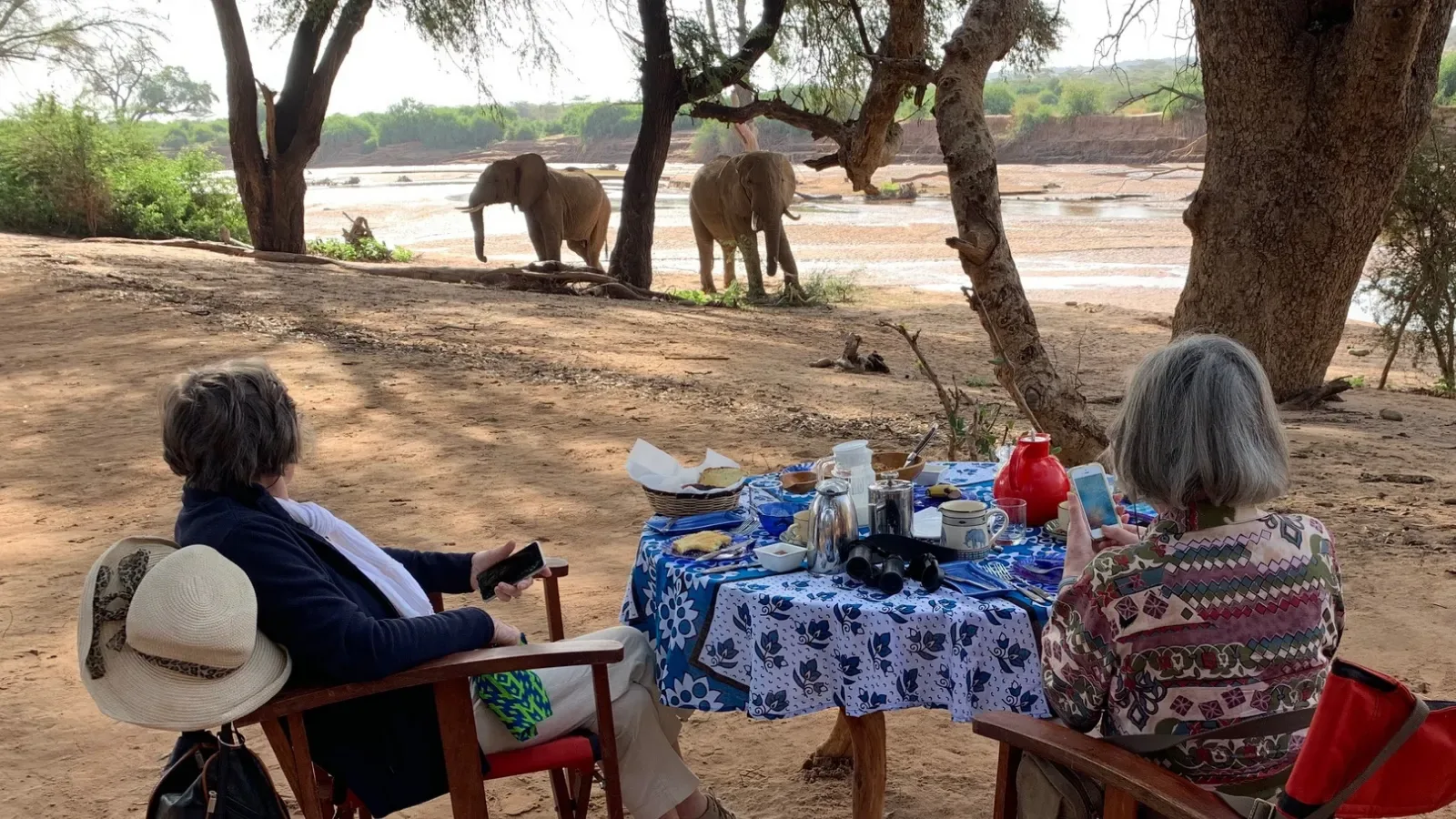
Elephant Watch Camp is not simply another riverside address. Its identity is tied to close knowledge of Samburu’s elephants and to the conservation research of Save the Elephants. Guides recognise individuals, family histories and behaviour, turning a sighting into a more informed encounter without reducing the animal to a name or a photograph.
The camp is small, highly personal and deliberately rooted in natural materials. Travellers choose it when guiding depth, atmosphere and conservation context matter more than a long list of resort facilities.
Setting and safari character
The six tents stand beneath trees beside the Ewaso Nyiro in Samburu National Reserve. This green river corridor contrasts sharply with the dry hills and open scrub beyond it, concentrating wildlife and birdlife while giving camp a cooler, shaded character.
Game drives explore both familiar river sectors and drier northern habitat. Elephants are central, but the safari remains broader: reticulated giraffe, Grévy’s zebra, gerenuk, oryx, predators and smaller desert-adapted species all belong to the same ecological story.
Tents and camp life
Each tent is individually designed and built to sit lightly within the landscape. The style is tactile and idiosyncratic rather than conventionally luxurious. Open-air bathrooms, local craft and the sounds of the river create a stay that feels distinctly Samburu.
Camp life is intimate and hosted. Meals and conversations often continue what began on the drive, making this a good choice for curious guests who enjoy learning from their guides rather than retreating into a self-contained suite.
Best for
Elephant Watch is particularly strong for conservation-minded travellers, elephant enthusiasts, photographers and repeat safari guests seeking specialist interpretation. It suits couples and older families comfortable in an unfenced bush camp. Travellers wanting private plunge pools, air conditioning or extensive spa facilities should choose a different style of property.
Getting there
The usual arrival is by scheduled light aircraft from Wilson Airport to the Samburu area, followed by a camp transfer. The operating airstrip is confirmed for each booking because airline patterns and field conditions change. Private charter can be valuable for a group or for a journey linking several remote northern camps.
Driving from Nairobi is feasible in a well-planned 4×4 itinerary, particularly through Nanyuki or Laikipia. It should be treated as a meaningful road-safari day, not described as a short transfer. Guests with limited time normally gain more from flying.
What to combine it with
Pair Elephant Watch with Namunyak for a transition from Reserve game viewing to the Mathews Range and community conservation. It also combines naturally with Ol Pejeta or Lewa, and can connect by air with the Maasai Mara. A coast stay after the safari provides a useful change of pace.
Wilderness Alternative note
We recommend this camp when guests want substance behind the elephant experience. The itinerary leaves time to stay with a family group, observe communication and hear the research context. We do not promise elephants inside camp; their movements remain wild and seasonal.