
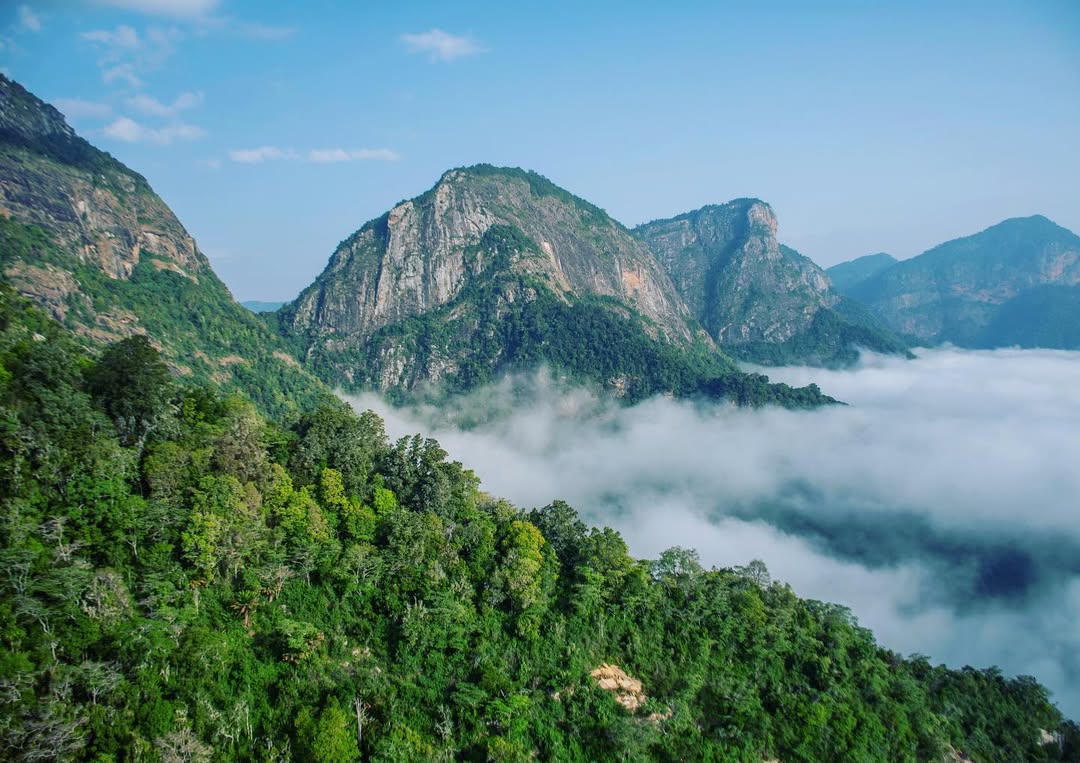
Wilderness Alternative Expedition guide to Namunyak and the Mathews Range
From the Samburu lowlands, the Mathews Range looks like a wall holding weather. Dry thorn gives way to folds of forest, granite and deep valleys; elephant routes disappear beneath the canopy; springs feed settlements and livestock far below. Namunyak is not a conventional fenced reserve. It is community land where conservation, grazing, tourism and daily Samburu life have to work in the same landscape.
Mountains above the dry country
The Mathews Range runs through northern Samburu County, catching moisture that the surrounding plains do not. Altitude creates cooler forest, ravines and a striking ecological contrast with the Ewaso Nyiro basin. From a ridge, the view can stretch over country that took hours to cross by road.
Walking is the clearest way to understand that change, but it is never assumed. Routes, guide requirements, wildlife, weather and community permission must be confirmed for the date. Some days are suitable for a forest walk; others call for a shorter valley route or no walking at all.
Namunyak as a community conservancy
Namunyak was one of the early community conservancies that helped shape the Northern Rangelands Trust model. Land remains connected to Samburu households and livestock systems while community institutions coordinate conservation, security, tourism and natural-resource management.
That does not remove pressure. Drought, livestock needs, elephant movement and human–wildlife conflict remain real. Tourism is useful when revenue, jobs and decisions stay connected to the community, and damaging when visitors treat community land as an empty private playground. We choose authorised properties and guides, then explain the model without pretending it is simple.
Elephants of the Mathews landscape
Elephants use the greater Namunyak and Mathews ecosystem for forest, water and movement between northern rangelands. In thick country, an encounter may be sound—a branch splitting, a rumble below the path—before an animal appears. Distance and guide judgement are essential on foot.
Reteti Elephant Sanctuary was established within Namunyak as a community-owned response to orphaned and abandoned calves. Its conservation work has included rehabilitation and release. Visitor access, welfare rules and programme design can change, so we only include Reteti after direct confirmation. It is never treated as a petting experience.
Wildlife in forest and rangeland
Elephant are central, but the range also supports leopard, African wild dog, buffalo, antelope, primates and a rich bird community. Sightings in forest are brief and uncertain. Lower rangelands may offer cleaner views of giraffe, zebra or gerenuk, depending on season and location.
This is not the place to chase a long game-drive list. Tracks, dung, plants, bird calls and water explain how animals use elevation. Guests wanting consistently open wildlife viewing should combine Namunyak with Samburu or Buffalo Springs.
Walking, guides and mountain conditions
A guided walk may follow a dry river, forest edge, ridge or spring. Heat builds quickly at lower elevation; rain makes rock and forest trails slippery; elephant can change the route. We match distance to the guest rather than using one heroic itinerary for everyone.
Independent hiking is inappropriate. Local guides read animal movement, water, land permissions and weather in ways no downloaded track can replace. Where a ranger is required, that arrangement is made in advance.
Photography with Kenny
The Mathews rewards photographs that connect habitat and subject. A long lens can compress forested ridges behind an elephant; a wide frame can place walkers beneath granite and cloud. Forest light requires careful shutter speed and high-ISO judgement, while exposed valleys demand control of bright sky.
Kenny helps guests carry less equipment on foot, protect it from dust and sudden rain, and decide when a picture would disturb people or wildlife. Community and ranger portraits require permission before the camera is raised.
Where to stay
Namunyak is known for small, high-quality lodges and camps integrated into community conservation. They differ greatly in valley, altitude, road access and included activities. A property with a magnificent view may not offer the walking route or elephant access a guest expects.
We confirm current ownership, operating dates, vehicle arrangements, community fees and what is genuinely included. Remote luxury still depends on water, power, staff logistics and road conditions.
Getting there and combining the journey
Road access normally builds north from Isiolo and Samburu country before turning towards the Mathews foothills. Final tracks can be rough and slow. Chartered or scheduled flights may serve selected private strips, subject to operator, property and baggage confirmation.
Namunyak combines naturally with Samburu, Buffalo Springs and Shaba. It can also begin a longer journey towards Ngurunit, Marsabit and Lake Turkana, but the onward road requires expedition planning rather than a routine transfer.
How long to stay
Three nights allow one full day and two useful edges of light. Four are better for walking, conservation context and weather flexibility. A single night after a long road journey misses the reason to come.
Responsible travel
- Use community-authorised guides, roads and walking routes.
- Let elephant position and behaviour decide distance.
- Confirm Reteti access and follow welfare rules without exception.
- Ask permission before photographing people, homes, livestock or ceremonies.
- Carry waste out and protect springs from contamination.
- Understand how tourism revenue and conservation fees reach local institutions.
Namunyak FAQ
Is Namunyak a national park?
No. It is a community conservancy within a lived pastoral landscape.
Can we walk in the Mathews Range?
Yes where current permission, guides, wildlife and weather allow. Routes must be confirmed.
Will we visit Reteti?
Only if the sanctuary currently accepts the appropriate visit and animal welfare permits it.
How does it differ from Samburu Reserve?
Samburu centres on riverine and open-vehicle wildlife viewing; Namunyak adds mountain forest, community rangelands and guided walking.
Plan a private Mathews Range journey
Tell us your walking ability, photographic interests and wider northern route. We will choose the right valley, confirm community and conservation access and leave room for weather and wildlife.
Plan Namunyak with Wilderness Alternative Expedition
Walking, sanctuary visits, wildlife, roads, airstrips and accommodation depend on current permission, welfare, weather and operations.