Wilderness Alternative Expedition guide to Sibiloi
Sibiloi protects a coast of another kind: open desert running to Lake Turkana, volcanic ridges, petrified wood and sediment beds that hold evidence of vanished animals and early humans. Wildlife is present, but the park’s scale is geological. To travel here is to move through an active research landscape where a hillside can contain several million years.
The north-eastern shore
Sibiloi covers roughly 1,571 square kilometres on the eastern side of northern Lake Turkana. Open plains, semi-desert, volcanic features and Mount Sibiloi meet shoreline habitat. The park forms the largest component of the UNESCO Lake Turkana National Parks property.
Distance is fundamental. Sibiloi is far beyond Loiyangalani and Marsabit, with limited fuel, water, accommodation and recovery support. It is planned as its own expedition chapter.
Koobi Fora within the park
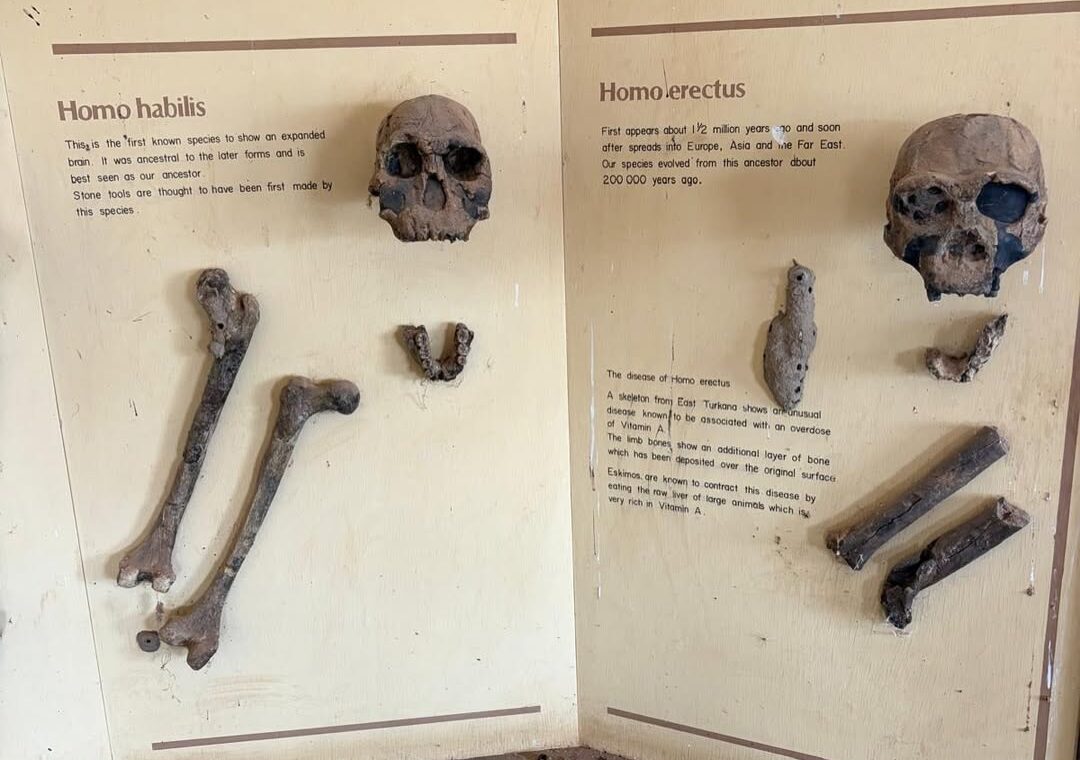
Koobi Fora’s sedimentary deposits contain hominin, mammal, mollusc and plant fossils together with stone artefacts. The museum and authorised field interpretation connect specimens to the layers from which they came. Site access may require coordination with National Museums of Kenya, the Koobi Fora curator and KWS.
Visitors do not search independently, collect fragments or walk into restricted localities. Scientific context is more valuable than a souvenir.
Petrified forest and volcanic ground
Mineralised tree remains record a very different past environment. Seen with an interpreter, they link vegetation, burial and geological change. Without context they can look like ordinary broken rock, which is why the guide matters.
Volcanic hills and eroded badlands provide strong landscape photography, but heat and distance demand early starts. We remain on permitted routes and avoid fragile exposures.
Wildlife and birds
KWS and UNESCO sources record Grevy’s zebra, reticulated giraffe, oryx, kudu, gazelles, carnivores and numerous birds within the wider protected landscape. Wildlife density is not comparable with the Mara, and distribution changes with water and grazing.
The shoreline supports waterbirds and crocodiles; terrestrial plains reward patient scanning. An animal encountered in this space is meaningful because of habitat, not because Sibiloi provides a conventional Big Five drive.
Road, fuel and communications
Access from the south or from Marsabit requires several long rough-road days, recent local information and a properly prepared vehicle. Fuel range is calculated conservatively. Water, food, first aid, satellite or radio communication, spares and recovery equipment travel with the group.
Air access may be possible by charter to suitable strips, but aircraft, strip condition, permissions, transfers and baggage must be confirmed. We never assume a scheduled service.
Camping and park operations
Facilities are limited and can change. KWS and National Museums have been assessing infrastructure and heritage tourism, but planned improvement is not the same as an operating guest facility. We verify campsite, ranger, museum, water and access directly before departure.
Expedition camping should be self-contained without contaminating scarce water or leaving waste for park staff and communities.
Photography with Kenny
Sibiloi favours visual storytelling: the vehicle as a small mark in a fossil basin, zebra against a volcanic ridge, a curator’s hand explaining a layer. Kenny helps guests handle heat shimmer, bright sediment and strong contrast, and keeps photography secondary to site rules.
Exact sensitive localities, research work and museum material are photographed only with permission. GPS metadata may need to be withheld.
How long to stay
At least two full days in the park are justified after the effort of arrival, with more for Koobi Fora interpretation, birding or photography. The round journey from the southern lake adds several road days. Sibiloi should never be inserted into a rushed itinerary to claim a name.
Responsible travel
- Follow KWS and National Museums access rules for every heritage locality.
- Never collect or move fossils, stone tools, petrified wood or sediment.
- Keep wildlife locations and sensitive research coordinates private.
- Carry all waste out and protect water sources.
- Use local guides and services where genuinely available and fairly paid.
Sibiloi FAQ
Is Sibiloi mainly an archaeological park?
Human-origins research is central, but the park also protects desert, lake, volcanic, wildlife and bird habitats.
Can we visit from Loiyangalani in one day?
No. The overland distance and conditions require a multi-day expedition.
Can we find fossils ourselves?
No. Access is guided or authorised, and nothing may be collected or moved.
Is there luxury accommodation?
Facilities are limited and change. We confirm current camps or specialist arrangements instead of promising a category.
Plan a private Sibiloi expedition
Tell us whether your priority is archaeology, geology, wildlife or photography. We will coordinate park and museum access, build conservative road days and prepare a self-contained field plan.
Plan Sibiloi with Wilderness Alternative Expedition
Roads, heritage access, camps, airstrips, wildlife and park operations require current confirmation.