
My trip to Lake Rutundu started with a drive north from Nanyuki towards Kisima. At Kisima, I turned right towards Marania Farm and the forest on Mount Kenya. I would drive as far as the road allowed, leave the car at the edge of a gorge and walk the final stretch to the lake with my dog.
Rutundu lies on the mountain’s quieter north-eastern side. There are fewer visitors here than on the main trekking routes, and this approach is still absent from many of the usual Mount Kenya itineraries. Getting there takes you through farmland, rainforest and open mountain country before you reach the water and the log cabins beside it.
From Kisima through Marania gate
The turn at Kisima takes you towards Marania Farm and the forest gate. Once you have cleared with the gate staff, you begin driving up through the rainforest. This is where the road conditions start to matter. In the dry season the track can be very dusty; during the rains it becomes muddy and slippery, and the climb can be considerably more difficult.
I would plan this journey in a 4×4 with good ground clearance. A dry track and a wet one can feel like two different roads, so ask about conditions at the gate before heading up. It is worth leaving Nanyuki with enough time for a slow drive rather than planning your arrival from the distance alone.
About three kilometres beyond the gate, you come to a fork. One track continues straight ahead, while the other turns left. This is a useful junction to know about before travelling, because the choice makes a difference to the drive.
The route straight ahead passes government forestry quarters and cultivated plots. Here, local residents are allowed to grow crops while helping establish and care for the planted trees. The fields are part of the working forest landscape: you are passing through an area used for forestry and farming as well as travelling towards the mountain.
The left-hand route is the one I recommend, especially if your 4×4 is less capable on rough ground. It is the better option for an easier approach. Ground clearance and the weather still matter, particularly after rain, so take the gate team’s current advice into account when choosing your route.
Climbing out of the forest towards Rutundu
As you climb, the forest gradually gives way to more open vegetation. The enclosed view between the trees opens into heath and moorland, and you begin to see more of the slopes around you. This change is one of the pleasures of the drive. You leave the farms near Kisima behind, pass through the forest and emerge into the higher country in the course of the same journey.
Watch for wildlife along the way. Elephants and zebras may be seen on the approach, although their movements vary and there is no guarantee of a sighting. Give animals room and let them move away in their own time if they are close to the track.
As you near Rutundu, a clear day may also give you views of Mount Kenya’s main peaks. The weather decides how much you see. Even when the peaks are hidden, the widening landscape tells you that you have climbed well above the foothills.
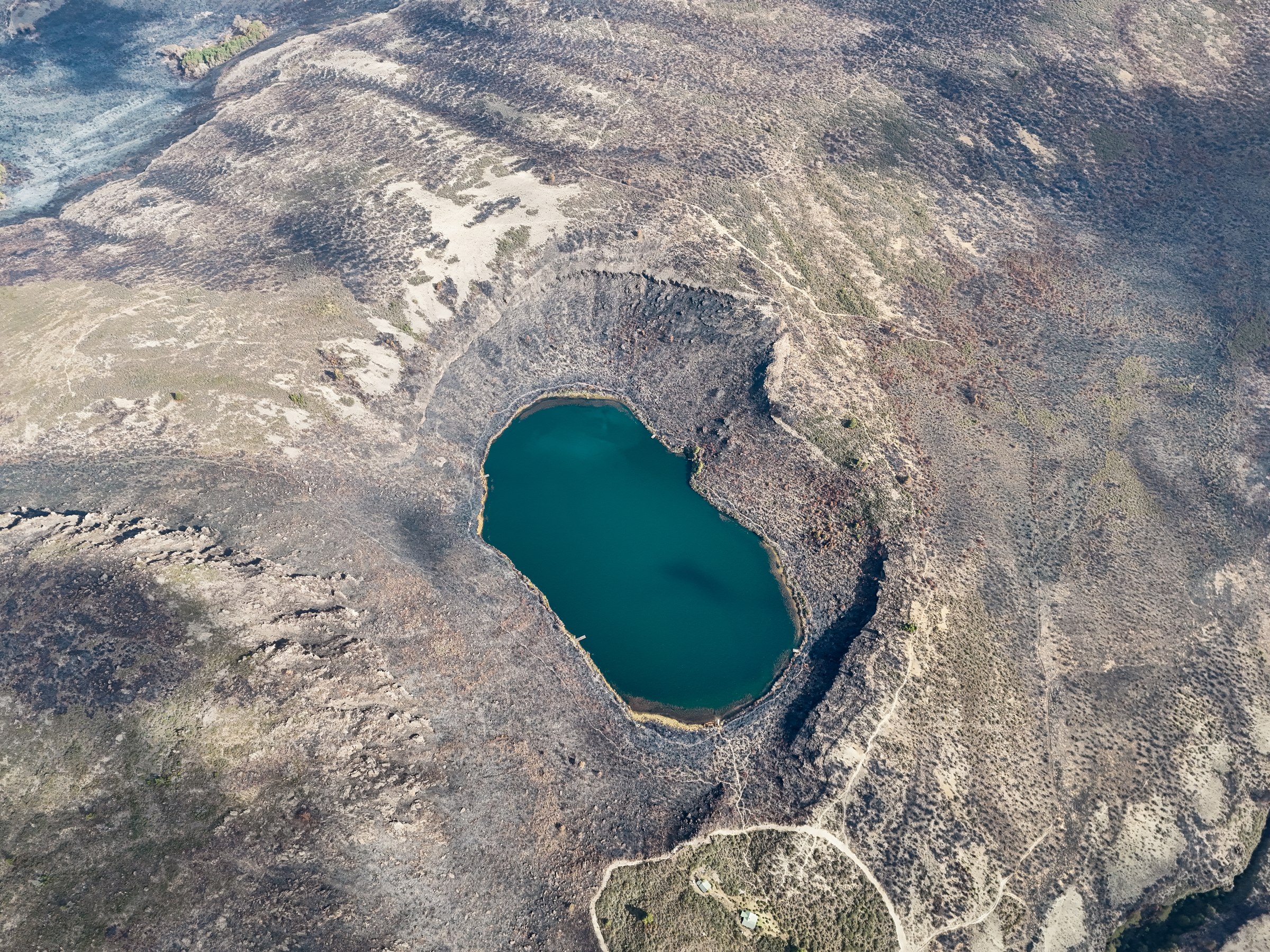
The gorge where the drive ends
You cannot drive all the way to Lake Rutundu or pull up outside the cabins. The road ends at a deep gorge, which separates the parking area from the last part of the approach. This was where I left the car and continued on foot.
For guests staying at the cabins, the Rutundu staff help move luggage across the gorge using a zip line. The bags cross on the line while you take the footpath through the gorge and walk up towards the cabins. It is a memorable arrival, and a practical answer to a place where the road simply cannot take you any further.
Keep the few things you need for the walk with you and let the staff organise the heavier bags. The ground is steep and uneven in places, so the final stretch deserves proper walking shoes, even if you have spent most of the journey in a vehicle. Arrange your arrival with the cabin team beforehand so they know when to meet you.
The gorge is also useful to understand when deciding how to visit. You can stay in the log cabins beyond it, or camp on the roadhead side and walk to the lake from there.
Reaching Lake Rutundu
Lake Rutundu sits at roughly 3,100 metres above sea level, held in a volcanic basin among the surrounding hills. From the shore, you look across the water towards the slopes that enclose it. The cabins are close by, and the paths around the water give you several places to stop and look across the basin.
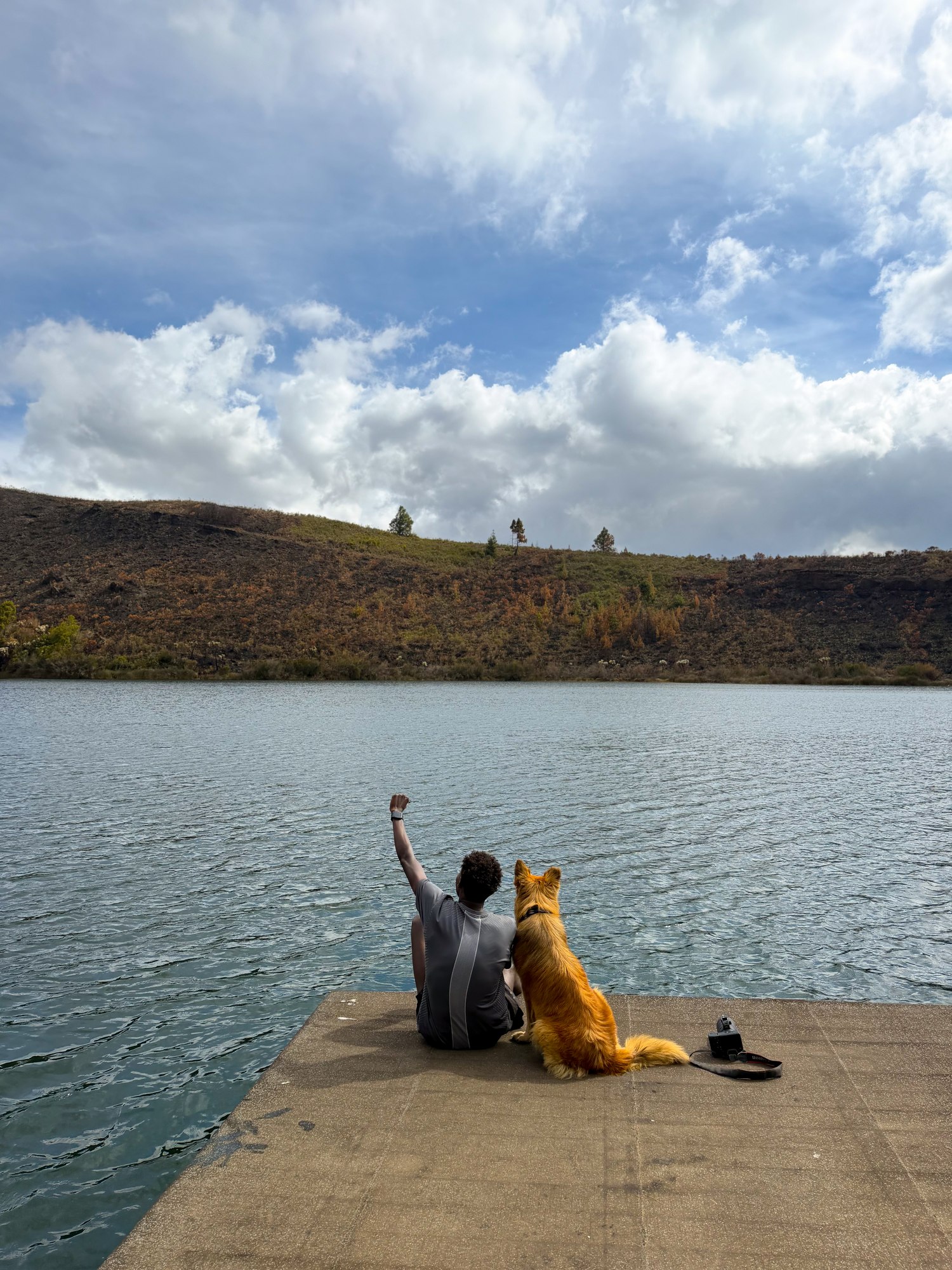
I had brought my dog along, and we walked the final stretch from the gorge together. Once at the lake, we sat on one of the platforms overlooking the water.
You can spend time walking around the lake, try for rainbow trout or ask the staff about taking out the rowing boat. There are casting platforms along the shore, and the team can help with fishing. If that is part of your plan, arrange your equipment in advance; Kenyan residents are asked to bring their own gear. The current fishing rules and any charges should be confirmed for the visit.
A stay at Rutundu Log Cabins
The log cabins give you a base beside the lake and time to explore without needing to return down the mountain that afternoon. Built from cedar logs, they have fireplaces for the cold evenings. The main cabin has the shared sitting and dining area, a kitchen, a bedroom and an en-suite bathroom; a smaller detached cabin provides another bedroom and bathroom. The verandah looks out over the surrounding mountain landscape.
The hosts have confirmed that they can accommodate groups of more than 14 people by prior arrangement. For a larger group, we agree the beds, room sharing and any additional sleeping arrangements with them before booking. That makes Rutundu an option for a gathering of friends or an extended family as well as a smaller party.
The cabins are self-catering, so organise food, drinks and firewood before leaving Nanyuki. Bedding, towels and kitchen equipment are provided, and the staff can help with cooking and cleaning. Solar power serves lighting and light charging, and there is no mobile signal at the cabins. Those are useful things to know before packing and setting off.
Staying overnight gives you a morning on the mountain before the return drive. If you want to include Lake Alice as well as time around Rutundu, I would allow two nights: one to arrive and settle in, followed by a full day for walking.
Camping beside the gorge
You do not have to stay in the log cabins to visit Lake Rutundu. Another option is to camp near the gorge, on the side where the road ends, and hike to the lake from there. You can spend time at Rutundu and return to your camp afterwards.
Your base is at the roadhead, with the vehicle nearby. Bring a camping setup suited to cold mountain nights, along with food and cooking equipment. Camping is a separate arrangement from a cabin booking, so plan to be self-sufficient rather than relying on the cabin kitchen or bathrooms.
We arrange the camping location and access before departure, including any applicable charges and guiding. Use the agreed camping ground and bring your rubbish back down with you.
Combining Lake Rutundu with a hike to Lake Alice
From either a cabin stay or a camping trip, you can plan a longer outing to Lake Alice, higher on the mountain. It extends the visit beyond Rutundu and takes you farther into the heathland, through heather and giant groundsel.
The climb from Rutundu towards Lake Alice is strenuous. The hosts give approximately two hours for the ascent, with more time needed for the return and any stops at the lake. If you are camping by the gorge, your day also needs to include the walk from camp and back. Allow for the whole outing when deciding when to leave and how much to carry.
A guide who knows this side of the mountain helps you put the route together and judge the weather. Carry water, food, warm layers and waterproofs, even if the morning starts clear. At this altitude, a change in cloud and wind can quickly change the feel of a walk.
Rutundu and Alice make a good pair for someone interested in Mount Kenya’s lakes and walking country. You can explore this quieter side of the mountain over a few days, with the drive through Marania, the gorge crossing and the two lakes all forming part of the same trip.
Visit Lake Rutundu with Wilderness Alternative Expedition
Wilderness Alternative Expedition can help arrange either option, with a guided hike to Lake Alice if you would like to go farther. Tell us where you will be starting, your dates, how many people are travelling and whether you want to camp or stay in the cabins. We will put the transport, access, accommodation and walking plans together around your visit.
Talk to us about a Lake Rutundu trip →
Route notes are based on my visit; road conditions and access arrangements are checked again before each departure. Photographs: Wilderness Alternative Expedition.