
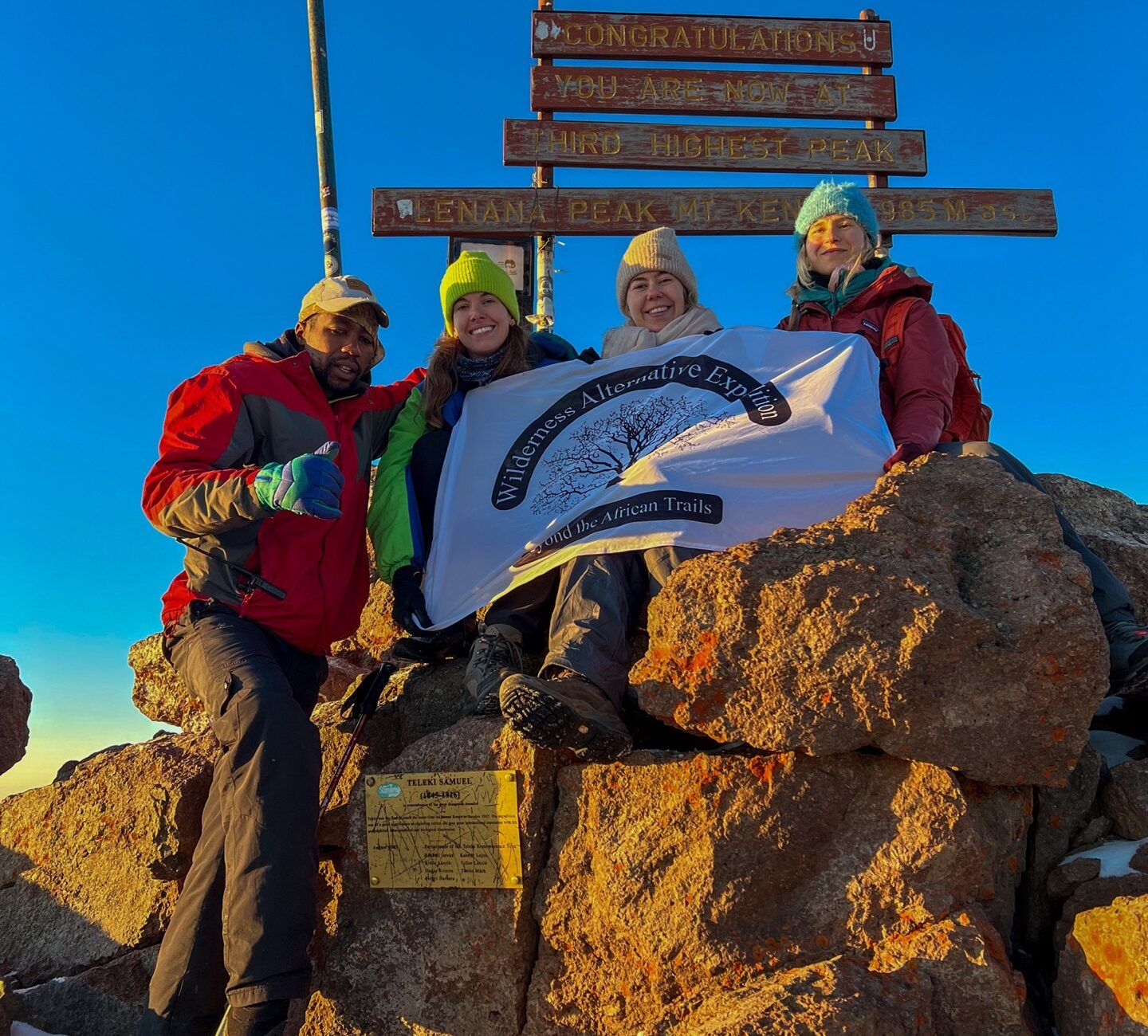
A very cheap Mount Kenya quote can look like a bargain. Sometimes it is simply a lean itinerary from a small local operator. Sometimes, however, the missing money has been taken from the parts of the climb that are hardest to see before you arrive: crew wages, meals, equipment, contingency time, transport or the number of people assigned to look after you.
The useful question is not, “Who has the lowest price?” It is, “What work, risk and responsibility does this price cover?” A Mount Kenya trek is not a hotel room with a fixed nightly rate. It is a moving expedition. For several days, a team must transport food and equipment, cook in mountain conditions, manage pace and altitude, keep everyone warm and fed, and solve problems far from a road.

This guide explains where the money goes, why two apparently similar climbs can have very different prices, and how to compare quotations without rewarding shortcuts. For the wider planning picture, start with our Mount Kenya planning guide.
First, make sure you are comparing the same mountain
“Climb Mount Kenya” can describe two completely different objectives. Most trekking itineraries finish at Point Lenana, the mountain’s 4,985 metre trekking summit. Batian, at 5,199 metres, is the highest point and a serious technical rock climb. Nelion is also technical. A Point Lenana trek and a Batian expedition should never be compared by price alone because their skills, equipment, guides, days and risk management are not the same.
Even Point Lenana quotations are rarely identical. One may be a three day up and down trek from one gate. Another may be a five day traverse, entering by Sirimon and leaving through Chogoria, with an extra acclimatisation day and a long vehicle transfer at the far end. Read the route, number of days and inclusions before looking at the total.

The costs that every responsible Mount Kenya trek must carry
Park and conservation charges
Mount Kenya National Park fees are not optional. They are normally calculated by visitor category and time in the park. As last checked in August 2026, the Kenya Wildlife Service schedule lists the non resident adult conservation fee for Mount Kenya at USD 70 per 24 hours. Citizen, resident, African citizen and child rates differ. The applicable fee and the number of chargeable periods should be shown clearly in your quotation.
Fees can change. Ask whether the quote uses the current KWS schedule, whether tax and camping or hut charges are included, and what happens if an official tariff changes before travel. A suspiciously low total may exclude park fees entirely and leave you to pay them at the gate.
The mountain crew
Your guide is only the most visible member of the operation. Depending on group size and itinerary, a trek may also need an assistant guide, cook and porters. The crew carries tents, food, cooking equipment, safety items and your agreed personal allowance. They establish camp, prepare meals, collect water where appropriate and keep the expedition moving.
Labour is therefore a large and legitimate part of the cost. A company paying its crew properly cannot always match a quote built on very low wages, late payment, excessive loads or an expectation that tips will fill a wage gap. At Wilderness Alternative Expedition, crew pay is a planned operating cost. A tip is a voluntary recognition of service, not a substitute for salary.
Food for guests and crew
Mountain food is more complicated than buying ingredients. It must be planned, packed, carried, protected from rain, prepared safely and portioned for people working hard in cold conditions. The crew also needs full meals. A low quote may provide adequate guest food while quietly reducing what the people carrying and cooking it receive.
Ask what a normal breakfast, trail lunch and dinner look like, how dietary needs are handled, and whether crew meals are included. You do not need a luxury menu. You do need enough varied, usable food to support several demanding days.
Transport and gate logistics
Nairobi or Nanyuki transfers, gate access, a Chogoria four wheel drive, driver time and the return of an expedition vehicle all cost money. A traverse is particularly easy to underquote because the exit vehicle must be positioned on the other side of the mountain. If a proposal merely says “transport included”, ask from where, to where, in what type of vehicle, and whether difficult road sections are covered.
Equipment, maintenance and replacement
Tents, sleeping mats, stoves, fuel bottles, group shelters, communication tools, first aid supplies and water containers wear out. A responsible operator inspects, cleans, repairs and replaces them. Those costs are spread across expeditions. Very old tents and unreliable zips do not appear in a price table, but they become important in a night of rain and wind.
Planning, permits and support off the mountain
A good climb begins before the gate. Someone checks your dates, route, dietary information, equipment and medical declarations; confirms the crew; purchases food; arranges payments; monitors conditions; and remains available if the plan changes. That work is less photogenic than summit morning, but it is part of delivering the climb safely.
Why one quotation can be much cheaper
There are legitimate reasons. A larger private group shares transport and some crew costs. A simple route can cost less than a traverse. A locally owned company may have lower overheads than an international reseller. A scheduled departure may spread fixed costs efficiently. None of these is automatically a problem.
The concern begins when the price is achieved by omitting necessary work or moving costs elsewhere. Common examples include park fees shown as an extra, no airport or city transfer, an unrealistic personal luggage allowance, too few crew, crew food funded from tips, poor tents, no contingency, or a three day schedule sold to someone who would be much better served by four or five days.
Some quotations are also cheap because the itinerary is written loosely. “Four days Mount Kenya” does not tell you the entry gate, exit gate, camps, walking time or whether Day 1 begins in Nairobi. Ask for a day by day route with overnight locations and transport stated.
A practical way to compare Mount Kenya prices
Put every quotation into the same checklist:
- Is the objective Point Lenana, Nelion or Batian?
- Which route and direction will you take?
- How many calendar days and park fee periods are included?
- Where do transfers begin and end?
- Which park, camping, hut and vehicle charges are included?
- How many guides, cooks and porters will support the stated group size?
- What personal weight may each guest give to the crew?
- Are full crew wages and meals included before tips?
- What sleeping, dining and safety equipment is supplied?
- What is excluded: tips, personal kit, insurance, hotels, drinks or evacuation?
- What happens if weather, illness or a road problem changes the plan?
A clear operator should be able to answer without becoming defensive. The goal is not to demand the most expensive expedition. It is to understand what you are buying and who bears the cost when something is left out.
Does spending more guarantee a summit?
No. Weather, health, altitude response and personal decisions still matter. Nor is a high price proof of ethical employment or good guiding. Price is evidence only when the operator can connect it to a sensible itinerary, an appropriate team and explicit inclusions.
For most trekkers, an extra acclimatisation day can be more valuable than decorative extras. A quieter private pace may matter more than a premium hotel before the climb. Good value means money is directed towards the parts that influence safety, wellbeing and the quality of the experience.
Our approach to crew welfare
Mount Kenya is our home mountain, and the people who work on it are not an anonymous supply chain. Our head guide Joseph Kimani leads porter welfare as well as mountain operations. We budget crew pay, meals and working equipment into the expedition rather than presenting them as optional generosity from the guest.
That approach does make the true cost visible. We believe it also produces a stronger team. People who are fed, properly equipped, fairly paid and respected can concentrate on their work and support one another. Better paid crew means a happier crew, but it also means a more stable professional mountain community.
Choose the right itinerary before asking for the price
The most economical climb is not the one with the smallest number on the first email. It is the shortest itinerary that still makes sense for your experience, acclimatisation and objective. Read our comparison of the Sirimon route and Chogoria route, then look at a real five day Sirimon to Chogoria traverse.
If you send us your dates, group size, recent hiking and preferred comfort level, we can explain the route and the price line by line. You can ask us to plan your Mount Kenya climb without committing to an itinerary that does not fit you.
Frequently asked questions
How much should a Mount Kenya trek cost?
There is no responsible universal figure. Route, days, group size, park fee category, transfers, accommodation and equipment all change the total. Compare written inclusions and crew provision, not only the headline amount.
Are Kenya Wildlife Service fees included in trek prices?
They may be included or excluded. A proper quotation should say clearly. Ask which fee schedule and visitor category were used and whether any park, camping or hut payment remains due.
Why is a private climb more expensive?
Private transport, guide and some crew costs are divided among fewer guests. The benefit is control over dates and pace. A small scheduled group can reduce the per person cost while retaining a sensible itinerary.
Do tips pay the porters’ wages?
They should not. Wages belong in the operating price. Tips are separate, voluntary recognition and should be distributed transparently.
Is a three day climb always cheaper than a five day climb?
Usually the total is lower because there are fewer fee periods and crew days, but it can be poor value if the pace is unsuitable. More time often improves acclimatisation and enjoyment.
Can I climb Mount Kenya without porters?
Some highly experienced, self sufficient trekkers may arrange a leaner expedition, subject to park rules and route requirements. Most visitors benefit from local guiding and crew support. Be honest about navigation, weather, altitude, load carrying and emergency self reliance.
What is the biggest warning sign in a quotation?
Vagueness. If the route, number of fee periods, crew, food, transfers and exclusions are not written down, the headline price tells you very little.
Fee note: Kenya Wildlife Service charges referenced here were checked against the official schedule available in August 2026. Official tariffs and tax treatment can change. Reconfirm the written KWS based amount for your dates before paying a deposit.